Monday, May 22, 2024

Industrial CNC Tools: Accuracy vs Operating Cost
by
Published
Views:
For procurement teams balancing precision, uptime, and total cost of ownership, choosing industrial CNC tools is no longer just a technical decision. From tolerance control to tool life and maintenance demands, the real challenge is finding equipment that delivers reliable accuracy without driving up operating costs. This article explores how buyers can evaluate performance, efficiency, and long-term value with greater confidence.
What do industrial CNC tools really mean in cost and accuracy terms?
Industrial CNC tools include cutting tools, holders, spindles, control systems, and machine platforms built for repeatable automated machining.
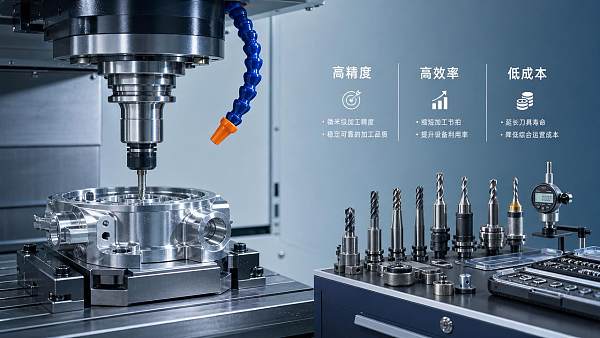
In practical sourcing decisions, accuracy means more than a headline tolerance number on a brochure.
It includes repeatability, thermal stability, surface finish consistency, and the machine’s ability to hold dimensions over long production runs.
Operating cost is also broader than purchase price. It covers energy use, tooling consumption, calibration, coolant management, downtime, training, and spare parts availability.
That is why industrial CNC tools should be evaluated as a full production system, not as isolated hardware.
Across electronics, automotive, agriculture equipment, and infrastructure components, hidden cost drivers often emerge after installation.
Examples include chatter at higher feed rates, premature insert wear, weak chip evacuation, and unstable dimensions during temperature shifts.
A lower-priced machine may appear attractive, yet poor process stability can increase scrap, rework, and inspection time.
By contrast, better industrial CNC tools may cost more upfront but reduce total lifecycle burden through predictable output.
How should accuracy be measured beyond nominal tolerance?
Nominal tolerance is only one layer of performance. Buyers should verify how industrial CNC tools behave under real production conditions.
Key accuracy indicators worth checking
- Positioning accuracy across all axes
- Repeatability after long cycles
- Spindle runout under load
- Thermal drift during shift changes
- Surface finish stability at target feed rates
- Toolholder concentricity and clamping consistency
These indicators matter because industrial CNC tools often perform differently in test cuts than in mixed-material production.
For example, aluminum housings, hardened steel shafts, composite panels, and stainless fittings each stress machines differently.
High precision on a simple coupon does not guarantee stable quality on a complex part with interrupted cuts.
A practical evaluation should request process capability data, sample inspection records, and long-cycle benchmarking.
Standards alignment also matters. Depending on the part, ISO, IATF, or IPC-linked documentation may support more reliable comparisons.
When industrial CNC tools are assessed this way, accuracy becomes measurable business performance, not marketing language.
Which operating costs matter most over the full lifecycle?
Operating cost is where many sourcing decisions succeed or fail. Industrial CNC tools create direct and indirect cost layers.
Direct cost categories
- Cutting tool consumption and insert replacement
- Power use during idle and active cycles
- Coolant, lubrication, and filtration media
- Planned maintenance parts and calibration services
Indirect cost categories
- Downtime from unstable tooling or spindle issues
- Scrap and rework caused by dimensional drift
- Longer setup time for frequent offsets and adjustments
- Training burden for complex controls or poor interface design
The best industrial CNC tools usually reduce cost volatility, not just average cost.
Stable tool life helps production planning. Predictable maintenance windows support higher uptime. Good diagnostics shorten troubleshooting.
This matters across cross-sector manufacturing, where delays in one component can disrupt several linked assembly schedules.
A useful comparison method is cost per qualified part, not cost per machine hour alone.
That approach reveals whether industrial CNC tools actually improve throughput while controlling quality loss and support costs.
How can buyers compare industrial CNC tools for different applications?
Application fit is critical. Industrial CNC tools used for EV housings may not suit agricultural driveline parts or filtration manifolds.
A structured comparison prevents overbuying precision that is never needed, or underbuying stability that production requires.
This comparison model helps industrial CNC tools align with actual production goals instead of generic performance claims.
It also supports clearer benchmarking across suppliers in a multi-disciplinary environment like GIM’s coverage framework.
What common mistakes increase cost while chasing precision?
Several mistakes push operating cost higher without creating meaningful quality gains.
Frequent decision errors
- Selecting ultra-tight tolerance capability for parts that do not require it.
- Ignoring tooling ecosystem compatibility and focusing only on machine specifications.
- Underestimating thermal control and shop-floor environmental effects.
- Comparing industrial CNC tools without using the same material and cycle assumptions.
- Overlooking software usability, diagnostics, and maintenance access.
Another mistake is treating all downtime as equal. Short stoppages can accumulate into major output loss.
Industrial CNC tools should therefore be reviewed for mean time between failure and mean time to repair.
A machine with slightly lower top-end precision may create stronger business value if it is easier to maintain and recover.
The goal is not maximum precision at any cost. The goal is fit-for-purpose accuracy with sustainable operating economics.
How can industrial CNC tools be evaluated before final commitment?
A disciplined pre-purchase process reduces uncertainty and reveals whether industrial CNC tools can perform in real conditions.
Recommended validation checklist
- Run sample parts using actual materials and target tolerances
- Request cycle time, scrap rate, and tool wear data
- Confirm metrology method used for accuracy claims
- Review maintenance intervals and consumable costs
- Check digital connectivity for traceability and diagnostics
- Assess spare part response times across operating regions
This step is especially important for globally distributed production programs.
When industrial CNC tools must support several facilities, service consistency becomes as important as machining performance.
Benchmarking across sectors can also uncover transferable insights. Cooling design, vibration control, and data monitoring often matter everywhere.
Quick FAQ table: how should final decisions be framed?
Industrial CNC tools should never be judged by a single number. Accuracy and operating cost are tightly linked.
The strongest decisions come from benchmarking real process behavior, lifecycle cost, and support resilience together.
For organizations managing cross-industry manufacturing complexity, this structured approach helps reduce risk and improve long-term efficiency.
Use the framework above to compare industrial CNC tools with clearer evidence, sharper assumptions, and more confident next-step planning.
The Archive Newsletter
Critical industrial intelligence delivered every Tuesday. Peer-reviewed summaries of the week's most impactful logistics and market shifts.