Monday, May 22, 2024
Industrial Efficiency Upgrades That Cut Downtime Without Major Capex
by
Published
Views:
Industrial efficiency gains do not always require major capital projects. For operators and frontline users, targeted upgrades—better process visibility, smarter maintenance routines, and practical equipment optimization—can cut downtime fast while improving output stability. This article explores actionable, low-capex strategies that help manufacturing teams reduce disruptions, strengthen daily performance, and build more resilient operations.
What Industrial Efficiency Means on the Shop Floor
In practical terms, Industrial efficiency is not only about producing more units per hour. For operators, it means keeping equipment available, reducing minor stops, lowering changeover losses, avoiding quality escapes, and making each shift more predictable. A line that runs slightly slower but stays stable often outperforms a line that reaches higher peak speed but suffers repeated interruptions.
This matters across a broad industrial landscape, from electronics assembly and automotive components to agri-tech equipment, water treatment systems, and precision tooling. In each case, unplanned downtime creates a chain reaction: missed schedules, overtime, scrap, late maintenance, and higher stress for frontline teams. That is why many manufacturers now treat Industrial efficiency as a daily operating discipline rather than a one-time improvement project.
For organizations that rely on cross-sector benchmarking, such as those comparing performance against ISO, IATF, or IPC-aligned expectations, the goal is straightforward: increase operational consistency using verifiable, low-risk actions. The best results often come from small upgrades that improve visibility, discipline, and responsiveness before any major capital expansion is considered.
Why Downtime Remains a High-Priority Issue
Downtime is expensive because it rarely affects only one machine. A short stop in an upstream process can starve downstream stations, create bottlenecks, distort labor allocation, and trigger rushed restarts that hurt quality. In integrated manufacturing environments, this impact becomes even larger when production cells depend on synchronized material flow, digital traceability, and strict delivery windows.
Many plants still focus too heavily on catastrophic breakdowns while overlooking the real productivity drain: frequent micro-stoppages, delayed adjustments, poor communication between shifts, and reactive maintenance habits. These losses are common because they do not always appear clearly in standard reports. Yet for users and operators, they are visible every day in the form of jam clearing, waiting for approvals, searching for tools, re-entering settings, or restarting machines after unstable runs.
Improving Industrial efficiency without major capex starts with acknowledging that downtime is often operational, not structural. In other words, many losses can be reduced through smarter execution of existing assets.
Common Low-Capex Levers That Improve Industrial Efficiency
Low-capex improvements work best when they target the points where production becomes unstable. These levers usually require modest spending but strong follow-through from supervisors, technicians, and equipment users.
The table shows a pattern that is often confirmed in benchmarking work: the biggest gains in Industrial efficiency are frequently tied to better control of routine losses, not expensive equipment replacement.
Industry Context: Why Cross-Sector Teams Are Focusing on These Upgrades
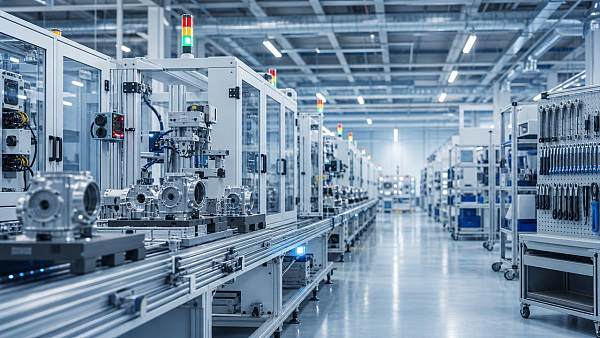
Across modern manufacturing, the boundaries between sectors are increasingly connected. Electronics lines depend on tight contamination control and precise handling. Automotive production requires traceability, repeatability, and strict uptime targets. Smart agri-tech combines rugged mechanical systems with digital monitoring. Environmental infrastructure operations depend on pumps, filtration modules, controls, and service continuity. Precision tooling supports all of them with exact tolerances and reliable cycle performance.
Because of this convergence, Industrial efficiency is now judged through a broader lens. Teams are not only asking whether a machine can run, but whether it can run consistently, support quality compliance, use energy wisely, and recover quickly from disturbances. Platforms such as GIM are valuable in this environment because they help users compare operational practices across industries rather than relying on isolated assumptions.
This cross-disciplinary perspective is important for frontline users. A practical maintenance routine proven in automotive machining may help a pump system in water infrastructure. A visual control method used in electronics assembly may improve setup accuracy in precision tooling. The lesson is clear: good Industrial efficiency practices often transfer well when they are adapted to process conditions.
Where Frontline Users Can Act First
Operators and daily users are usually the first to see instability. They hear abnormal noise, notice drift in settings, detect longer warm-up time, or recognize repeated jam points before formal data systems do. That makes them central to low-capex uptime improvement.
A good starting point is to classify downtime into simple categories that reflect real shop-floor behavior: material-related stops, adjustment-related stops, minor mechanical issues, sensor or control interruptions, quality holds, and utility-related disturbances. When these categories are used consistently, improvement efforts become easier to prioritize.
Frontline action is especially effective in three areas:
- Capturing accurate reasons for every stop, even very short ones.
- Escalating repeat issues based on frequency, not only severity.
- Following recovery standards so restarts are safe, fast, and consistent.
These habits strengthen Industrial efficiency because they convert individual experience into repeatable operational knowledge.
Practical Upgrade Paths That Do Not Require Major Capex
1. Improve process visibility before buying new equipment
If teams cannot see where time is being lost, they often invest in the wrong fix. Start with simple downtime mapping by shift, machine, product family, and stop reason. Even a basic digital log or operator-input station can reveal patterns such as recurring delays after breaks, unstable startup after changeover, or frequent interventions tied to one sensor location. Visibility is one of the fastest routes to Industrial efficiency because it turns assumptions into measurable action.
2. Upgrade maintenance from reactive to condition-aware
Many plants already have preventive maintenance schedules, but those schedules may not match actual wear conditions. Low-capex upgrades include vibration checks, temperature trend review, lubrication control, belt and seal inspection, and replacement triggers based on equipment behavior rather than only calendar dates. This approach helps maintenance teams intervene earlier, reducing downtime without large system overhauls.
3. Simplify changeovers and startup routines
Changeovers often hide a large amount of lost production time. Standardizing tool placement, labeling critical settings, pre-staging materials, and creating startup checklists can reduce adjustment loops after product switches. In high-mix environments, these steps produce major Industrial efficiency gains because they improve both uptime and first-pass quality.
4. Use visual controls to reduce decision delay
Operators lose time when they must interpret unclear machine states or search for the correct response. Visual standards such as color-coded status points, fault trees, daily abnormality boards, and one-point lessons shorten reaction time. These tools are inexpensive, but they improve Industrial efficiency by making the right action obvious during pressure situations.
5. Stabilize support systems that quietly cause stops
Compressed air leaks, coolant contamination, poor grounding, worn connectors, clogged filters, and dust buildup often trigger interruptions that appear random. In reality, they are manageable reliability risks. A focused audit of utilities and machine environment can deliver better uptime than a much larger equipment investment.
Typical Application Areas by Operating Context
This type of classification helps users focus on upgrades that fit their operating reality instead of copying generic improvement programs.
What to Watch When Evaluating Results
Not every improvement should be judged only by output volume. To understand whether Industrial efficiency is truly improving, users should monitor a balanced set of indicators: unplanned downtime minutes, mean time between stops, startup loss after changeovers, first-pass yield, maintenance response time, and repeat fault frequency. If possible, track trends by product family and shift to separate systemic issues from isolated events.
It is also important to confirm that one gain is not creating a hidden loss elsewhere. For example, faster restarts should not increase defects, and reduced maintenance time should not lead to more breakdowns later. Sustainable Industrial efficiency comes from stable improvement, not short-term speed at the expense of control.
Implementation Guidance for Teams
A practical rollout sequence is often more effective than a large transformation plan. Start with one pilot area where downtime is frequent but manageable. Build a short baseline, identify the top three recurring losses, assign clear ownership, and test low-capex countermeasures for two to four weeks. Review the result with operators, maintenance, and production leadership together. Then standardize what works and extend it to similar assets.
This method aligns well with technically rigorous benchmarking approaches. It favors evidence over assumptions and allows plants to compare outcomes across lines, sites, and sectors. For organizations using broad industrial intelligence, this creates a stronger foundation for future automation, digital monitoring, or larger capital decisions.
FAQ on Industrial Efficiency and Low-Capex Downtime Reduction
Is new machinery the fastest way to improve uptime?
Not always. If downtime is caused by poor visibility, weak standards, delayed maintenance, or unstable support systems, new machinery may not solve the root problem. Many Industrial efficiency gains come from better use of existing equipment.
Which low-cost action usually delivers the quickest return?
Accurate stop tracking is often the best first move. Once teams know where minutes are being lost, they can target the biggest recurring causes instead of guessing.
Who should lead these upgrades?
The strongest results usually come from joint ownership among operators, maintenance technicians, and line leaders. Industrial efficiency improves faster when daily users help define both the problem and the solution.
Building Resilient Performance with Practical Upgrades
Industrial efficiency is most effective when it is treated as a disciplined operating practice, not a slogan or a large capital wish list. For frontline users, the path to lower downtime often starts with simple but high-value upgrades: clearer process visibility, condition-aware maintenance, stronger changeover control, better visual support, and closer attention to utilities and machine environment.
In a global industrial environment shaped by interconnected supply chains, technical standards, and cross-sector performance demands, these low-capex actions can deliver meaningful resilience. Teams that improve stability first are better prepared to scale output, protect quality, and make smarter long-term investment decisions. If your operation is seeking measurable Industrial efficiency improvements, begin with the losses users experience every day—because that is where downtime can often be cut fastest.
The Archive Newsletter
Critical industrial intelligence delivered every Tuesday. Peer-reviewed summaries of the week's most impactful logistics and market shifts.