Monday, May 22, 2024

Manufacturing Tools That Reduce Setup Time Without Losing Accuracy
by
Published
Views:
In modern manufacturing, the right manufacturing tools can dramatically cut setup time without compromising accuracy, helping teams improve Manufacturing efficiency while meeting strict Manufacturing standards. For engineers, operators, and procurement leaders, success depends on verifiable data, strong digital foundations, and actionable Procurement insights that connect vehicle technology, industrial filtration, sustainable water solutions, and even CO2 removal to smarter, faster production decisions.
Across electronics, mobility, water infrastructure, and precision tooling, setup time is no longer a narrow shop-floor metric. It affects OEE, labor allocation, scrap rates, compliance readiness, and supplier responsiveness. A 20-minute reduction in changeover can be the difference between meeting a same-week delivery target and carrying excess WIP for another shift.
For technical evaluators and sourcing teams, the challenge is clear: which manufacturing tools shorten setup without introducing drift, repeatability issues, or hidden integration costs? The answer usually lies in a combination of tooling design, digital verification, fixture strategy, operator guidance, and benchmarking against the right standards.
This article examines the tool categories, selection criteria, implementation steps, and purchasing checkpoints that matter most when setup speed and dimensional control must improve together. It is written for researchers, operators, quality leaders, project managers, distributors, and industrial buyers who need practical guidance rather than generic claims.
Why Setup Time Reduction Must Be Paired With Accuracy Control
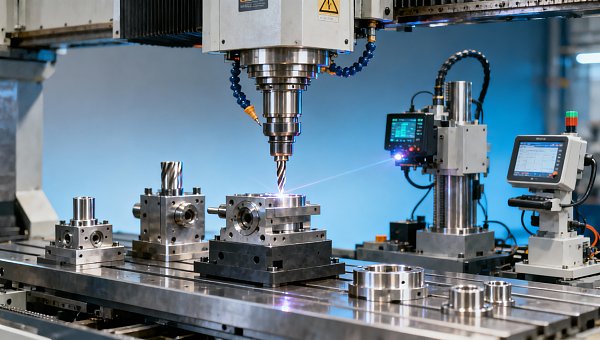
In mixed-model production, setup is often repeated 4 to 12 times per shift. Each changeover introduces opportunities for offset errors, fixture misalignment, wrong-part loading, and parameter inconsistency. Reducing setup time matters, but reducing it carelessly can increase first-piece rejection, rework, and downstream inspection load.
The most effective manufacturing tools do not simply speed up clamping or program selection. They preserve positional repeatability within a defined range such as ±0.01 mm for precision machining, ±0.05 mm for general assembly alignment, or application-specific thresholds based on ISO, IATF, or IPC requirements. The acceptable window depends on process capability, not speed alone.
For procurement officers, setup reduction also has a financial dimension. A line that loses 45 minutes per changeover across 3 changeovers per day can consume more than 11 hours per week in non-productive time. Even when labor cost is modest, the impact on machine utilization, order flexibility, and late-shipment risk is substantial.
Accuracy, meanwhile, protects more than part quality. It supports traceability, process validation, and customer audits. In automotive and electronics supply chains, repeated setup variation can trigger capability reviews, containment action, or lot segregation. This is why leading plants treat setup tools as part of a wider control architecture rather than isolated accessories.
Where setup losses typically occur
The largest delays usually come from five sources: manual adjustment, fixture re-centering, tool length confirmation, program or recipe selection, and first-piece verification. When these steps are disconnected, operators often spend 10 to 30 minutes rechecking values that could be standardized or digitally locked.
- Manual fixture change with no locating reference increases repositioning time and error probability.
- Unlabeled or inconsistent tool assemblies create avoidable measurement and offset entry steps.
- Recipe selection without poka-yoke controls can cause parameter mismatch between product families.
- First-off inspection performed too late shifts defects into the next process or batch.
Setup objectives by industrial environment
Different sectors prioritize setup differently. Semiconductor and electronics lines often target micron-level repeatability and contamination control. Automotive lines emphasize takt stability and traceable part-family switching. Water and filtration equipment production may allow wider mechanical tolerance, but require strong flange alignment, seal compression consistency, and test repeatability over 2 to 8 hour validation cycles.
The table below shows how setup speed and accuracy priorities vary across common industrial scenarios.
The common lesson is that setup improvement should be measured in two dimensions at once: time saved per changeover and deviation introduced after the change. If one improves while the other worsens, the plant has not solved the real problem.
Manufacturing Tools That Deliver Faster Changeovers
Several tool categories consistently reduce setup time without eroding process control. They work best when selected as a system, not as isolated purchases. In many facilities, the first 3 upgrades that generate measurable gains are modular fixtures, quick-change tool holders, and digital setup verification devices.
Modular fixturing shortens alignment work by using repeatable locating elements, reference pins, and standardized base interfaces. Instead of rebuilding each setup from scratch, operators exchange nests or clamps on a common datum structure. Depending on part family complexity, setup time can drop from 40 minutes to 10 to 18 minutes while maintaining repeatability across batches.
Quick-change tool holders and presetting systems reduce spindle idle time and manual offset correction. In machining environments, tool presetting performed offline can remove 5 to 12 minutes from each tool changeover cycle. More importantly, it shifts measurement away from the machine, where every extra minute carries a utilization cost.
Digital torque tools, guided fastening systems, and barcode-linked recipes are especially useful in assembly environments. They do not only speed setup; they reduce wrong-program risk. For high-mix assembly cells, preventing a single recipe mismatch per week may save more value than shaving 2 minutes off every changeover.
Core tool types worth evaluating
- Zero-point clamping and quick-lock fixture systems for repeated positioning in under 60 to 120 seconds.
- Offline tool presetters that verify length and diameter before the machine cycle begins.
- Machine vision and laser alignment devices for first-piece confirmation and fixture reference checking.
- Digital work instruction terminals linked to product-specific setup parameters.
- Smart torque and fastening tools that record values and prevent sequence deviation.
Why digital guidance matters
In cross-sector manufacturing, human variation often explains more setup instability than hardware limitations. A digital instruction layer can cut interpretation time, reduce training dependency, and support multilingual workforces. Plants with 2-shift or 3-shift operations benefit most because consistency between crews becomes easier to maintain.
The following comparison highlights practical trade-offs among common setup-reduction tools.
A strong selection strategy usually combines one mechanical tool, one measurement tool, and one digital control tool. That combination reduces both physical setup steps and verification delays, which is where many facilities leave hidden time on the table.
How to Select Tools by Process Risk, Tolerance, and Procurement Priorities
Tool selection should begin with process mapping rather than catalog browsing. Buyers need to identify which 20% of setup tasks generate 80% of delay or variation. In some plants, the critical issue is fixture exchange. In others, it is parameter entry, leak-test preparation, or part verification after model change.
Tolerance stack-up matters just as much as setup duration. If the process already runs close to its capability limit, aggressive setup compression can create instability. For example, a filtration manifold assembly with repeated gasket compression and flange mating may tolerate a 15-minute faster changeover only if torque sequence control and locator accuracy stay stable within the validated range.
Procurement teams should also assess lifecycle implications. A lower-cost fixture system may look attractive on day one, but if spare elements require 6 to 8 weeks lead time or calibration support is weak across regions, the total operational risk rises. This is especially relevant for global manufacturers balancing resilience, serviceability, and supplier continuity.
For GIM-aligned decision frameworks, cross-sector benchmarking is valuable because similar setup problems appear in different industries under different labels. A semiconductor handler, EV subassembly station, autonomous agricultural module, and water treatment skid can all benefit from the same logic: standardize interfaces, reduce manual interpretation, and verify critical points before production starts.
Four selection filters that prevent poor purchases
- Define the required repeatability threshold, such as positional, torque, thermal, or recipe accuracy.
- Estimate actual changeover frequency per day, week, or product family, not just theoretical usage.
- Check integration needs with MES, barcode systems, PLC logic, or inspection equipment.
- Review service support, calibration interval, and spare-part availability across 12 to 24 months.
Questions technical evaluators should ask
A practical evaluation includes more than headline accuracy. Ask how the tool behaves after 500 cycles, under coolant or dust exposure, across 10°C to 35°C ambient variation, or with operators of different experience levels. These details often determine whether setup gains survive real production conditions.
The matrix below can help buyers compare options using operational rather than purely commercial criteria.
When selection is driven by these factors, buyers are less likely to overpay for precision they do not need or underinvest in reliability they cannot afford to lose.
Implementation Steps: From Pilot Cell to Scaled Production
Even the best manufacturing tools fail to deliver if rollout is rushed. A structured implementation plan usually takes 3 phases: baseline study, controlled pilot, and scaled deployment. Depending on process complexity, the full cycle may take 4 to 12 weeks, with the pilot itself running 1 to 3 product families before wider adoption.
Start by measuring current setup time in detail. Separate mechanical change, tool verification, software input, first-piece approval, and restart confirmation. Without this breakdown, improvement teams often buy hardware to solve a digital workflow problem, or add software when the real issue is fixture repeatability.
Pilot execution should include both expert and average operators. A setup method that only works with the most experienced technician is not robust enough for scale. Quality teams should also verify whether first-pass yield, Cpk stability, and inspection burden remain steady after the time reduction target is achieved.
For project managers, standardization is the bridge between pilot success and network-wide adoption. This means documented setup steps, spare-part definitions, calibration intervals, training criteria, and escalation points. Plants operating across multiple regions often need the same tool logic to transfer between automotive, electronics, and environmental equipment programs with minimal retraining.
A five-step rollout model
- Measure current setup in minutes, defects per changeover, and first-piece approval time.
- Select one pilot line with stable demand and measurable changeover frequency.
- Validate tool repeatability over at least 30 to 50 setup cycles.
- Train operators, quality staff, and maintenance on one standard work package.
- Scale only after target gains hold for 2 to 4 consecutive weeks.
Common rollout mistakes
- Skipping baseline data and relying on anecdotal estimates of time savings.
- Ignoring maintenance input, which later increases downtime from wear or miscalibration.
- Adding too many variables in the pilot, making root-cause analysis unclear.
- Failing to align purchasing, engineering, and quality acceptance criteria before launch.
A disciplined rollout turns setup improvement from a one-time event into a transferable operating capability. That is especially valuable for manufacturers dealing with volatile order mixes, regional supplier shifts, or stricter audit expectations.
Maintenance, Risk Control, and Long-Term Performance
Setup-reduction tools need maintenance discipline to preserve their value. Quick-change systems, digital torque devices, presetters, and alignment components all degrade if cleaning, inspection, or recalibration is neglected. A small wear pattern or sensor drift can slowly add back 3 to 8 minutes of setup time while quietly increasing variability.
Maintenance intervals should be based on cycle count, environment, and criticality. For example, high-use mechanical clamping elements may need inspection every 5,000 to 10,000 cycles, while digital torque systems may follow periodic verification tied to shift frequency, fastening criticality, or internal quality plans. The point is not to over-maintain, but to protect repeatability before performance degrades.
Risk control also requires clear acceptance windows. If a fixture interface exceeds allowable play, or a digital setup aid loses synchronization with the active recipe, production should not continue by assumption. Strong plants define stop-and-check triggers so that speed never overrides process discipline.
Distributors and agents should pay close attention to service expectations because customers increasingly evaluate post-sale support as part of the initial purchase. Lead time for wear parts, calibration capability, and replacement policy can influence deal viability as much as the original tool specification.
Practical maintenance checkpoints
- Inspect locating surfaces, pins, and clamping faces for wear, debris, or impact damage.
- Verify software version control and recipe access rights at least once per revision cycle.
- Check torque, alignment, or measurement devices against internal verification standards.
- Review setup trend data monthly to identify gradual time creep or rising first-off failures.
FAQ for buyers and project teams
How much setup time reduction is realistic?
In practical terms, 15% to 40% is common when a plant replaces manual fixture alignment and handwritten parameter transfer with modular hardware and digital guidance. Higher gains are possible, but only when the current state is highly manual and process stability is already understood.
Which operations benefit most from these tools?
High-mix, low-to-medium volume operations usually see the fastest return. This includes precision machining, EV subassembly, electronics test changeovers, filtration module assembly, and configurable industrial equipment lines where product variants change several times per week or per shift.
What should procurement teams review before issuing an RFQ?
At minimum, define 6 items: target setup time, required repeatability, interface constraints, environmental conditions, operator skill range, and support expectations over 12 months. If these are unclear, quotes will be difficult to compare and post-award changes will be more likely.
How long does implementation usually take?
For a focused pilot, 2 to 6 weeks is common depending on fixture complexity and digital integration scope. Multi-line standardization can take longer, especially where validation, traceability, or customer approval requirements are part of the change process.
Manufacturing tools that reduce setup time without losing accuracy are not defined by speed alone. Their value comes from repeatable positioning, controlled verification, practical integration, and lifecycle support. When chosen well, they improve throughput, reduce risk, and strengthen production agility across sectors from electronics and automotive to agri-tech and environmental infrastructure.
For organizations using cross-sector benchmarking to guide sourcing and engineering decisions, a structured approach delivers better outcomes than isolated equipment buying. If you are assessing fixture systems, digital setup tools, or process-specific changeover solutions, contact GIM to get a tailored evaluation framework, compare options against real operating requirements, and explore more solutions for resilient, high-accuracy manufacturing.
- electronics
- Mobility
- sensors
- vehicle technology
- Agri-Tech
- industrial filtration
- sustainable water solutions
- CO2 removal
- precision machining
- manufacturing tools
- Precision tooling
- Digital foundations
- Verifiable data
- Modern manufacturing
- Procurement insights
- Manufacturing standards
- Manufacturing efficiency
- Environmental infrastructure

The Archive Newsletter
Critical industrial intelligence delivered every Tuesday. Peer-reviewed summaries of the week's most impactful logistics and market shifts.