Monday, May 22, 2024

PSA Smart Yard Cuts China CNC Tool Delivery to 14 Days
by
Published
Views:
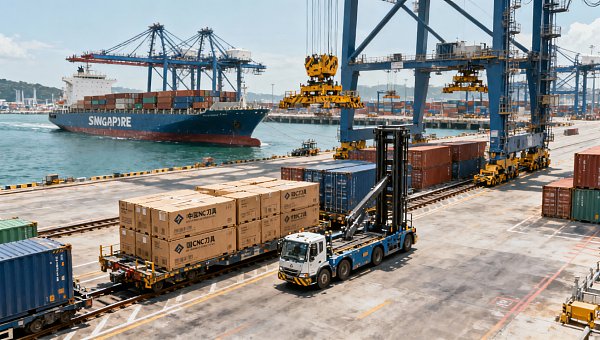
On June 30, 2026, PSA Singapore put into operation an automated container yard built on the IEC 62559 Smart Power Grids communication protocol, creating a closed loop between power dispatching, equipment coordination, and condition forecasting. For companies involved in exporting CNC machining tools from China, this is worth close attention because the reported gain is not only a technical upgrade inside the port: loading, inspection, and transfer efficiency for these cargoes rose by 40%, while the average East China-Singapore delivery cycle, including customs clearance, fell from 22 days to 14 days. That puts exporters, buyers, and supply chain service providers in direct contact with a shorter and more predictable logistics path.
What Has Been Confirmed at PSA Singapore
According to the provided event information, PSA Singapore officially launched on June 30, 2026 the world’s first automated container yard based on the IEC 62559 Smart Power Grids communication protocol.
The yard upgrade is described as enabling a closed-loop system covering power scheduling, equipment coordination, and status prediction.
The same information states that, for Chinese CNC machining tools exported through the port, cargo handling, inspection, and feeder transfer efficiency increased by 40%.
It also states that the average delivery cycle on the East China-Singapore route was reduced from 22 days to 14 days, with customs clearance included in that timeframe.
In addition, the provided summary says that international customers including Trumpf of Germany and Yamazaki Mazak of Japan have confirmed in writing that they will use this logistics channel.
Why the Impact Extends Beyond Port Operations
For exporters shipping CNC machining tools
From an industry perspective, the immediate relevance for direct trading companies is delivery execution. A reduction from 22 days to 14 days changes how exporters may plan shipment windows, customer commitments, and coordination with customs-related documentation. What deserves closer attention is whether companies can align internal production release and port handover timing with a faster outbound cycle.
For manufacturers managing production and dispatch
Processing and manufacturing enterprises may feel the effect in the handoff between factory completion and overseas shipment. Analysis shows that when a logistics leg becomes materially shorter, internal bottlenecks become more visible. For CNC machining tool producers, the practical issue is not only shipping faster, but ensuring that inspection files, packing lists, and dispatch readiness are synchronized with a compressed delivery promise.
For overseas buyers and procurement teams
For procurement-side users, the change matters because delivery time is part of sourcing risk. The written confirmation by Trumpf and Yamazaki Mazak indicates that this route is already being recognized by major international customers. Observably, buyers may pay closer attention to whether suppliers can consistently offer this route and whether shorter transit and clearance cycles can be reflected in contract lead times or replenishment planning.
For logistics and supply chain service providers
Service providers are likely to be affected at the coordination layer. The reported efficiency gains cover handling, inspection, and feeder transfer, which means freight forwarders, customs brokers, and route planners may need to update service design around this corridor. The key point is not simply capacity, but whether operational coordination can support the shorter cycle without creating friction in documentation or cargo staging.
What Companies Should Track Next
Watch for further operational wording from the port side
Companies should closely track any follow-up official language related to the new yard’s operating scope, cargo applicability, and execution standards. The current information confirms the launch and the reported effect on CNC machining tool exports, but businesses still need to verify how consistently that performance applies in day-to-day operations.
Review which shipments truly fit the faster corridor
Not every order structure benefits equally from a shorter route. What deserves closer attention is whether a company’s key product categories, shipment batches, and destination commitments can actually be aligned with the East China-Singapore corridor described in the event summary.
Recheck documents and fulfillment timing
A shorter end-to-end cycle raises the cost of paperwork errors or handover delays. Exporters and service partners should pay attention to document completeness, supplier qualification records, and customer-facing delivery commitments, because those practical details determine whether a nominal 14-day cycle is commercially usable.
Adjust customer communication carefully
The written confirmation from named international customers is commercially relevant, but companies should avoid treating one route improvement as a blanket lead-time reset. Analysis shows that customer communication should distinguish between a confirmed logistics option and a universally guaranteed delivery standard.
How This News Should Be Read at This Stage
Analysis shows that this development is more than a routine port technology announcement because the reported improvement is directly tied to a specific export category: Chinese CNC machining tools. That makes the news operationally meaningful for companies that sell, buy, or move such equipment.
At the same time, it is more appropriate to understand this as an important directional signal rather than a finished industry-wide outcome. The facts provided confirm the yard launch, the stated efficiency improvement, the reduced delivery cycle, and written customer adoption. They do not, on their own, establish that every exporter, every shipment pattern, or every downstream market will experience the same result immediately.
Observably, the industry should continue watching whether this logistics channel becomes a repeatable benchmark for delivery performance rather than a strong early case tied to a defined route and cargo group.
What the Current Signal Really Means
The clearest industry meaning of this update is that port-side digital infrastructure can now have a measurable effect on export lead time for CNC machining tools, not only on internal terminal efficiency. For market participants, the practical takeaway is to treat this as a meaningful logistics improvement with direct commercial implications, while keeping judgment anchored to confirmed route performance and actual shipment execution.
At this stage, the most balanced reading is that the PSA upgrade represents a concrete short-term change on a defined trade lane and a longer-term signal for how smart port systems may influence delivery competitiveness in machinery exports. It remains a development that warrants continued verification rather than a basis for broad assumptions.
Basis of This Article and What Still Needs Verification
This article is based on the user-provided news title, event date, and event summary. The content reflects the confirmed details provided for the June 30, 2026 launch at PSA Singapore and the reported effects on Chinese CNC machining tool exports.
For this type of industry update, relevant source categories would typically include official port announcements, corporate statements, industry association information, authoritative media coverage, and standards-related documentation. However, a specific official source link was not provided in the input, so the underlying claims still require continued verification against future official disclosures.
Further observation should focus on whether subsequent official statements provide additional detail on operating rules, cargo coverage, and the consistency of the reported 14-day delivery cycle in actual business use.

The Archive Newsletter
Critical industrial intelligence delivered every Tuesday. Peer-reviewed summaries of the week's most impactful logistics and market shifts.