Monday, May 22, 2024

Qualcomm Pushes AI Chips Into CNC Edge Control
by
Published
Views:
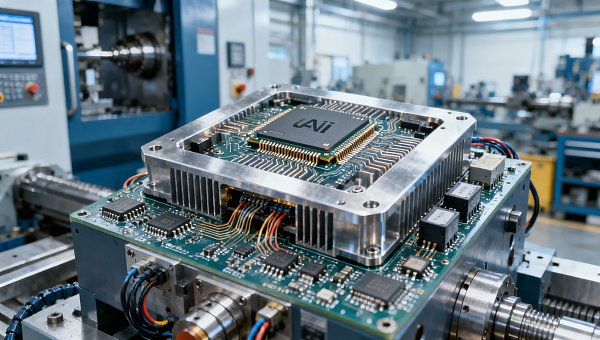
On June 25, 2026, Qualcomm said during an investor communication that its new HBC architecture AI chip is being used to upgrade real-time motion control modules in high-end CNC machining tools. The disclosed setup combines a lightweight VLA (vision-language-action) model for tool-wear prediction and adaptive feed compensation, making this development relevant not only to AI chip deployment but also to machine tool builders, export-oriented manufacturers, and precision production users in Europe and North America.
What Qualcomm Confirmed on June 25
According to the disclosed information, Qualcomm is developing custom AI chips for two unnamed hyperscale cloud customers, and the related technology is also being extended into edge control units for CNC machining tools. The company said its HBC architecture AI chip is being applied to retrofit real-time motion control modules in high-end CNC equipment. The stated function of the embedded lightweight VLA model is to support AI-based tool wear prediction and adaptive feed compensation. Qualcomm also said the solution has entered small-batch pilot production and is expected to be shipped from the third quarter with exports to precision mold factories in Europe and aerospace structural component processing plants in North America.
Why the signal matters across the manufacturing chain
For machine tool and control system suppliers
From an industry perspective, this update matters because the AI function is being positioned inside the real-time control layer rather than as a separate software add-on. That may affect how machine builders, controller integrators, and motion module suppliers evaluate future product architecture, especially where high-end CNC systems are sold on process stability and machining consistency. What deserves closer attention is whether edge-side AI becomes a differentiating feature in export-facing equipment configurations.
For precision processing plants and end users
European precision mold factories and North American aerospace structural component processors are specifically mentioned in the disclosed rollout path. Analysis shows that for these users, the immediate relevance is not broad factory AI adoption, but whether tool wear prediction and adaptive feed compensation can be integrated into existing production requirements, quality control routines, and equipment acceptance standards. Buyers and plant managers may therefore pay closer attention to validation, compatibility, and delivery timing rather than headline AI capability alone.
For exporters and supply chain service providers
The fact that the solution is already in small-batch pilot production and is expected to move into export-linked deliveries from Q3 makes this noteworthy for companies involved in equipment delivery, technical documentation, and cross-border project coordination. Observably, any technology inserted into a CNC control unit can influence communication between equipment makers, overseas customers, and after-sales service teams, especially where configuration clarity and delivery readiness are concerned.
What companies should watch next
Track how Qualcomm describes the rollout
What deserves closer attention is whether later official statements keep the focus on pilot-stage deployment, expand the list of use cases, or clarify how widely the HBC-based control upgrade is being adopted. For companies assessing partnership or procurement implications, the wording of follow-up disclosures will matter.
Focus on the export-facing application path
The currently disclosed destination profile points to European precision mold production and North American aerospace structural part machining. For equipment suppliers and related service firms, this makes those application environments more relevant than broad manufacturing demand assumptions. The near-term issue is where actual delivery and installation activity appears first.
Separate technical promise from operational readiness
Analysis shows that the announced functions—tool wear prediction and adaptive feed compensation—describe a practical manufacturing use case, but the business impact still depends on how such functions fit into procurement review, deployment schedules, and customer-side acceptance. Companies should therefore distinguish between a technically credible direction and a fully scaled commercial result.
Prepare for documentation and delivery coordination
For exporters, integrators, and service teams, it is more appropriate to focus on execution details such as product configuration clarity, supporting documentation, customer communication, and fulfillment timing. Where CNC control units are involved, these operational issues often matter as much as the underlying chip announcement.
How this development is best understood for now
Observably, this news points to a broader industry direction: AI chips discussed in the context of large cloud customers are also moving into specialized industrial edge control scenarios. At the same time, it is more appropriate to understand the current update as an early but concrete deployment signal rather than a fully established market outcome. The disclosed facts show pilot-stage production and planned exports, but they do not yet confirm wider rollout, performance results, or adoption scale beyond the stated use cases.
A measured reading of the latest move
This development is worth following because it links AI chip customization, industrial control retrofits, and export-oriented CNC applications within one disclosed path. From an industry perspective, the key significance is not that the market outcome is already settled, but that an edge-AI manufacturing scenario has moved beyond abstract discussion and into small-batch production planning. For now, this is best read as a meaningful near-term signal with longer-term implications that still require verification through subsequent deliveries and official updates.
Basis of this article and what still needs verification
This article is based on the user-provided news title, event date, and event summary. For this type of industry update, commonly relevant source categories may include official company statements, corporate disclosures, industry association information, authoritative media coverage, and technical or standards-related documents. A specific official source link was not provided in the input, so further verification remains necessary. Areas that still warrant continued monitoring include subsequent official wording, the progress of Q3 export-linked deliveries, and any additional clarification on application scope or customer deployment status.
The Archive Newsletter
Critical industrial intelligence delivered every Tuesday. Peer-reviewed summaries of the week's most impactful logistics and market shifts.