Monday, May 22, 2024

Saudi Energy Facility Attack Cuts Oil Output by 700k bpd
by
Published
Views:
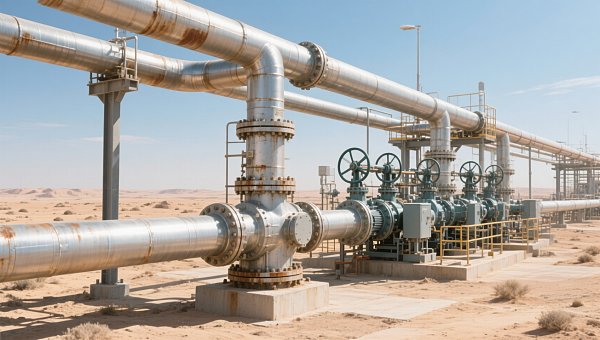
Saudi Arabia’s East-West Crude Pipeline (Petroline) pump station was struck on May 12, 2026, triggering a sharp reduction in export capacity and intensifying global energy supply volatility. The incident has immediate cost implications for industrial energy users worldwide—and particularly for China-based exporters serving high-precision, energy-intensive manufacturing sectors.
Event Overview
On May 12, 2026, a confirmed attack damaged a key pump station along Saudi Arabia’s East-West Crude Pipeline (Petroline). As reported by the Saudi Ministry of Energy and verified by the International Energy Agency (IEA), the facility’s operational capacity declined by approximately 700,000 barrels per day. Brent crude surged to USD 98 per barrel that same day.
Industries Affected
Direct Export Trading Firms
Export trading firms handling finished goods from China’s precision manufacturing clusters—including CNC-machined components and carbon capture system assemblies—are facing tighter margin visibility. With energy-driven logistics and production overheads rising, their ability to honor fixed-price Q3 contracts is increasingly contingent on fuel surcharge clauses and forward hedging arrangements—neither of which are uniformly embedded in legacy agreements.
Raw Material Procurement Enterprises
Enterprises sourcing base metals, specialty alloys, or polymer feedstocks—many of which rely on energy-intensive refining or electrolytic processes—are observing upward pressure on input costs. While spot price adjustments may lag by 2–4 weeks, procurement teams report reduced flexibility in negotiating volume discounts amid tightening regional refining margins and elevated bunker fuel premiums.
Contract Manufacturing & OEM Facilities
Manufacturers engaged in high-precision CNC machining, heat-treated component fabrication, and carbon capture equipment assembly face dual exposure: higher electricity tariffs (linked to gas-fired generation benchmarks) and increased diesel costs for on-site generators and backup power systems. Analysis shows that facilities operating above 65% thermal load factor may see average unit energy cost rise by 8–12% over Q3—potentially affecting delivery lead times if unplanned maintenance or shift adjustments become necessary.
Supply Chain Service Providers
Third-party logistics (3PL) operators, customs brokers, and freight forwarders servicing cross-border industrial shipments are revising transit risk assessments. Observably, marine insurance premiums for Middle East–Asia routes have risen by ~15% week-on-week, while inland drayage providers in Guangdong and Jiangsu are introducing temporary fuel adjustment factors effective June 1. These changes affect documentation turnaround, bonded warehouse utilization, and multimodal handoff reliability.
Key Considerations and Recommended Actions
Review Q3 Contract Terms for Energy-Linked Clauses
Parties with open orders scheduled for delivery between July and September should audit pricing mechanisms—especially whether fuel, electricity, or carbon compliance costs are indexed, capped, or excluded. Where absent, initiate bilateral discussions before mid-June to avoid disputes during shipment execution.
Stress-Test Localized Inventory Buffers
Overseas buyers—particularly in EU and U.S. markets—should reassess minimum viable safety stock levels for critical subassemblies. Current data suggests a 12–18-day buffer better absorbs both upstream energy-driven delays and secondary port congestion risks than standard 7-day models.
Evaluate Short-Term Fuel Hedging Options
For manufacturers consuming >5 GWh/month of grid power or >20,000 liters of diesel weekly, engaging licensed commodity advisors to explore 3-month over-the-counter (OTC) swaps on Dubai crude or Singapore fuel oil futures may mitigate near-term volatility—though counterparty credit and margin requirements warrant due diligence.
Editorial Perspective / Industry Observation
This incident is not primarily a supply shock—it is a stress test of energy resilience architecture across global industrial value chains. From industry perspective, the more consequential impact lies less in absolute output loss and more in how quickly alternative routing (e.g., Red Sea tanker diversions) and regional inventory drawdowns erode confidence in predictable cost baselines. What matters now is not just ‘how much’ oil is missing, but ‘how long’ uncertainty persists—and whether it accelerates strategic shifts toward localized energy procurement and hybrid fuel systems in Tier-2 manufacturing hubs.
Conclusion
The May 12 Petroline disruption underscores that energy infrastructure security is no longer a geopolitical footnote—it is a core determinant of industrial competitiveness, contract enforceability, and supply chain continuity. Rational interpretation points not to imminent crisis, but to a recalibration phase where transparency, clause agility, and scenario-aware planning matter more than historical averages.
Source Attribution
Official statements from the Kingdom of Saudi Arabia Ministry of Energy (May 12, 2026); IEA Emergency Response Report No. ER-2026-05-12; Bloomberg Commodities Flash Data Feed (May 12–13, 2026). Note: Restoration timeline, full operational recovery status, and secondary effects on OPEC+ production coordination remain under active monitoring.
The Archive Newsletter
Critical industrial intelligence delivered every Tuesday. Peer-reviewed summaries of the week's most impactful logistics and market shifts.