Monday, May 22, 2024

Sheet Metal Cutting Tolerances Explained
by
Published
Views:
Sheet Metal Cutting Tolerances Explained
In precision manufacturing, sheet metal cutting tolerances shape part fit, assembly stability, and total production cost.
That matters even more when parts move across suppliers, plants, and quality systems.
A small variation in sheet metal cutting can create rework, scrap, or hidden downstream delays.
This guide breaks down the main tolerance drivers, realistic benchmarks, and practical review points.
The goal is simple: make sheet metal cutting decisions with clearer technical and commercial confidence.
Why sheet metal cutting tolerances matter
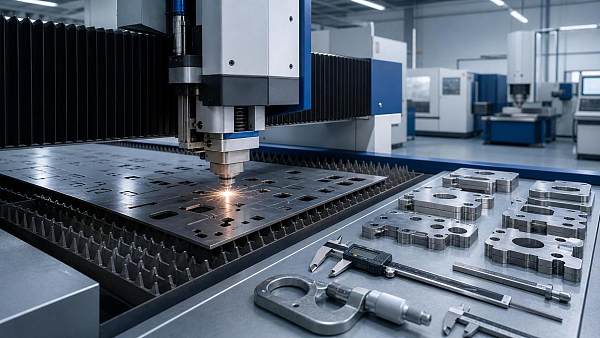
Cutting tolerance is the allowed deviation between the nominal part dimension and the actual cut result.
In real production, this affects hole position, edge quality, bend alignment, and weld preparation.
It also affects whether a part passes inspection without selective sorting.
For low-volume prototypes, wider tolerances may be acceptable if function stays stable.
For repeat production, inconsistent sheet metal cutting quickly becomes a system-level risk.
That is why tolerance review should never be separated from process capability and end-use requirements.
What defines achievable sheet metal cutting tolerance
No single number defines all sheet metal cutting work.
Tolerance depends on the full interaction between material, machine, setup, and geometry.
Material type and thickness
Mild steel, stainless steel, aluminum, copper, and coated sheets do not cut the same way.
Harder materials often increase heat impact, burr risk, and dimensional drift.
As thickness increases, kerf behavior changes and edge taper becomes more visible.
This means the same sheet metal cutting tolerance cannot be assumed across gauges.
Cutting method
Laser cutting usually delivers tighter sheet metal cutting tolerance than plasma or oxy-fuel methods.
Waterjet avoids a heat-affected zone, but speed and taper still influence final dimensions.
Mechanical shearing is fast, but edge distortion can limit precision near critical features.
Turret punching can be highly repeatable, yet tooling wear must be monitored closely.
Part geometry
Simple outer profiles are easier to control than dense patterns with slots, tabs, and micro-features.
Tight internal corners, narrow webs, and small hole diameters usually reduce tolerance stability.
In short, challenging geometry can make nominal sheet metal cutting values look better on paper than in production.
Typical tolerance ranges by cutting process
Recent market changes have made process comparisons more important during sourcing reviews.
A quoted tolerance should always be tied to method, thickness range, and inspection definition.
These are practical ranges, not universal guarantees.
The more useful signal is process capability under controlled production, not a single advertised number.
How standards and drawings shape tolerance decisions
In technical reviews, tolerance is rarely judged from the cut edge alone.
It is judged against drawings, GD&T practice, inspection plans, and customer standards.
General tolerances versus critical tolerances
General tolerances may follow ISO frameworks or supplier default rules.
Critical dimensions need explicit callouts, especially for interfaces, hole patterns, and sealing surfaces.
This helps prevent a common sourcing problem: precise quotes based on vague drawings.
Measurement method
A sheet metal cutting result can appear compliant or noncompliant depending on how it is measured.
Calipers, optical systems, CMMs, and gauges do not capture edges the same way.
Burr presence, edge roughness, and thermal distortion can also affect readings.
That is why measurement protocol should be aligned before supplier comparison begins.
Common tolerance risks in real production
On paper, sheet metal cutting often looks straightforward.
In practice, several risks quietly reduce consistency.
- Machine calibration drift changes actual path accuracy over time.
- Nozzle wear, tooling wear, or dirty optics affect cut width and edge shape.
- Sheet flatness variation shifts focus, height control, and positional stability.
- Nested part density increases heat buildup in laser sheet metal cutting runs.
- Operator changes may alter setup quality, lead-in strategy, or inspection discipline.
A stronger sourcing decision looks at control methods for these risks, not only quoted tolerance bands.
How to evaluate a supplier’s sheet metal cutting capability
A practical review should connect process claims with evidence.
This is where technical benchmarking becomes especially useful.
- Request tolerance by material grade and thickness, not one generic statement.
- Review sample inspection reports for critical dimensions and hole locations.
- Check whether Cp or Cpk data exists for repeated sheet metal cutting jobs.
- Confirm secondary operations, since deburring and bending can change final size.
- Ask how machine maintenance, nozzle replacement, and calibration are documented.
- Compare tolerance promises against actual part complexity and annual volume.
If the supplier cannot link numbers to process controls, the risk profile rises quickly.
More importantly, the best sheet metal cutting partner explains what cannot be held consistently.
Practical ways to improve tolerance outcomes
Better sheet metal cutting results usually come from better design and process alignment.
- Match tolerance levels to function instead of applying tight limits everywhere.
- Avoid very small holes in thick sheet when another feature can achieve the same goal.
- Leave room for bend deduction, edge cleanup, and coating buildup in later stages.
- Standardize datum references so cut features are measured the same way every time.
- Use pilot runs for high-risk geometries before locking commercial supply terms.
This approach usually reduces cost without weakening functional quality.
It also creates more realistic expectations between design teams, buyers, and fabricators.
Final takeaway
Sheet metal cutting tolerance is not just a machine issue.
It is the combined outcome of material behavior, process choice, geometry, standards, and control discipline.
The clearest decisions come from comparing sheet metal cutting capability against real application needs.
When tolerance claims are backed by measurement logic and production evidence, sourcing risk drops sharply.
That is the practical path to stronger quality, smoother assembly, and better long-term manufacturing performance.

The Archive Newsletter
Critical industrial intelligence delivered every Tuesday. Peer-reviewed summaries of the week's most impactful logistics and market shifts.