Monday, May 22, 2024

Spindle Speed Limits That Hurt Surface Finish Before Tool Life
by
Published
Views:
For Industrial strategists and Tier-1 engineers, choosing high-speed machining spindle speed is not only about tool life but also about surface integrity, Industrial transparency, and reliable Cross-sector data. From HDI substrates to broader Infrastructure benchmarking, spindle limits influence Mechanical foundations, material fatigue in hardware, and even validation paths such as metal hardness testing (rockwell), making speed control a critical variable for consistent manufacturing performance.
Why spindle speed limits affect surface finish earlier than many teams expect
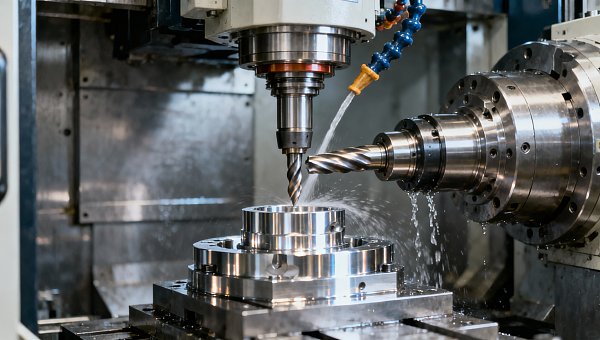
Many machining teams still treat spindle speed as a simple productivity lever. In practice, the upper spindle speed limit often starts hurting surface finish before it shortens tool life enough to trigger attention on the shop floor. That gap matters in electronics, automotive, agri-tech, water infrastructure, and precision tooling because surface finish directly affects sealing behavior, coating adhesion, contact resistance, fatigue initiation, and downstream inspection yield.
The key reason is dynamic instability. A spindle can remain technically operational while already operating in a range where vibration, thermal growth, runout amplification, and chip evacuation instability degrade the machined surface. On paper, the tool may still last for 20–40 minutes or complete a planned batch. Yet the workpiece may show torn material, chatter marks, smeared edges, burr growth, or roughness drift outside the target window.
For information researchers and machine operators, this creates a common decision problem: the spindle speed recommended by a cutter catalog, CAM default, or machine marketing sheet does not always reflect the real limit of the spindle-tool-holder-material system. A high-speed setting that works on one machine with fresh bearings and balanced holders may fail on another machine with different thermal behavior or clamping rigidity within 2–3 production shifts.
This is why GIM approaches spindle speed limits as a benchmarking issue rather than a single-machine parameter. Cross-sector manufacturing now shares common failure patterns. Whether the part is an EV drivetrain feature, an HDI substrate fixture component, an autonomous tractor housing, or a stainless module for environmental infrastructure, the same decision logic applies: stable surface finish usually defines the practical speed ceiling before tool consumption becomes the dominant alarm.
What usually changes first when speed is too high
The first signs are rarely catastrophic. Operators often notice a roughness shift, edge gloss inconsistency, or dimensional drift before flank wear looks severe. In production terms, these are early warnings. If the Ra target is narrow, for example below 0.8 µm on a sealing or bearing-related feature, even a small increase in spindle-induced vibration can create reject risk long before the cutter reaches its expected wear limit.
- Surface waviness increases even when average tool wear appears normal.
- Thermal growth shifts geometry during runs longer than 30–60 minutes.
- Burr formation rises on ductile materials because the chip no longer separates cleanly.
- Fine-feature edges in electronics or thin-wall parts show local tearing before the tool is declared worn.
For procurement and process validation teams, that distinction matters because surface finish failures drive hidden costs. Scrap, rework, unplanned polishing, delayed hardness verification, and extra metrology time may exceed the cost of earlier tool replacement. A spindle speed strategy that looks economical at the cutter level can therefore be expensive at the system level.
Which technical factors set the real spindle speed ceiling in production?
The real spindle speed ceiling is defined by a stack of conditions, not by one RPM number. Material type, tool diameter, overhang, holder balance grade, spindle bearing condition, coolant delivery, and machine structural stiffness all interact. In high-mix manufacturing, this interaction changes quickly. A speed that is safe for aluminum at one diameter may become unstable for hardened steel, fiber-filled composite, or thin stainless sections under the same machine setup.
A practical evaluation should separate three thresholds: the catalog speed zone, the machine-capable speed zone, and the surface-safe speed zone. The first is supplier guidance. The second is what the spindle can physically reach, such as 12,000 rpm, 18,000 rpm, or 24,000 rpm. The third is what maintains finish, geometry, and thermal repeatability across a full production window, often 1 batch, 1 shift, or 1 week of repetitive output.
For operators, the most frequent mistake is assuming that if no alarming noise appears in the first 5–10 minutes, the speed is acceptable. In reality, heat buildup and balance sensitivity may only emerge after a longer cycle or at the end of the holder stack. This is especially common when small tools, long gauge lengths, or high-speed finishing passes are used in cavities, ribs, or thin-wall sections.
The table below summarizes the most common variables that reduce the practical spindle speed ceiling before visible tool failure occurs. These are useful screening factors for both process engineers and sourcing teams comparing machines, holders, and cutting packages.
The takeaway is simple: maximum rpm is not the same as usable rpm. In many production cells, finish-sensitive work is better controlled by backing off 10%–20% from the highest achievable spindle speed, then tuning feed, engagement, and holder quality. That approach often protects both appearance and functional surface integrity without sacrificing overall throughput.
How cross-sector parts change the limit
Electronics and fine-feature components
In electronics-related machining, including fixtures, copper-alloy supports, and precision plate features, local edge quality matters more than gross tool wear. High spindle speed can cause burrs and surface tearing that complicate assembly, cleaning, or contact performance. The practical limit is often set by edge integrity and recast-like smearing, not by the remaining life of the cutter.
Automotive, mobility, and rotating hardware
For automotive and mobility applications, finish on bearing seats, sealing lands, and mating bores may influence NVH, leakage, and fatigue response. If spindle speed raises waviness or thermal drift, the problem may survive assembly and appear later as performance variation. Here, a stable finish window over 500–5,000 parts can be more important than theoretical cycle-time reduction.
Infrastructure, agri-tech, and corrosive-service parts
In stainless, coated, or corrosion-exposed parts used in agriculture and environmental infrastructure, surface finish influences fouling, wear, and cleanability. Excessive speed can create heat tint, micro-tearing, or poor coating reception. These effects may later affect inspection routes, including roughness validation and hardness-related acceptance checks after secondary processing.
How to compare spindle speed decisions: faster cycle time versus better finish stability
Decision-makers usually face a trade-off: should the process run near the advertised spindle capability, or should it stay in a lower but more stable speed band? The answer depends on what costs more in your operation: direct machining time or finish-related variation. For many B2B environments, especially where traceability and downstream assembly matter, stable finish wins more often than raw rpm.
A useful comparison should include at least 5 dimensions: roughness consistency, edge integrity, geometry drift over time, tool consumption pattern, and recovery cost when the process shifts out of control. Operators see the first three during production. Procurement and quality teams usually see the last two after supplier complaints, late-stage rework, or inconsistent incoming inspection results.
The following comparison table helps teams evaluate whether a high spindle speed strategy is truly productive or only appears productive in short trials. It is especially useful during process transfer, supplier benchmarking, or machine procurement reviews across multiple industries.
For cross-sector manufacturers, the third and fourth paths often produce the strongest total result. They align machine capability with quality risk instead of forcing all value from spindle speed alone. GIM’s benchmarking perspective is useful here because the same comparison logic can be applied across components with very different end-use functions but similar precision exposure.
A practical 4-step screening method
- Define the finish-critical features first, not the machine maximum rpm.
- Run at least 3 speed bands, such as baseline, +10%, and -10%, over a meaningful batch length.
- Measure roughness, geometry repeatability, burr level, and tool wear together.
- Select the band that holds output across time, not only on the first few parts.
This method helps avoid a common purchasing trap: buying a spindle package for headline speed while the real production bottleneck remains holder quality, thermal repeatability, or process control. In many cases, the better investment is not more rpm but better stability around the rpm range already in use.
What should buyers and operators check before setting or approving high spindle speed?
If you are approving a process, qualifying a supplier, or setting machine parameters, focus on evidence that links spindle speed to surface finish over time. One of the most reliable ways to reduce risk is to request a documented validation window instead of a single trial result. A sound trial should cover at least 3 elements: speed range, batch duration, and measurement method.
For procurement teams, surface finish risk is often underestimated during RFQ review. Machine builders may specify spindle power and top rpm, while tooling suppliers specify cutting speed, but neither alone confirms the finish-safe limit for your actual part family. This is where GIM’s cross-sector benchmarking approach helps procurement officers compare technical claims against process reality, especially when parts move across regions or supplier tiers.
Operators need a simpler checklist. Before raising spindle speed, confirm holder condition, runout, warm-up routine, workholding rigidity, coolant path, and feature sensitivity. If two or more of these are uncontrolled, increasing rpm usually amplifies instability rather than productivity. In many plants, a 15-minute setup correction prevents far more loss than a 2% cycle-time gain from aggressive speed settings.
The checklist below can be used during process setup, supplier audits, machine acceptance, or troubleshooting. It is intentionally practical for mixed-industry environments where users must compare machining decisions across different product lines and compliance expectations.
5 key checks before increasing spindle speed
- Verify measured runout at the tool tip, especially for small diameters and finishing tools.
- Confirm whether the spindle has completed a repeatable warm-up cycle, typically 10–30 minutes depending on machine design.
- Review feature-specific finish requirements such as Ra, waviness, burr tolerance, or sealing behavior.
- Check whether coolant or air blast reaches the cut zone consistently during the entire toolpath.
- Assess if the validation includes more than first-off parts, ideally one full batch or one representative shift.
Relevant standards and validation logic
Surface finish decisions should also align with the documentation culture of the target industry. Automotive sourcing may expect IATF-aligned process discipline. Electronics suppliers may rely on IPC-related dimensional and cleanliness expectations. General industrial and infrastructure programs may focus more heavily on ISO-based inspection control, documented work instructions, and material verification. Spindle speed selection should fit within that wider quality framework.
In some applications, finish quality also affects later validation paths, including coating checks, leak testing, fit verification, and hardness-related review such as Rockwell-based acceptance after heat treatment. The point is not that spindle speed changes hardness directly, but that poor heat and surface control during machining can complicate interpretation of downstream quality outcomes. That is why finish-safe speed selection supports broader manufacturing transparency.
Common misconceptions, FAQ, and the next step for technical benchmarking
A recurring misconception is that tool life is the best master indicator for spindle speed. It is important, but it is not always the earliest or most expensive failure signal. In finish-critical work, the real alarm often appears in roughness variation, burr behavior, or geometry drift. Another misconception is that a machine rated for high rpm is automatically suitable for all high-speed finishing tasks. The rating only confirms mechanical capacity, not process stability.
A second misunderstanding is that surface finish problems can always be solved later by polishing, deburring, or slower final passes. Those secondary fixes add labor, variability, and inspection burden. They may also hide the original spindle-speed mismatch rather than solve it. In regulated or traceable B2B supply chains, repeated correction loops are usually less desirable than a validated speed window established at the process level.
The most effective long-term strategy is to create a shared language between operators, process engineers, and sourcing teams. GIM supports that need by connecting spindle behavior, surface integrity, benchmarking logic, and cross-industry standards into one decision framework. This is especially valuable when one organization manages multiple product families with different risk profiles but similar machining infrastructure.
FAQ: How do teams usually evaluate spindle speed limits?
How do I know if spindle speed is hurting surface finish before tool life?
Look for finish drift across a batch, not just visible wear on the tool. If roughness, waviness, edge integrity, or burr level becomes unstable while the tool still appears serviceable, the spindle speed is already beyond the surface-safe zone. This often appears within 10–50 parts on sensitive features or later in runs lasting 30–90 minutes.
What speed reduction is usually worth testing first?
A practical first move is to test a 10%–20% reduction from the current high-speed setting while keeping feed strategy and engagement under review. This range is often enough to reduce dynamic instability without creating a major cycle-time penalty. The exact value depends on material, holder quality, and feature sensitivity.
Is high spindle speed more risky for small tools?
Yes, especially when small tools also have long overhang or are used in deep features. Small-diameter tools are more sensitive to runout, balance, and chip recutting. In those cases, surface finish may deteriorate very quickly even if the tool does not fail immediately. That is why micro-feature and fine-finishing work often needs narrower validation windows.
What should I ask a supplier or benchmarking partner to provide?
Ask for a validated operating window that includes spindle speed range, holder and tool setup, material condition, batch length, and inspection method. If relevant, request links to ISO, IATF, or IPC-aligned documentation practices. Also ask whether the recommendation is based on short trials, repeat batches, or a broader benchmark across similar part categories.
Why choose us for spindle-speed benchmarking and decision support
Global Industrial Matrix helps technical teams move beyond generic speed recommendations. We connect machining parameters to cross-sector production realities, from semiconductor and electronics hardware to automotive, smart agri-tech, environmental infrastructure, and precision tooling. That broader view helps users understand when a spindle speed limit is a local machine issue and when it reflects a wider process capability constraint.
You can contact us for parameter confirmation, process benchmarking, supplier comparison, finish-risk review, standard-aligned documentation expectations, sample evaluation logic, and RFQ-stage selection support. If you are deciding between faster cycle time and more stable surface finish, we can help structure the comparison around actual production criteria instead of headline spindle specifications alone.
For teams preparing a new line, transferring a part family, or troubleshooting inconsistent surface quality, it is useful to review 4 items together: spindle speed window, holder and runout condition, feature-specific finish requirement, and validation length. That combined view often reveals whether the next best action is parameter adjustment, tooling change, machine maintenance, or a broader sourcing and compliance review.

The Archive Newsletter
Critical industrial intelligence delivered every Tuesday. Peer-reviewed summaries of the week's most impactful logistics and market shifts.