Monday, May 22, 2024

What to Check Before Investing in Industrial CNC Tools
by
Published
Views:
Before allocating capital to industrial CNC tools, business decision-makers need more than vendor claims—they need a clear view of performance, compatibility, lifecycle cost, and supply chain reliability. In a market shaped by precision demands and cross-industry standards, the right investment can improve output, reduce risk, and strengthen long-term competitiveness. This guide outlines the key factors worth checking before making a purchase.
The core search intent behind “industrial CNC tools” in this context is commercial evaluation. Readers are not looking for a basic definition of CNC equipment. They want a practical framework for assessing whether a tool, machine, or tooling package will deliver measurable business value without introducing avoidable technical or procurement risk.
For enterprise decision-makers, the biggest concerns usually center on production fit, total cost of ownership, quality consistency, lead times, service support, software compatibility, and the credibility of the supplier. The most useful content, therefore, is not generic industry commentary. It is decision-oriented guidance that helps compare options, validate claims, and avoid expensive mistakes.
In this article, the emphasis is on what matters most before investment: application requirements, technical performance, integration with existing operations, lifecycle economics, supplier resilience, compliance, and implementation risk. Broad background explanations are intentionally minimized so the discussion stays useful for procurement leaders, plant managers, and industrial strategists.
Start with the real business case, not the catalog specification
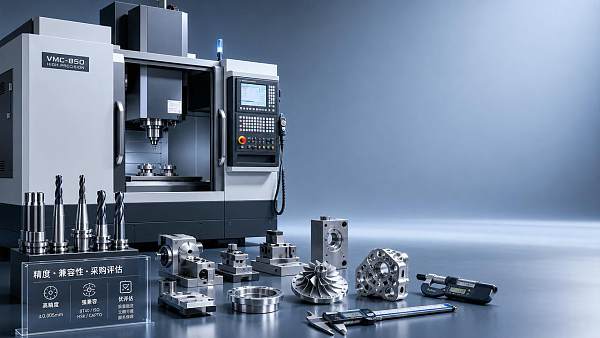
The first thing to check before investing in industrial CNC tools is whether the purchase is tied to a specific operational objective. Many companies begin by comparing spindle speed, axis count, tool material, or tolerance claims. Those specifications matter, but they only matter in relation to a defined business goal.
Ask what problem the investment is supposed to solve. Is the goal to increase throughput on a constrained line, reduce scrap in high-precision work, bring outsourced operations in-house, support a new material, shorten setup time, or improve repeatability for regulated customers? A CNC investment that does not clearly support one of these outcomes often underperforms financially, even if the equipment itself is technically impressive.
For decision-makers, this step is essential because it frames every later comparison. A tool optimized for one production environment may be a poor fit in another. A high-end solution may be justified if it unlocks margin, quality, or strategic capability. In other cases, it may simply add cost and complexity.
Before moving into supplier discussions, define the expected return in operational terms: output per shift, scrap reduction, labor savings, uptime improvement, quality gains, or lead-time compression. That business case becomes the benchmark against which all industrial CNC tools should be evaluated.
Check whether the tool matches your actual materials, tolerances, and production volumes
One of the most common mistakes in CNC purchasing is evaluating equipment or tooling under ideal test conditions rather than real production conditions. A machine or tooling system may perform well in demonstrations but struggle with your mix of materials, part geometries, coolant environment, duty cycle, or tolerance expectations.
Start with the workpiece material. Aluminum, hardened steel, stainless steel, titanium, engineering plastics, composites, and specialty alloys all place different demands on cutting tools, spindle stability, tool holders, coolant strategy, and wear resistance. Industrial CNC tools that perform well in general machining may not deliver acceptable tool life or surface finish in more demanding applications.
Tolerance requirements deserve equal attention. If your customer contracts or internal quality standards require tight dimensional repeatability, you need more than nominal machine accuracy. You need process stability over time, thermal control, vibration management, reliable fixturing, and tooling consistency across production runs.
Production volume also changes the economics. For low-mix, high-volume environments, durability, cycle time, and automation compatibility may be more important than flexibility. For high-mix, lower-volume operations, setup speed, programmability, and changeover efficiency may deliver more value than peak cutting performance alone.
In practical terms, companies should ask suppliers for application-specific data: tool life benchmarks, documented tolerances on similar parts, cycle time data, and performance evidence under comparable material and production conditions. The closer the benchmark is to your real environment, the more useful it is.
Evaluate machine and tooling compatibility across your existing production system
Industrial CNC tools do not operate in isolation. Their value depends heavily on how well they fit into your current manufacturing ecosystem. Compatibility problems can quietly erode ROI through downtime, rework, retraining, and integration delays.
Begin with machine compatibility. Confirm that the tooling works with your spindle interface, holders, collet systems, coolant delivery setup, machine envelope, controller capabilities, and programmed feeds and speeds. If the tooling requires upgrades to holders, balancing, probing, coolant pressure, or software, those costs need to be included in the investment decision.
Next, assess digital compatibility. If your operation depends on CAM software, tool management systems, MES platforms, or condition monitoring, the new CNC tools should fit into that data flow. Even a high-performing tool can become inefficient if tool data cannot be standardized, tracked, or synchronized with planning and quality systems.
This is particularly important for larger organizations operating across multiple plants or global supply networks. Standardized tooling and compatible data structures can reduce training burden, simplify spare management, and improve cross-site benchmarking. For decision-makers, system fit often matters as much as individual product performance.
Look beyond purchase price to the full lifecycle cost
Many procurement decisions still overweight initial acquisition cost. That is risky. The lowest-priced industrial CNC tools are not necessarily the most economical once tool wear, downtime, scrap, maintenance, and replacement cycles are considered.
Total cost of ownership should include the purchase price, installation or qualification cost, tooling consumption rate, maintenance requirements, spare availability, operator training, programming adjustments, energy implications where relevant, and the cost of any process instability introduced by the new system.
Tool life is especially important. A lower-cost tool that wears out quickly, generates inconsistent finishes, or requires frequent stoppages may cost far more over a year than a premium alternative. Likewise, if a CNC solution reduces cycle time by even a small percentage on a bottleneck process, the productivity gains can justify a higher up-front price.
Decision-makers should ask suppliers to support cost analysis with real operating assumptions. This means estimating cost per part, expected wear intervals, maintenance windows, setup time impact, and scrap risk. A cost model tied to actual production volume is far more informative than a discount on list price.
Verify supplier credibility, support depth, and supply chain resilience
Even technically sound industrial CNC tools can become a liability if the supplier lacks consistency, service capacity, or supply chain stability. In recent years, procurement leaders have learned that vendor reliability is not a soft factor. It is a strategic risk variable.
Check the supplier’s manufacturing footprint, lead-time performance, local or regional support presence, and track record in your industry. Can they provide engineering support during commissioning? Do they have application specialists who understand your material and process requirements? Is spare stock available within a practical timeframe?
It is also worth evaluating whether the supplier depends on vulnerable upstream sources for critical components, coatings, inserts, electronics, or specialty materials. A CNC tool that is easy to buy once but difficult to replenish during market disruption can put production continuity at risk.
For enterprise buyers, references matter. Ask for case studies or customer examples involving similar part complexity, quality standards, and production scale. A credible supplier should be able to discuss implementation results in concrete terms rather than relying solely on broad performance claims.
Confirm quality assurance, standards compliance, and traceability
In industrial manufacturing, especially in sectors linked to automotive, electronics, aerospace-adjacent production, infrastructure, or regulated export markets, compliance is not optional. Before investing, confirm whether the supplier’s quality systems align with your own obligations and your customers’ requirements.
This may involve ISO-certified quality systems, batch traceability, calibration documentation, dimensional inspection records, coating consistency data, and process validation procedures. If a CNC tool will be used in applications where quality escapes create warranty exposure or regulatory risk, traceability becomes a major decision factor.
Buyers should also examine the repeatability of production quality across lots and facilities. It is not enough for a tool to perform well in a single sample. The supplier should demonstrate manufacturing discipline that supports consistent performance over time.
For companies working across global sourcing networks, this point has additional importance. Standardized quality documentation can reduce supplier onboarding time, strengthen audit readiness, and support smoother qualification across multiple plants.
Assess implementation risk before signing the order
A strong investment case can still fail during rollout if implementation risk is underestimated. Before purchase, evaluate what the transition will demand from engineering, operations, maintenance, quality, and procurement teams.
Will the new tool require process redevelopment, updated cutting parameters, operator retraining, fixture changes, new inspection routines, or pilot runs before stable production is reached? How long will qualification take? What is the contingency plan if early performance falls short?
This matters because hidden implementation burdens can delay payback. A tool that looks efficient on paper may create short-term disruption that affects delivery performance or quality targets. For that reason, prudent buyers often phase adoption through controlled pilot programs or limited-cell deployment before committing to a full-scale standardization strategy.
It is also wise to define success criteria in advance. For example, the tool should achieve a target cycle time, maintain a specific tolerance range, reduce scrap by a defined percentage, or remain stable over a set number of operating hours. Clear metrics reduce ambiguity and make supplier accountability easier to manage.
Use a structured comparison process to avoid subjective decisions
When several industrial CNC tools appear technically viable, structured evaluation becomes the difference between disciplined investment and opinion-driven selection. Business decision-makers benefit from a weighted scorecard that compares options across technical, operational, financial, and supply chain dimensions.
A useful framework may include: application fit, tolerance capability, cycle time impact, tool life, software compatibility, required upgrades, supplier support, lead-time stability, total cost of ownership, and compliance readiness. Each factor can be weighted based on your operating priorities.
This method helps organizations avoid overvaluing a single headline feature while overlooking larger business risks. It also improves internal alignment between procurement, manufacturing engineering, plant leadership, and finance, since the decision criteria are visible and comparable.
For multi-site or multinational companies, a structured review process creates an additional benefit: repeatability. It turns CNC procurement into a more transparent, benchmarkable discipline rather than a series of one-off purchasing events.
Questions every buyer should ask before investing in industrial CNC tools
Before final approval, decision-makers should pressure-test the purchase with a concise set of questions. These questions often reveal whether the solution has been properly validated or whether the organization is still relying too heavily on assumptions.
What exact operational problem does this tool solve, and how will success be measured? Has the supplier demonstrated performance on our materials, geometries, and tolerance requirements? What changes will be required in machines, software, holders, training, or quality control? What is the expected cost per part compared with our current process?
How stable is the supplier’s delivery capability? Are spare parts, inserts, or support engineers accessible within acceptable timeframes? What quality documentation and traceability are available? If the first implementation underperforms, what corrective support and escalation path are in place?
If these questions cannot be answered clearly, the investment case is not yet ready. In capital-intensive manufacturing, uncertainty should be reduced before purchase, not managed afterward through avoidable disruption.
Conclusion: the best CNC investment is the one that strengthens operations over time
Choosing among industrial CNC tools is not just a technical buying decision. It is an operational strategy decision with implications for cost, quality, resilience, and long-term competitiveness. The strongest investments are rarely defined by the most aggressive sales pitch or the lowest quoted price. They are defined by fit, evidence, and the ability to perform reliably inside your real production system.
For enterprise decision-makers, the smartest approach is to evaluate CNC tools through four lenses at once: production suitability, lifecycle economics, supplier reliability, and implementation risk. When those areas are examined carefully, the purchase is far more likely to support throughput, reduce variability, and improve supply chain confidence.
In a manufacturing environment shaped by tighter tolerances, cross-industry standards, and rising pressure for operational resilience, disciplined evaluation is a competitive advantage. Before investing, make sure the tool is not only capable of cutting material, but capable of advancing the business case behind the purchase.
The Archive Newsletter
Critical industrial intelligence delivered every Tuesday. Peer-reviewed summaries of the week's most impactful logistics and market shifts.