Monday, May 22, 2024

When do CNC milling machines lose accuracy during long runs?
by
Published
Views:
When CNC milling machines lose accuracy during long runs, the impact extends beyond precision tooling to electronic components, automotive technology, and even ISO standards compliance. For teams evaluating plastic injection molds, smart power grids, water purification, wastewater treatment, Sustainable agriculture, or carbon capture systems, understanding drift, heat buildup, and wear is essential to reducing risk, improving quality, and making smarter procurement and operating decisions.
Why do CNC milling machines lose accuracy during long runs?
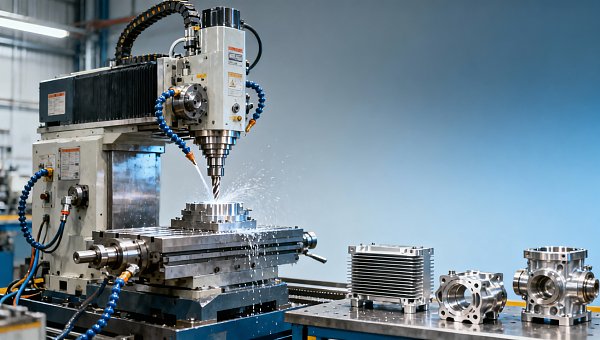
A CNC milling machine rarely loses accuracy because of one single fault. In most long-run situations, the problem is cumulative. Heat expands spindle components, ballscrews change behavior, guideways experience friction shifts, cutting tools wear gradually, and workholding can relax under vibration. Over 4–8 hours of continuous production, these small changes can stack into visible dimensional drift, poorer surface finish, and unstable repeatability.
For operators and quality teams, the first warning is often not a machine alarm. It may appear as a 0.01–0.05 mm size trend, unexpected burr formation, edge taper, or a rising scrap rate on the last third of a shift. For procurement managers and project owners, that means the true issue is not only machine precision on day one, but process stability across long duty cycles, material changes, and variable ambient conditions.
This matters across industries. In electronics, fixture drift can affect connector housings and heat sink flatness. In automotive and mobility, long-run deviation can compromise sealing faces, bearing fits, and battery enclosure interfaces. In smart agri-tech and environmental infrastructure, accuracy loss can distort pump bodies, filtration parts, manifolds, and bracket systems that depend on consistent interchangeability.
GIM approaches this issue as a cross-sector benchmarking problem. Instead of treating precision tooling in isolation, we compare how thermal stability, maintenance discipline, material behavior, and compliance requirements interact across semiconductor tooling, automotive production, water treatment hardware, and industrial ESG infrastructure. That wider view helps decision-makers identify whether the root cause is equipment design, process setup, operator practice, or supplier capability.
The most common long-run accuracy loss mechanisms
- Thermal growth in the spindle, spindle housing, table, and ballscrews during continuous cutting, especially when coolant control is inconsistent or shop temperature swings exceed typical 2°C–5°C ranges.
- Progressive tool wear, which changes cutting forces and tool geometry over a batch of 50, 200, or 1,000 parts depending on the material, coating, feed strategy, and chip evacuation quality.
- Backlash growth, lubrication inconsistency, or guideway contamination, all of which can reduce positioning repeatability during long production windows.
- Workholding instability caused by clamp relaxation, fixture heating, vibration, or uneven loading across multiple cavities or multiple stations.
Why long-run accuracy matters more than nameplate precision
A machine may demonstrate excellent accuracy in a short acceptance test, yet still struggle in real production. That gap is critical for technical evaluators and finance approvers. A short test may last 30–60 minutes, while actual production may run for 10–20 hours per day, 5–6 days per week. If the process drifts after warm-up, downstream inspection, rework, and line balancing costs can rise far beyond the original equipment savings.
For distributors, agents, and end users, this also affects support expectations. Machines installed in climate-controlled electronics plants behave differently from machines placed near foundry operations, agricultural equipment fabrication, or water infrastructure workshops. The same CNC milling machine can deliver different long-run performance depending on thermal load, dust, humidity, coolant management, and maintenance maturity.
Which factors should operators, engineers, and buyers track first?
The fastest way to diagnose CNC milling machine accuracy loss is to separate machine-related drift from process-related drift. Teams often jump directly to calibration, but in practice, accuracy change usually comes from a combination of machine temperature, tool life variation, part material inconsistency, and inspection timing. Tracking 5 core variables over 2–3 production cycles gives a much better picture than looking at a single nonconforming part.
A structured review is especially valuable in multi-industry sourcing. A procurement team comparing suppliers for mold inserts, EV busbar fixtures, wastewater valve bodies, or precision agri-tech housings needs to know whether the supplier can hold tolerance only on sample runs or across stable production. That is where process evidence becomes more useful than brochure claims.
The table below summarizes practical indicators that quality managers, project leaders, and purchasing teams can use when evaluating long-run accuracy risk. These indicators are relevant whether the machine is used for aluminum, stainless steel, engineering plastics, or mixed-material production.
For most users, the practical takeaway is simple: if you do not log these factors, you cannot distinguish true machine inaccuracy from process instability. GIM often sees sourcing discussions stall because suppliers provide nominal tolerance claims but not long-run process evidence such as warm-state inspection records, maintenance intervals, or tool life control plans.
A 4-step check sequence before blaming the machine
- Measure the first-off, mid-run, and end-of-run parts under the same inspection conditions to identify whether drift is linear, sudden, or random.
- Review tool wear records and spindle load trend over the last 1–3 batches to see whether cutting forces changed before dimensional failure appeared.
- Check coolant concentration, lubrication logs, and environmental temperature records from the same production period.
- Confirm fixture repeatability by unloading and reloading a master part or gauge feature several times under the same clamping sequence.
This sequence helps technical assessment teams reduce unnecessary service calls and gives buyers stronger evidence when comparing supplier process capability. It also improves communication between operators, maintenance staff, and quality auditors who may otherwise focus on different symptoms instead of the same root cause.
How does long-run accuracy affect different industries and compliance needs?
Long-run CNC milling machine accuracy is not only a tooling issue. It influences product function, documentation burden, and supplier risk across multiple sectors. In semiconductor and electronics-related parts, flatness, hole position, and thermal interface geometry can affect assembly yield. In automotive and mobility, sustained tolerance control supports interchangeability, leak prevention, and downstream fastening reliability. In environmental systems, machined interfaces can affect sealing, alignment, and maintenance access.
This is where a broad benchmarking platform becomes useful. GIM connects machining performance to the larger system context: ISO-oriented process control, IATF-linked automotive expectations, IPC-adjacent electronics quality discipline, and supplier transparency needs for global sourcing teams. Buyers increasingly ask not just whether a part can be machined, but whether it can be produced repeatedly under traceable controls over 3 months, 6 months, or a full program cycle.
The following comparison table helps teams understand how the consequences of accuracy loss change by application. This supports better RFQ requirements, more realistic inspection plans, and smarter acceptance criteria for suppliers serving different industrial segments.
The key insight is that the same 0.02 mm drift does not carry the same business consequence in every industry. A deviation that is manageable in a general bracket may be critical in a battery plate, a mold insert, or a sealing surface. That is why cross-sector technical benchmarking matters for sourcing and risk evaluation.
Standards and process discipline buyers should consider
Useful compliance questions during supplier evaluation
- Does the supplier link dimensional checks to a defined control plan, such as first article, in-process checks every set interval, and final lot verification?
- Are measurement methods aligned with the part risk level, for example calipers for noncritical features and CMM or functional gauges for tighter interfaces?
- Can the supplier show how machine warm-up, maintenance, and tool change intervals are controlled across 1 shift and multi-shift production?
- Are records sufficient to support ISO, IATF, IPC-related, or customer-specific documentation needs without rebuilding the traceability chain later?
These questions do not require a supplier to claim special certifications beyond what is actually held. They simply test whether the machining process is mature enough for repeatable industrial supply. That distinction helps finance and procurement teams avoid overpaying for marketing language while still protecting quality and compliance goals.
What should procurement teams compare before selecting a CNC milling supplier or machine?
When buyers compare CNC milling machines or outsourced machining suppliers, they often focus on initial precision, spindle speed, or quoted tolerance. Those metrics matter, but they are incomplete. For long-run accuracy, the better comparison framework includes 3 categories: thermal stability, process control maturity, and support responsiveness. This is especially important when delivery windows are 2–6 weeks and there is limited time for process revalidation.
For enterprise decision-makers, the hidden cost is usually not the machine price itself. It is the cost of scrap, line interruption, customer complaints, expedited shipping, repeated PPAP-like documentation efforts, and field replacement risk. A lower purchase price can become expensive if the machine or supplier cannot hold stable dimensions across long production hours.
The checklist below is useful for buyers, distributors, and technical reviewers assessing whether a machine platform or machining partner is appropriate for long-run work in mixed industrial applications.
5-point procurement checklist for long-run accuracy
- Confirm warm-state performance, not only cold-start accuracy. Ask for dimensional data from at least three points in the run: startup, mid-run, and end-run.
- Review maintenance structure. Daily cleaning, weekly lubrication checks, and monthly condition reviews often separate stable production from drifting output.
- Evaluate tool management. A supplier should define wear limits, replacement triggers, and offset update rules instead of relying on operator intuition alone.
- Check fixture strategy. Multi-part fixtures and high-throughput setups need repeatability validation, not just clamping convenience.
- Align inspection and documentation with the actual risk. Critical features may require higher check frequency during the first 20–50 pieces of a batch and then adjusted monitoring later.
Cost thinking: cheaper machine, higher process risk?
A lower-cost CNC milling machine or supplier may still be the right choice for low-duty, low-risk parts. But if the production involves tight bores, sealing faces, mold components, or assembly-critical datums, long-run process capability should carry more weight than nominal price. This is where GIM helps teams compare not just machine claims, but application fit across precision tooling, automotive mobility systems, industrial utilities, and sustainability infrastructure.
A sound sourcing decision often comes from matching the machine or supplier to the duty profile. For prototype work, short-run flexibility may be enough. For repeat programs running 8–16 hours continuously, thermal behavior, maintenance readiness, and inspection discipline become strategic purchasing criteria rather than secondary details.
FAQ: common misunderstandings about CNC milling machine accuracy during long runs
Many teams discover accuracy loss only after scrap or customer complaints appear. The questions below reflect common search intent from operators, sourcing teams, project managers, and quality personnel who need practical answers rather than generic machining advice.
How long can a CNC milling machine run before accuracy starts to drift?
There is no single threshold because drift depends on machine construction, spindle load, material, tooling, ambient conditions, and maintenance status. Some processes stabilize after a 20–40 minute warm-up, while others show gradual change after 3–6 hours of continuous cutting. The more useful question is whether the process remains within tolerance from first-off to end-of-run under actual production conditions.
Is thermal growth always the main reason for lost accuracy?
Thermal growth is one of the most common causes, but not the only one. Tool wear, fixture movement, lubrication issues, chip buildup, and inconsistent inspection methods can create similar symptoms. That is why a 4-step diagnosis sequence is more reliable than adjusting offsets immediately after seeing one out-of-tolerance part.
What should quality teams inspect during a long production run?
Focus on critical dimensions, not every feature. In many industrial applications, 3–6 features determine functional fit: bore size, positional accuracy, flatness, parallelism, sealing face geometry, or datum relationship. A practical plan includes first-off approval, in-process checks at defined intervals such as every 1–2 hours or every fixed part count, and end-of-run confirmation under consistent measurement conditions.
Can software compensation solve long-run accuracy loss?
Compensation can help manage predictable drift, but it should not be treated as a substitute for stable mechanics and disciplined process control. If the root cause is contamination, worn guideways, unstable fixturing, or poorly controlled tool life, compensation may mask the issue temporarily while making long-term variation harder to understand.
Why work with GIM when evaluating long-run CNC milling accuracy?
GIM supports companies that need more than isolated machining advice. Our value lies in connecting precision tooling performance to the broader realities of global manufacturing: supplier risk, compliance expectations, cross-industry application fit, and operational efficiency. That matters when a machined part sits inside a larger system such as EV assemblies, HDI electronics support hardware, water treatment modules, smart agriculture platforms, or industrial ESG infrastructure.
For information researchers and technical evaluators, we help clarify which performance signals truly matter. For procurement and finance teams, we support better comparisons between price, process maturity, and lifecycle risk. For operators, project leaders, and quality managers, we help translate field symptoms into actionable evaluation criteria that suppliers and machine builders can actually answer.
You can contact GIM to discuss parameter confirmation, supplier benchmarking, machining process risk review, tolerance feasibility, inspection planning, delivery cycle expectations, and cross-sector compliance considerations. If you are comparing options for mold tooling, electronics hardware, automotive components, filtration modules, or custom industrial parts, we can help structure the decision around long-run stability rather than short-term claims.
A productive inquiry usually starts with 5 inputs: part material, critical tolerances, expected batch size, daily run time, and documentation requirements. With that information, GIM can help you assess whether the challenge is machine selection, supplier qualification, process control, or a broader sourcing strategy issue. That leads to faster quotation alignment, fewer assumption gaps, and stronger decisions before production risk becomes expensive.
- electronics
- electronic components
- Mobility
- automotive technology
- Agri-Tech
- Industrial ESG
- wastewater treatment
- water purification
- carbon capture
- smart power grids
- CNC milling machines
- plastic injection molds
- Precision tooling
- Technical benchmarking
- Smart Agri-Tech
- ISO standards
- Operational efficiency
- Global manufacturing
- Sustainable agriculture
- Environmental infrastructure
- ISO standards compliance

The Archive Newsletter
Critical industrial intelligence delivered every Tuesday. Peer-reviewed summaries of the week's most impactful logistics and market shifts.