Monday, May 22, 2024

When does investing in processing machinery actually lower unit cost?
by
Published
Views:
Investing in processing machinery lowers unit cost only when the machine will be used enough, run steadily enough, and improve enough parts of the operation at once to offset its full ownership cost. That usually means more than faster output. The real savings show up when throughput rises, labor per unit falls, scrap becomes more predictable, downtime stays under control, and the line can absorb demand without constant firefighting. If those conditions are missing, a new machine can easily make the balance sheet heavier without making each unit cheaper.
That is the part many buying teams underestimate. The machine itself is visible, quoted, and easy to compare. The economic tipping point is less obvious. It sits inside utilization, changeover loss, maintenance discipline, material yield, staffing patterns, and order stability. For a business leader deciding whether to expand capacity, replace manual work, or standardize production, that tipping point matters more than the vendor’s headline output rate.
Where unit cost actually moves
In practice, unit cost falls when a machine improves the cost structure of the whole process, not just one station. A processor that runs twice as fast on paper may not reduce cost if upstream feeding, downstream packaging, inspection, or internal logistics stay constrained. The bottleneck simply moves.
A short answer is this: processing machinery starts to pay back when the added fixed cost is spread across enough good units, and when variable costs per unit genuinely decline. That sounds simple, but it forces a much better question than “Is this machine more advanced?” The better question is “Will this machine produce enough stable, saleable output in our real operating conditions?”
There are five levers that usually decide the answer:
- Utilization: how many hours the asset will truly run at productive load.
- Labor efficiency: whether it removes repetitive touch labor, supervision burden, or rework handling.
- Yield and quality stability: whether it reduces scrap, defect variation, and customer rejects.
- Maintenance economics: whether uptime is high enough and spare parts support is realistic.
- Volume consistency: whether demand is steady enough to absorb the installed capacity.
If only one of these improves, savings are often disappointing. When three or four improve together, unit cost can shift materially.
Processing machinery is usually cheaper per unit at the point where fixed cost gets diluted
Most executives already understand the broad idea: automation and mechanization add fixed cost and aim to reduce variable cost. The mistake is assuming that any increase in throughput automatically creates lower cost per piece.
It does not. Fixed cost dilution only works when output is real, sellable, and repeatable. A machine rated for high-volume operation but used for short runs, frequent recipe changes, or unstable order patterns can leave you paying for idle capacity. In that situation, the cost per unit may rise even if the technical capability of the asset is impressive.
One useful internal test is to compare three numbers before approving capital expenditure:
- Current fully loaded cost per good unit
- Expected cost per good unit at realistic utilization, not ideal utilization
- Expected cost per good unit in a downside case, such as lower demand or slower ramp-up
The phrase “good unit” matters. Procurement teams sometimes model output in gross pieces per hour, while operations teams live with scrap, trial runs, startup waste, and cleaning downtime. Those are not side details. They are often the difference between a healthy payback and a disappointing one.
For example, a food processor, plastics converter, or precision component manufacturer may all buy faster equipment for different reasons, yet the economics hinge on the same issue: can the operation convert rated capacity into saleable output without adding hidden losses elsewhere?
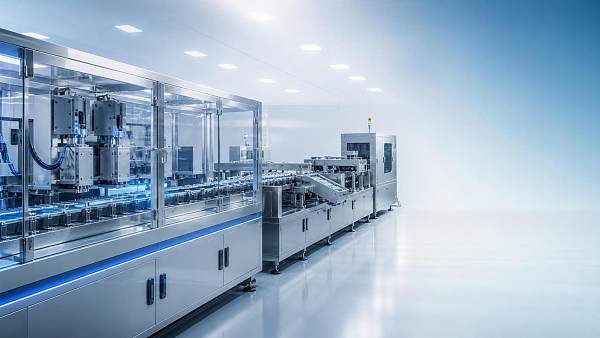
When higher throughput does not create savings
There is a pattern that comes up often in capital reviews. A company sees a labor-intensive step, receives a proposal for upgraded processing machinery, and builds the business case around speed. Then six months later, the line is not delivering the expected cost reduction.
The usual reasons are familiar:
- The machine is oversized for actual order volume.
- Product mix changes too often, creating setup loss.
- Operators were reduced on paper, but support labor quietly increased.
- Maintenance requires specialist intervention that was not budgeted properly.
- Material variation prevents stable high-speed operation.
- Quality inspection remains manual, slowing the flow.
This is why the cheapest unit cost often appears later than expected. Ramp-up takes time. Programs need tuning. Operators need training. Tooling needs refinement. Spare parts stocking needs discipline. If the purchase decision was built on best-case assumptions, the line may still improve operations while missing the promised cost target.
None of that means the investment was wrong. It means the business case was incomplete.
The strongest cases for investing
Processing machinery tends to lower unit cost fastest in a few specific situations.
First, when demand is stable and volume is high enough to keep the asset loaded. This is the cleanest case because fixed cost spreads naturally. If a line can run near planned capacity over a sustained period, the economics are much easier to defend.
Second, when manual production is creating expensive inconsistency. In sectors where dimensional control, thermal control, dosing accuracy, or contamination risk matter, a machine can reduce more than labor. It can stabilize output, lower scrap, reduce warranty exposure, and simplify compliance documentation. Those savings are less visible in a purchase quote, but very real in operating margin.
Third, when labor availability is already constraining output. In some plants, the issue is not wage rate alone. It is turnover, training burden, ergonomic risk, absenteeism, or dependence on a small number of experienced operators. In that environment, processing machinery may lower unit cost indirectly by making production more predictable.
Fourth, when the new asset replaces several fragmented steps. A machine that integrates forming, filling, sorting, trimming, curing, or inspection can remove transfer delays and handling damage. Integration often creates a better cost outcome than buying one faster standalone machine into a weak process.
Where decision-makers get misled
One common mistake is using vendor cycle time as the main benchmark. Cycle time matters, but procurement decisions should be based on effective throughput, which reflects changeovers, cleaning, warm-up time, operator intervention, scrap events, preventive maintenance windows, and actual uptime.
Another mistake is ignoring the cost of complexity. More advanced processing machinery can unlock better control, traceability, and output consistency, but it can also introduce software integration work, more demanding maintenance routines, and narrower tolerance for poor input material. Buying a sophisticated asset into an undisciplined production environment can expose process weakness rather than fix it.
There is also a financial blind spot around underutilization. Many teams compare the cost of doing today’s volume manually against the cost of processing tomorrow’s volume on a machine. That sounds reasonable, but it quietly assumes tomorrow’s volume will arrive on schedule. If it does not, the payback period stretches fast.
That is why scenario planning matters. For capital equipment, the base case should not be the only case.
What to validate before you sign the PO
Before committing to a machine, it helps to pressure-test the economics through operations, quality, procurement, and maintenance together. Not in separate slides. In one conversation.
Focus on questions like these:
- What weekly output level is required for cost parity with the current process?
- How many saleable units per shift are realistic after setup, cleaning, and downtime?
- Will labor actually be removed, or just reassigned nearby?
- What spare parts, consumables, tooling, and service contracts are mandatory?
- How sensitive is performance to raw material variation?
- What happens if demand stays 20% below plan for the first year?
If clear answers are not available, the buying process is still too early. That may sound strict, but it is cheaper than discovering later that a strong machine was placed into the wrong operating model.
In more complex manufacturing environments, especially where electronics, mobility systems, agri-tech hardware, or infrastructure components overlap, benchmarking across adjacent industries can improve judgment. This is one reason platforms such as Global Industrial Matrix (GIM) are useful to procurement and strategy teams. When a business can compare equipment capability, standard alignment, and operational assumptions across sectors rather than in isolation, it becomes easier to spot where a supplier quote is realistic and where it is optimistic.
Not every plant should automate this step now
Sometimes the right answer is to wait.
If demand is volatile, product designs are still changing, margins are uncertain, or the current process is not yet standardized, large investments in processing machinery can lock the business into the wrong configuration. A semi-automated step, a tooling upgrade, better fixtures, or tighter process control may produce better short-term economics with less capital risk.
This is especially true for companies moving from pilot scale to early commercial scale. Many assume that buying larger machinery is the next logical move. In reality, scale only helps when the surrounding system is mature enough to support it.
That is why experienced buyers look at readiness, not just ambition.
How experienced buyers frame the decision
The better procurement teams rarely ask, “Is this machine worth the money?” They ask, “Under what operating conditions does this machine become the lower-cost option, and how confident are we that those conditions will hold?”
That framing changes the discussion. It moves the decision away from sales claims and toward operating evidence. It also helps reconcile the priorities of finance, engineering, and production. Finance wants payback. Engineering wants capability. Operations wants reliability. The right investment in processing machinery should satisfy all three well enough to be durable, not just persuasive in a capex meeting.
If you are close to the tipping point, build the case around verified throughput, quality yield, serviceability, and realistic loading. If you are far from it, forcing the investment early usually creates a more expensive unit, not a cheaper one.
FAQ
How do I know if a machine is oversized for my plant?
If your expected order volume will leave the asset lightly loaded for long periods, or if your mix requires frequent changeovers, oversizing is a real risk. Rated capacity alone is not a buying signal.
Should labor savings be the main justification?
No. Labor matters, but the stronger cases combine labor reduction with better yield, more stable quality, and higher usable throughput.
Can used processing machinery still lower unit cost?
Yes, if uptime, parts availability, and process fit are strong. A cheaper purchase price does not help if maintenance risk creates unstable output.
What is the biggest hidden cost after installation?
Many plants underestimate ramp-up loss: tuning, operator learning, startup scrap, and service dependency in the first months of operation.
Image Placeholder List
- - Suggested placement: after the section explaining where throughput assumptions break down. Suggested image: a simple cost curve or factory decision chart showing utilization, throughput, scrap, and maintenance effects on unit cost. Suggested alt text: “Break-even view for processing machinery investment and unit cost reduction.”
Internal Link Anchor Text Suggestions
- benchmarking industrial equipment performance: equipment benchmarking or technical comparison page
- how to evaluate total cost of ownership in manufacturing: procurement guide or cost analysis page
- production line utilization metrics: operations efficiency resource page
- ISO IATF IPC standards in equipment selection: compliance or standards reference page
- capital equipment sourcing strategy: industrial procurement strategy page
External Authoritative Source Suggestions
- International standards organization materials covering equipment, quality, and process control requirements
- Industry association reports on manufacturing productivity, automation, and maintenance practices
- OEM technical documentation and official service manuals for the machinery category being evaluated
The Archive Newsletter
Critical industrial intelligence delivered every Tuesday. Peer-reviewed summaries of the week's most impactful logistics and market shifts.