Monday, May 22, 2024

Agricultural Insights That Make Distributor Portfolios Easier to Build
by
Published
Views:
Agricultural insights are becoming essential for distributors, agents, and portfolio managers who need to identify reliable products, reduce sourcing risks, and respond faster to shifting market demand. By combining technical benchmarking, supply chain visibility, and cross-sector intelligence, GIM helps channel partners build stronger agricultural portfolios with greater confidence, sharper positioning, and better long-term commercial outcomes.
For channel partners in modern agri-tech, the challenge is no longer just finding products to sell. It is selecting the right mix of equipment, components, and support capabilities across irrigation, precision farming, autonomous machinery, sensing systems, water treatment, and field infrastructure. In many regions, buying cycles now compress into 30–90 day windows, while end users expect faster delivery, better technical documentation, and clearer lifecycle value.
That is where agricultural insights become commercially useful. For distributors, they turn scattered market signals into structured decisions: which product lines deserve shelf space, which suppliers carry hidden risk, what technical standards matter in target markets, and how to build a portfolio that remains relevant through seasonal volatility, regulatory change, and evolving farm economics.
Why Agricultural Insights Matter More in Portfolio Planning
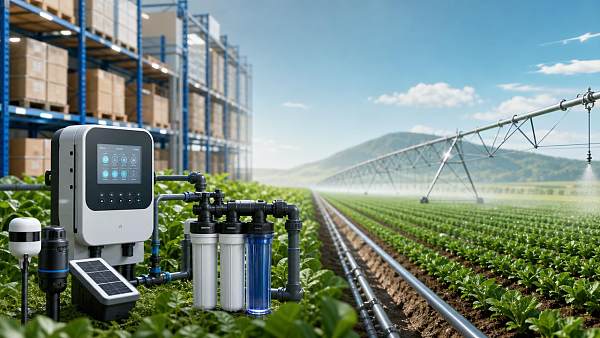
Distributors serving agriculture operate at the intersection of product performance, regional demand, and supply chain consistency. A portfolio that looks attractive on paper can fail quickly if lead times stretch from 2 weeks to 8 weeks, spare parts are inconsistent, or field performance varies under heat, dust, moisture, or unstable power conditions. Agricultural insights help reduce that mismatch before capital is committed.
In practical terms, these insights combine 4 decision layers: technical suitability, supplier resilience, compliance fit, and commercial timing. GIM supports this process by connecting smart agri-tech with adjacent sectors such as electronics, automotive-grade controls, filtration systems, and precision tooling. That cross-sector view is critical because modern agricultural hardware increasingly depends on sensors, embedded control units, power electronics, and durable fabricated assemblies.
From Product Catalogs to Decision Intelligence
Traditional sourcing often focuses on price lists and supplier promises. However, agricultural portfolios are exposed to more variables than many industrial categories. Seasonal stocking must align with planting or harvest cycles, replacement demand can spike in less than 14 days, and product failure in the field can damage channel reputation far more than a delayed office purchase ever would.
Strong agricultural insights move the conversation from “What can we buy?” to “What can we distribute reliably over the next 12–24 months?” This includes benchmarking durability, expected service intervals, software compatibility, packaging suitability, traceability, and standard documentation. It also includes evaluating whether the supplier can scale from pilot orders of 50 units to repeat volumes of 500 or more without quality drift.
Common Portfolio Risks for Distributors and Agents
The table below outlines recurring risk areas that agricultural insights can help identify before a distributor expands a product range or appoints a new principal.
The key lesson is that agricultural insights should not be treated as market commentary alone. They are operational tools. When properly applied, they allow distributors to screen product lines earlier, lower avoidable warranty exposure, and allocate working capital to categories with more predictable turnover.
What GIM Adds to the Evaluation Process
- Technical benchmarking against widely recognized frameworks such as ISO, IATF, and IPC where relevant to assemblies and electronic subsystems.
- Cross-sector visibility into components shared between agriculture, mobility, filtration, and industrial automation.
- Structured comparison of sourcing, durability, and lifecycle support factors across multiple product categories.
- Faster identification of hidden dependencies in semiconductors, connectors, drive systems, and fabricated parts.
How to Build a Stronger Agricultural Portfolio with Better Insight
A distributor portfolio becomes easier to build when each category is evaluated through the same disciplined lens. That lens should include at least 5 criteria: field relevance, technical robustness, replenishment speed, serviceability, and margin sustainability. Agricultural insights help standardize those criteria across irrigation products, autonomous equipment accessories, environmental control systems, and digital farming hardware.
Five Screening Questions Before Adding a Product Line
- Does the product solve a repeatable problem in a clear farm segment, such as row crops, greenhouse production, livestock operations, or water reuse?
- Can the supplier support realistic order bands, for example MOQ at 20–100 units and repeat restocking every 4–6 weeks?
- Is the technical file complete enough for dealers, installers, and after-sales teams to work without constant factory intervention?
- Are failure points known and manageable, including connectors, seals, filters, bearings, boards, and calibration drift?
- Can the line sit beside existing products without channel conflict or excessive training burden?
These questions sound simple, but they often separate healthy agricultural portfolios from fragmented ones. Many distributors overvalue novelty and undervalue integration. In reality, a product that installs in 2 hours with standardized replacement parts may outperform a more advanced alternative that requires 3 specialist visits and irregular firmware support.
Priority Categories Where Insight Creates Faster Returns
Not every agricultural category deserves the same stocking strategy. The table below highlights how agricultural insights can guide portfolio weighting across different agri-tech segments.
The table shows that distributor strategy should change by product type. Agricultural insights make those distinctions clearer. A high-turn sensor portfolio should be managed differently from a low-volume autonomous platform, even if both serve the same farming customer base.
A Practical 3-Stage Portfolio Model
Many channel partners benefit from using a 3-stage model. Stage 1 covers core volume products with predictable demand and low training complexity. Stage 2 adds adjacent technical lines that raise average order value. Stage 3 includes strategic or emerging products that may require project selling, demonstrations, or co-development with local integrators.
Using agricultural insights, this model can be tied to service capacity and cash flow reality. For example, Stage 1 products may target 30-day stock turns, Stage 2 may support 45–60 day cycles, and Stage 3 may move on a quotation-driven basis. This prevents portfolio inflation and helps distributors avoid carrying too many difficult SKUs at once.
What Technical and Supply Chain Signals Should Be Checked First
Reliable agricultural insights are not abstract trends. They are made of observable signals. For distributors, the first screen should focus on six areas: material durability, environmental tolerance, component traceability, lead time consistency, after-sales structure, and documentation quality. If two or more of these areas are weak, the line may be unsuitable even when the initial quote appears competitive.
Technical Validation Points That Affect Commercial Success
- Environmental resistance: products exposed to fields or utility rooms often need clear tolerance for dust, moisture, vibration, and temperature swings such as 0°C to 45°C or wider.
- Service interval visibility: filters, seals, bearings, probes, and membranes should have maintenance windows stated in operating hours, cycles, or months.
- Subsystem quality: boards, connectors, housings, and drive elements should be reviewed as part of the whole product, not as hidden assumptions.
- Packaging and transport resilience: long-distance distribution can expose weak packaging within 7–21 days of transit and handling.
This is where GIM’s multi-disciplinary structure becomes valuable. A smart irrigation controller is not only an agriculture product; it is also an electronics assembly, a software interface, and often a ruggedized outdoor device. A water reuse skid is not only a utility product; it is also a filtration, controls, and maintenance-planning system. Agricultural insights become stronger when these overlaps are visible.
Supply Chain Questions That Deserve Early Answers
Before expanding a supplier relationship, distributors should map the basic continuity profile. This includes production geography, single-source dependencies, substitute components, spare parts availability, and response times for engineering clarification. In many B2B agricultural categories, a 24–48 hour response standard for technical questions can materially improve conversion and installation readiness.
Another important issue is cross-sector competition for the same components. Agricultural systems increasingly share semiconductors, power modules, connectors, and fabricated metal parts with automotive and industrial automation markets. During demand spikes, agriculture can lose priority unless the distributor understands where bottlenecks exist and which categories require buffer stock.
Useful Distributor Checks Before Commitments
- Request standard lead time plus peak-season lead time.
- Verify spare parts list coverage for at least 12 months.
- Review installation and maintenance documentation before first order.
- Confirm whether firmware, calibration, or configuration tools are open, restricted, or factory-dependent.
- Test one sample shipment for packaging integrity and completeness.
Turning Agricultural Insights into Sales Positioning and Long-Term Growth
A better portfolio is only part of the outcome. Agricultural insights also improve market positioning. Distributors who understand technical fit, compliance relevance, and lifecycle cost can communicate more clearly with dealers, contractors, cooperatives, and farm operators. That creates stronger differentiation than generic claims about quality or value.
How Insights Support Better Commercial Messaging
For example, instead of promoting a sensor as simply “advanced,” a distributor can position it around measurable realities: shorter installation time, defined calibration intervals, lower replacement frequency, or compatibility with existing control architecture. Instead of presenting a filtration module as “efficient,” the commercial team can explain expected maintenance windows, consumable planning, and application suitability by water condition or operating profile.
This matters because B2B agricultural buyers often compare 3–5 alternatives before making a commitment. Sales teams that rely on agricultural insights can answer technical objections sooner, reduce uncertainty, and move from price-based competition toward outcome-based selling.
Common Mistakes When Expanding an Agri-Tech Portfolio
- Adding too many SKUs in the first 90 days without defining service coverage.
- Assuming a product succeeds in one region without checking climate, power quality, water conditions, or farm size differences.
- Prioritizing factory price over lifecycle support, documentation, and spare parts access.
- Treating agricultural insights as annual research rather than ongoing quarterly review.
A disciplined review cadence helps. Many distributors benefit from reassessing demand signals, fill rates, return reasons, and supplier response performance every quarter, then running a deeper portfolio review every 6–12 months. This keeps the portfolio aligned with real operating data rather than assumptions formed during initial sourcing.
Where GIM Fits in the Growth Process
GIM supports channel partners that need more than general market commentary. By integrating smart agriculture with electronics, mobility systems, environmental infrastructure, and precision manufacturing perspectives, GIM helps distributors see both the product and the system behind it. That is especially valuable when evaluating technically dense categories where one hidden weakness in control hardware, fabricated tolerance, or filtration reliability can affect the whole commercial result.
For distributors, agents, and portfolio managers, the practical value of agricultural insights lies in clearer selection, fewer avoidable sourcing errors, better category prioritization, and stronger customer conversations. GIM brings those insights together in a form that supports benchmarking, risk reduction, and more resilient portfolio development across modern agri-tech and connected industrial sectors.
If you are reviewing suppliers, entering a new agricultural segment, or refining an existing product mix, now is the right time to apply a more structured intelligence framework. Contact GIM to discuss your portfolio goals, request a tailored benchmarking view, or explore broader solutions that can make agricultural portfolio building faster, safer, and more commercially effective.

The Archive Newsletter
Critical industrial intelligence delivered every Tuesday. Peer-reviewed summaries of the week's most impactful logistics and market shifts.