Monday, May 22, 2024

Drilling Rigs: Maintenance Risks to Watch
by
Published
Views:
For after-sales maintenance teams, drilling rigs demand more than routine inspections—they require disciplined risk detection across hydraulic systems, structural components, powertrains, controls, and safety interfaces.
Even minor wear, contamination, or calibration drift can escalate into downtime, costly repairs, or field safety incidents.
This guide highlights maintenance risks to watch on drillingrigs and explains how proactive checks, data-backed diagnostics, and standardized service procedures protect reliability.
What makes drillingrigs maintenance different from ordinary equipment service?
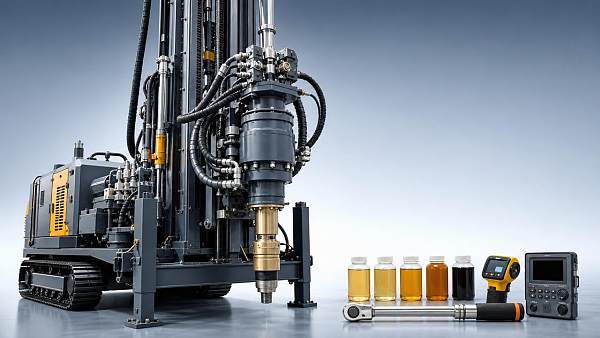
Drillingrigs combine high loads, vibration, fluid power, rotating assemblies, and digital controls in one harsh operating environment.
Unlike simpler machines, drillingrigs often work far from workshops, under changing ground, weather, and duty-cycle conditions.
A small leak, loose fastener, or sensor error can affect multiple systems at once.
This makes maintenance a risk-control process, not only a repair activity after failure.
Key maintenance complexity comes from system interaction.
- Hydraulic pressure influences feed force, rotation stability, and emergency response.
- Structural fatigue affects alignment, load transfer, and operator safety.
- Control drift can hide mechanical wear until performance drops sharply.
- Contaminated fluids damage valves, pumps, seals, and precision tooling interfaces.
For drillingrigs, reliable maintenance begins with understanding how symptoms travel across the machine.
A slow actuator may indicate fluid contamination, pump wear, electrical signal loss, or mechanical binding.
The best service programs verify root causes before replacing parts.
Which hydraulic risks on drillingrigs deserve immediate attention?
Hydraulic systems are among the highest-risk areas on drillingrigs because they handle force, motion, braking, and positioning.
The most common warning signs are oil temperature rise, pressure instability, slow response, hose abrasion, and cylinder drift.
Fluid contamination is especially dangerous because damage spreads quietly through pumps, valves, and seals.
Water ingress, metal particles, dust, and degraded oil reduce lubrication and increase internal leakage.
On drillingrigs, hydraulic inspection should include both visual checks and measurable diagnostics.
- Check hose routing for rubbing, kinking, heat exposure, and unsupported bends.
- Record system pressure under comparable operating loads.
- Inspect filters for abnormal particles and replacement interval compliance.
- Test oil cleanliness, viscosity, water content, and oxidation indicators.
- Verify relief valve settings against documented specifications.
A frequent mistake is replacing a leaking seal without asking why the seal failed.
Misalignment, pressure spikes, scored rods, or contaminated oil may cause repeat failure.
For drillingrigs working in abrasive environments, protective sleeves and cleaner refill procedures reduce repeat hose and valve issues.
How should structural fatigue and mast integrity be checked?
Structural risk is often underestimated because cracks can begin before visible deformation appears.
Drillingrigs experience vibration, impact loading, transport stress, and repeated setup cycles.
The mast, rotary head mounts, feed frame, outriggers, base frame, and weld zones require planned inspection.
Maintenance records should identify recurring looseness, bolt replacement, abnormal noise, or uneven wear patterns.
These details often reveal fatigue before a major structural repair becomes necessary.
What are early signs of structural trouble?
- Paint cracking near welds or high-stress joints.
- Elongated holes around pins or mounting points.
- Uneven mast movement during feed operations.
- Repeated bolt loosening after correct torque application.
- Unexpected vibration during rotation or pullback.
For drillingrigs, visual inspection should be supported by torque checks, alignment measurement, and non-destructive testing where risk is high.
Repairs should follow approved procedures, not field improvisation.
Uncontrolled welding can change material properties, distort alignment, or introduce new stress concentrations.
A controlled repair plan protects asset value and service consistency.
When do powertrain, rotation, and feed issues become high-risk?
Powertrain problems on drillingrigs rarely stay isolated.
Engine weakness, transmission wear, rotary head backlash, or feed chain elongation affects productivity and component life.
High-risk symptoms include unstable rotation speed, abnormal torque spikes, overheating, excessive smoke, and delayed feed response.
These symptoms should be evaluated against operating load, tool condition, ground condition, and maintenance history.
Rotation systems need special attention because they directly transfer drilling energy.
Backlash, bearing wear, gearbox oil contamination, and poor lubrication can damage expensive assemblies.
Feed systems also carry risk because chain stretch or cylinder leakage changes bit pressure and hole accuracy.
Which checks reduce unexpected downtime?
- Trend engine load, fuel use, oil pressure, and coolant temperature.
- Inspect gearbox oil for particles, discoloration, or burnt odor.
- Measure rotary head backlash at scheduled service intervals.
- Check feed chain tension, rollers, guides, and wear marks.
- Confirm lubrication points receive correct grease and volume.
For drillingrigs used across variable formations, maintenance should compare data by application.
A load profile in soft soil differs from rock drilling or foundation work.
Context prevents false conclusions and unnecessary replacement.
Why do controls, sensors, and safety interfaces need calibration discipline?
Modern drillingrigs increasingly rely on sensors, controllers, displays, interlocks, and remote diagnostics.
These systems improve precision, but they also create hidden maintenance risks when calibration drifts.
A pressure sensor reading slightly low can encourage overload without obvious alarms.
A limit switch with intermittent contact can interrupt operation or fail during a critical movement.
Electrical risks often come from vibration, moisture, heat, and poor connector protection.
Harness chafing, corroded pins, loose grounds, and software mismatch can mimic mechanical faults.
For drillingrigs, troubleshooting should separate signal problems from component problems before replacement.
Which safety functions should never be skipped?
- Emergency stop verification under controlled conditions.
- Interlock checks for guards, mast position, and service access.
- Load, pressure, and temperature alarm confirmation.
- Grounding, bonding, and battery isolation inspection.
- Software version and parameter backup review.
Safety interfaces on drillingrigs should be tested after repairs, transport, major component replacement, or software updates.
A signed checklist supports traceability and reduces ambiguity during later fault analysis.
How can maintenance teams prioritize risks without over-servicing?
Effective maintenance is not maximum replacement.
For drillingrigs, the goal is risk-based service using condition data, operating hours, duty severity, and failure history.
A balanced plan separates critical checks from convenience tasks.
Critical checks prevent safety incidents, major downtime, and cascading damage.
Convenience tasks may wait for planned windows if risk remains controlled.
Standardized forms help compare drillingrigs across regions, fleets, and applications.
They also support better benchmarking against technical requirements and internal reliability targets.
This approach reflects the cross-sector discipline used in industrial quality systems.
Data transparency improves decisions, whether the asset supports infrastructure, energy, mining, geotechnical, or environmental work.
What common maintenance mistakes shorten the life of drillingrigs?
Many failures on drillingrigs come from avoidable maintenance habits.
The first mistake is treating symptoms as isolated events.
A hot hydraulic circuit, for example, may involve oil quality, valve restriction, cooling capacity, or operator settings.
The second mistake is ignoring contamination control during service.
Open ports, dirty funnels, unsealed containers, and poor storage introduce damaging particles.
The third mistake is skipping baseline measurements after repair.
Without baseline pressure, temperature, backlash, and sensor values, future diagnostics become guesswork.
A practical maintenance culture for drillingrigs includes clean work practices, documented settings, and controlled spare parts.
Parts should match specification, material grade, pressure rating, and software compatibility where relevant.
Low-cost substitutions can create higher lifecycle cost through repeat failures and safety exposure.
Summary: building a safer maintenance plan for drillingrigs
Reliable drillingrigs depend on early risk detection, not emergency reaction.
Hydraulics, structure, powertrain, rotation, controls, and safety systems should be reviewed as connected systems.
The strongest maintenance plans combine inspections, oil analysis, calibration, torque control, trend data, and repair traceability.
Global Industrial Matrix supports this discipline through cross-sector technical benchmarking and verifiable industrial intelligence.
For complex drillingrigs, the next step is a standardized risk checklist matched to duty cycle, environment, and critical components.
Use the checklist after transport, before demanding projects, after major repairs, and whenever performance trends change.
Consistent action protects uptime, lifecycle value, and safer operation in demanding industrial conditions.

The Archive Newsletter
Critical industrial intelligence delivered every Tuesday. Peer-reviewed summaries of the week's most impactful logistics and market shifts.