Monday, May 22, 2024

How an Automated Trade Platform Reduces Order Processing Delays
by
Published
Views:
How an Automated Trade Platform Reduces Order Processing Delays
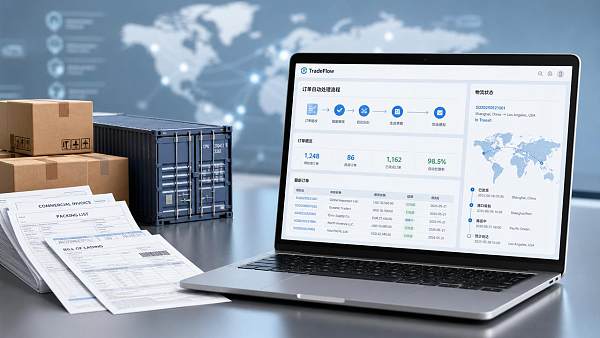
For global manufacturers, order delays rarely start on the factory floor. They often begin inside fragmented trade workflows, disconnected systems, and slow document handoffs.
A missed shipping instruction, an incomplete customs form, or a pricing mismatch can add hours, then days, to critical orders.
That is why the automated trade platform has become more than a software upgrade. It is now a practical answer to operational friction.
In complex industrial supply chains, speed depends on data quality, process control, and visibility across suppliers, carriers, brokers, and internal teams.
An automated trade platform connects those moving parts. It reduces rework, shortens approval cycles, and helps teams act before delays become disruptions.
For organizations managing electronics, automotive, agri-tech, infrastructure, or precision tooling, the impact is especially clear.
When every shipment supports production continuity, the cost of slow order processing is far higher than an isolated admin issue.
It affects working capital, supplier trust, customer service, and risk exposure across the entire operating model.
Why Order Processing Delays Still Happen
Many trade teams still rely on email chains, spreadsheets, and manual data entry. That mix slows decisions and increases the chance of avoidable errors.
In actual operations, delays often come from small gaps between departments. Sales confirms one detail, logistics uses another, and finance sees a third version.
Those gaps become serious when orders cross borders, require compliance checks, or involve multi-tier supplier coordination.
A modern automated trade platform tackles this root problem by creating one controlled flow for trade data, approvals, and execution.
- Manual document creation causes version conflicts and repeated corrections.
- Disconnected ERP, procurement, and shipping tools hide status changes.
- Compliance screening often happens too late in the cycle.
- Exception handling depends on individual experience, not standard rules.
- Supplier updates arrive late, creating planning blind spots.
From a management perspective, the issue is not simply labor intensity. It is the absence of synchronized, decision-ready trade intelligence.
How an Automated Trade Platform Speeds Up Execution
The value of an automated trade platform comes from workflow compression. Steps that once required multiple handoffs become structured, validated, and faster to complete.
This does not just save time. It changes how quickly teams can respond to demand shifts, supply constraints, and customs requirements.
1. It standardizes trade data at the source
Product codes, Incoterms, pricing, origin data, and shipping instructions are captured in one workflow. That sharply reduces duplicate entry.
When data is standardized early, downstream documents are generated faster and with fewer exceptions.
2. It automates document generation and validation
Commercial invoices, packing lists, certificates, and customs records can be created automatically using approved templates and rule sets.
An automated trade platform flags missing fields before submission. That matters because prevention is much faster than correction.
3. It accelerates approvals
Built-in approval logic routes orders to the right people based on value, destination, product class, or risk level.
That removes the usual waiting time caused by unclear ownership or email-based escalation.
4. It improves exception management
Not every order is clean. The difference is how quickly the system identifies issues and assigns action.
With an automated trade platform, teams can isolate blocked orders, see the cause, and resolve them before shipment windows are missed.
Where the Business Impact Becomes Visible
The strongest case for an automated trade platform is measurable performance. Faster processing improves outcomes well beyond the trade department.
More importantly, it creates a steadier operating rhythm across procurement, production, compliance, and customer delivery.
This is especially relevant in industries where component traceability, certification, and timing precision directly affect output.
For example, a delayed electronics shipment can stop assembly. A delayed filtration module can postpone infrastructure commissioning. Speed and accuracy move together.
How GIM Supports Smarter Trade Decisions
Technology alone does not remove delays. Teams also need reliable benchmarks, supplier visibility, and cross-sector intelligence to make better workflow decisions.
That is where Global Industrial Matrix adds practical value. GIM helps organizations understand how trade execution connects with engineering standards, sourcing risk, and operational resilience.
By integrating intelligence across semiconductors, automotive systems, agri-tech, ESG infrastructure, and precision tooling, GIM provides a broader decision context.
That context matters when selecting or refining an automated trade platform. Process speed must align with supplier capability, compliance exposure, and technical specifications.
- Benchmark supplier readiness against international standards such as ISO, IATF, and IPC.
- Identify high-risk nodes where order delays are most likely to spread across operations.
- Compare trade workflow needs across product categories and regional markets.
- Support more resilient sourcing and order planning decisions.
In other words, an automated trade platform works best when it is backed by verified industrial intelligence, not just internal assumptions.
What to Prioritize During Implementation
Many deployments underperform because they focus on digitizing old habits instead of redesigning trade execution.
A better approach is to target the points where delays cause the greatest operational damage.
- Map the current order process from quote confirmation to customs clearance.
- Measure delay sources by frequency, financial impact, and downstream production risk.
- Standardize master data before automating document and approval flows.
- Connect the automated trade platform with ERP, logistics, and compliance systems.
- Set alert rules for exceptions, document gaps, and high-risk destinations.
- Track cycle time, correction rate, hold rate, and on-time release after launch.
This sequence keeps the project grounded in business outcomes. It also helps avoid a common mistake: automating fragmented data without fixing ownership and control.
From recent market shifts, the stronger signal is clear. Trade operations are no longer a back-office function.
They now influence inventory strategy, customer responsiveness, and resilience under volatile global conditions.
Final Takeaway
An automated trade platform reduces order processing delays by removing manual bottlenecks, validating data earlier, and coordinating decisions across the trade lifecycle.
The practical benefit is not only faster transactions. It is stronger control over risk, timing, and supply chain continuity.
For industrial organizations facing tighter lead times and higher compliance pressure, the case is increasingly straightforward.
A well-designed automated trade platform, supported by trusted intelligence from GIM, gives teams the structure to move faster without losing accuracy.
The next step is to review where delays begin, identify which workflows create the most risk, and build automation around the points that matter most.

The Archive Newsletter
Critical industrial intelligence delivered every Tuesday. Peer-reviewed summaries of the week's most impactful logistics and market shifts.