Monday, May 22, 2024

How to Evaluate Hospitality Furniture OEM Quality and Lead Times
by
Published
Views:
How to Evaluate Hospitality Furniture OEM Quality and Lead Times
Choosing the right hospitality furniture OEM can shape guest experience, brand consistency, and project timelines.
Price matters, but it should never be the only filter.
A weak supplier can create delays, finish defects, costly rework, and installation headaches across multiple sites.
A strong hospitality furniture OEM brings process discipline, quality stability, and realistic production planning.
This guide explains how to assess quality systems, customization ability, and lead times before placing a large order.
Start with the OEM’s Operating Foundation
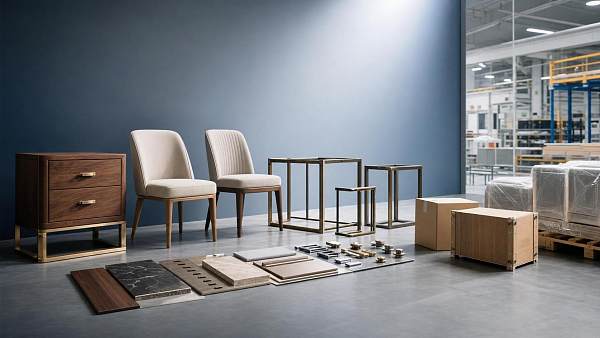
Before reviewing samples, look at how the hospitality furniture OEM actually runs its business.
A polished catalog does not prove factory control.
Start with legal registration, factory location, export history, and ownership of production assets.
Some suppliers act as traders while presenting themselves as manufacturers.
That model is not always wrong, but it changes risk, communication speed, and lead time control.
In practical sourcing, the more direct the factory control, the easier it is to manage engineering changes.
- Confirm whether cutting, welding, upholstery, finishing, and packing are done in-house.
- Ask for current certifications such as ISO 9001, FSC, BIFMA, or local fire compliance records.
- Review the main export markets and project types served in the last three years.
- Check whether the supplier handles hotels, serviced apartments, resorts, or restaurant chains.
These details reveal whether a hospitality furniture OEM fits your program or just wants the order.
Assess Material Quality and Compliance Depth
Material quality is where many sourcing problems begin.
A hospitality furniture OEM may quote attractive pricing by downgrading board density, foam resilience, veneer thickness, or hardware grade.
That difference often stays hidden until installation or early use.
Ask for a full bill of materials with brand names, specifications, and test references.
Then compare it against project standards, not just against the sample room.
Key points to verify
- Wood species, moisture content, and plywood or MDF density.
- Laminate, veneer, edge banding, and surface abrasion resistance.
- Foam density, compression recovery, and fabric rub count.
- Metal thickness, weld quality, anti-corrosion treatment, and powder coating consistency.
- Drawer slides, hinges, fasteners, and load-bearing hardware brands.
For hospitality use, durability matters as much as appearance.
Guest rooms, lobbies, and food service areas create constant wear.
A qualified hospitality furniture OEM should explain why each material suits each application.
If the explanation stays vague, that is usually a warning sign.
Review Manufacturing Controls, Not Just Finished Samples
A clean sample can hide unstable production.
That is why process control matters more than showroom presentation.
Ask the hospitality furniture OEM how quality is checked from raw materials to final packing.
Reliable factories usually have inspection checkpoints at every major stage.
- Incoming material inspection.
- First-piece approval before batch production.
- In-line checks during machining, welding, sewing, and finishing.
- Final inspection with dimensions, function, and visual criteria.
- Packaging verification before container loading.
In recent years, more buyers also request digital inspection records.
That includes photos, defect logs, and production status reports.
This also means a hospitality furniture OEM must do more than promise quality verbally.
It should show repeatable evidence.
Test Customization and Engineering Capability Early
Most hospitality projects need custom dimensions, finishes, and brand-specific detailing.
That makes engineering support a core selection factor.
A capable hospitality furniture OEM should review drawings, identify production risks, and suggest practical adjustments before mass production.
For example, it should flag unstable structures, hard-to-source finishes, or oversized items that complicate shipping.
Questions worth asking
- Can the team convert concept drawings into production-ready shop drawings?
- How are change requests controlled after sample approval?
- What is the sample lead time for casegoods, seating, and metal items?
- Can the supplier match branded finishes across multiple product categories?
- How does the factory manage replacement parts for future maintenance needs?
This stage often separates a true hospitality furniture OEM from a basic volume producer.
The strongest partners reduce design risk before it becomes a factory problem.
Evaluate Lead Times with a Real Production Lens
Lead time promises are easy to make and hard to trust without detail.
A realistic hospitality furniture OEM breaks lead time into sourcing, sampling, approval, production, inspection, and shipping stages.
This approach gives better visibility than one total number.
A dependable hospitality furniture OEM should also explain peak-season constraints.
If lead times stay unchanged during busy months, question the accuracy.
More reliable planning usually includes buffer time for high-risk materials and approval loops.
Compare Suppliers with a Weighted Decision Framework
When several suppliers look similar, a scorecard helps prevent subjective decisions.
This is especially useful when selecting a hospitality furniture OEM for multi-property rollouts.
Use weighted criteria based on project priorities.
- Quality system maturity: 25%.
- Material compliance and durability: 20%.
- Customization and engineering support: 20%.
- Lead time credibility: 15%.
- Price competitiveness: 10%.
- Communication speed and reporting: 10%.
The exact weighting can change, but the principle stays useful.
A low quote from a weak hospitality furniture OEM often becomes expensive after delays, claims, and replacements.
A balanced scorecard keeps total project cost in view.
Watch for Common Red Flags Before Contract Award
Some warning signs appear early if you know where to look.
Ignoring them usually creates problems later.
- Specifications change between quotation and sample submission.
- Test reports are outdated, incomplete, or unrelated to the quoted item.
- Lead times sound aggressive but lack stage-by-stage detail.
- Finishes vary across samples from the same hospitality furniture OEM.
- Questions about rework, defect rates, or capacity receive vague answers.
- Communication slows down once technical details become difficult.
More obvious signals often appear during sample review.
Uneven gaps, poor stitching, sharp edges, unstable frames, and inconsistent sheen usually reflect deeper process issues.
If these flaws appear in samples, mass production rarely improves them.
Build a Smarter Selection Process
The best hospitality furniture OEM is not always the cheapest or the fastest on paper.
It is the supplier that consistently meets technical standards, handles customization well, and delivers on a credible schedule.
A practical evaluation process starts with factory validation, then moves into materials, process control, engineering response, and schedule realism.
That sequence reduces sourcing risk before commercial terms are finalized.
For complex programs, GIM recommends using technical benchmarking, compliance review, and lead time mapping together.
This creates a clearer basis for choosing a hospitality furniture OEM with confidence.
The goal is simple: fewer surprises, stronger quality, and smoother project delivery from first sample to final installation.

The Archive Newsletter
Critical industrial intelligence delivered every Tuesday. Peer-reviewed summaries of the week's most impactful logistics and market shifts.