Monday, May 22, 2024

Manufacturing Tools vs Custom Fixtures in High-Mix Production
by
Published
Views:
In high-mix production, choosing between manufacturing tools and custom fixtures directly affects manufacturing efficiency, manufacturing standards, and procurement insights. For engineers, operators, and sourcing teams, the right decision depends on repeatability, cost, changeover speed, and verifiable data. This article examines how these options support flexible production while aligning with broader digital foundations across modern industry.
Why the choice matters in high-mix production
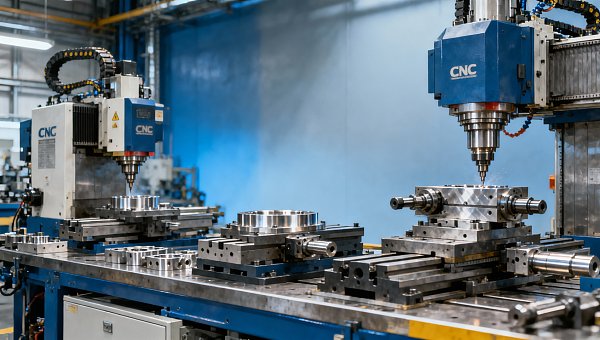
High-mix production means frequent model changes, variable batch sizes, and tighter coordination between engineering, quality, and procurement. In many factories, lot sizes can range from prototype quantities of 5–20 units to repeat orders of 200–500 units within the same month. Under these conditions, the decision between general manufacturing tools and custom fixtures is not a minor workshop preference; it shapes throughput, defect risk, and changeover discipline.
Manufacturing tools usually refer to standardized cutters, holders, dies, torque tools, presses, gauges, or process accessories used across multiple parts or programs. Custom fixtures are purpose-built devices that locate, clamp, guide, or support a specific workpiece during machining, welding, assembly, inspection, or testing. Both are essential, but they solve different bottlenecks in flexible production systems.
For operators, the issue is often setup simplicity and repeatability over an 8–12 hour shift. For quality teams, the concern is whether the workholding method maintains dimensional stability within the required tolerance band, such as ±0.05 mm, ±0.1 mm, or a defined torque window. For purchasing teams, the question is broader: which option reduces total operational friction over 3–12 months rather than only lowering the first invoice value.
This matters across sectors. Electronics assembly, automotive subcomponents, agri-equipment modules, environmental infrastructure hardware, and precision tooling all operate with different production rhythms but similar pressure points: shorter lead times, traceable quality, and fewer surprises during ramp-up. That is why a cross-sector benchmarking view is valuable when teams compare process capability instead of comparing tooling prices in isolation.
Where confusion usually begins
Many teams treat manufacturing tools and custom fixtures as interchangeable because both support production execution. In practice, they differ in purpose, life-cycle logic, and return profile. A standard tool may serve dozens of SKUs with limited modification, while a custom fixture may be justified only when one product family repeats often enough to recover engineering and build cost.
Another source of confusion is that high-mix operations often evolve from manual setups to semi-standardized work cells. In this transition, a plant may accumulate many low-cost accessories that appear flexible but create inconsistency during line changeovers. What looks adaptable on paper can generate 10–20 minutes of extra setup time per shift, multiplied across several cells and several part families.
- If product geometry changes weekly, standard manufacturing tools often protect flexibility better than heavy fixture investment.
- If the same interface, datums, or assembly sequence repeats for 3–6 months, custom fixtures often improve consistency and operator speed.
- If quality failures are linked to unstable positioning, custom fixtures usually deserve earlier evaluation than another round of operator retraining.
Manufacturing tools vs custom fixtures: what is the practical difference?
The practical difference is not simply standard versus custom. It is flexibility versus process anchoring. Manufacturing tools enable operations such as cutting, pressing, fastening, measuring, and handling across many jobs. Custom fixtures create a repeatable physical condition so those operations happen in the same orientation, sequence, and load path every time. In high-mix production, this distinction determines whether variation is absorbed by people or controlled by hardware.
A useful way to evaluate the difference is to ask three questions. First, what varies most often: the tool path, the workpiece geometry, or the clamping method? Second, where does the current defect or delay originate: operation execution or part positioning? Third, how long will the current product mix remain stable: 2–4 weeks, 1–2 quarters, or longer? These questions prevent overspending on custom hardware where a modular tool strategy would be enough.
The table below compares the two options using criteria that matter in B2B purchasing, process engineering, and quality control. It is especially useful when a team must align technical requirements with commercial review and project timing.
The comparison shows that custom fixtures are not automatically the better choice. They are stronger when the production problem is repeatability at the interface level. Manufacturing tools remain the better asset when the production problem is variety management. In many high-mix plants, the winning strategy is hybrid: standard tools for process flexibility, plus selected custom fixtures for the 20–30% of operations that generate most quality escapes or setup delays.
A simple decision framework for cross-functional teams
Project managers and sourcing leaders often need a quick screen before approving engineering hours. A practical framework is to classify each operation by repeat frequency, tolerance sensitivity, and changeover burden. If an operation repeats more than 3 times per week, affects a critical dimension or sealing surface, and consumes more than 8–10 minutes in manual setup, custom fixture review becomes justified.
Three indicators that favor custom fixtures
- The process depends on stable datums, force direction, or angular alignment that operators cannot reliably reproduce with generic holding methods.
- Inspection data shows recurring variation linked to part seating, clamp pressure, or manual orientation rather than machine capability alone.
- The same product family is scheduled for enough cycles over 8–24 weeks to amortize fixture design and validation effort.
Which option fits different application scenarios?
Application context matters more than theory. A machining cell producing several aluminum housings with minor dimensional differences may perform well with modular vices, standard cutting tools, and quick-change soft jaws. By contrast, an assembly line for sensors, EV submodules, irrigation control components, or filtration housings may benefit from custom fixtures that protect orientation, connector access, or sealing compression across repeated tasks.
High-mix production rarely means one universal solution. In semiconductor support hardware and electronics, delicate geometries and ESD-aware handling may shift the decision toward precision fixture nests for test or assembly. In automotive and mobility, the trigger is often repeatability under takt pressure. In smart agri-tech and environmental equipment, rugged parts and field-serviceability may favor simpler tooling at first, then selective fixture standardization as programs stabilize.
The table below helps teams map typical shop-floor scenarios to the more suitable approach. It is not a rulebook, but it supports faster alignment between engineering, operations, and procurement during quoting or line review.
The scenario mapping suggests a common pattern: the more the process depends on precise positioning and repeated interfaces, the more custom fixtures gain value. The more the process depends on frequent engineering change and broad SKU coverage, the more standardized manufacturing tools preserve agility. For distributors and channel partners, this distinction is also important because stocking decisions and service support differ significantly between reusable tools and customer-specific fixtures.
How GIM supports scenario-based evaluation
Global Industrial Matrix supports this evaluation by connecting tooling decisions to cross-sector benchmarks rather than treating each plant as an isolated case. A locating challenge in precision tooling may resemble a test-fixturing issue in electronics. A repeatability problem in mobility assembly may resemble clamping instability in environmental equipment fabrication. This system-level view helps teams identify proven decision criteria faster.
Because GIM benchmarks hardware and production logic against internationally recognized frameworks such as ISO, IATF, and IPC where relevant, technical evaluators can review tooling choices through a more disciplined lens. That is especially useful when procurement and engineering teams operate across regions, suppliers, and product categories and need verifiable language for approval gates.
- Benchmark repeatability requirements by application, not by vendor claims alone.
- Compare tooling impact on quality risk, changeover time, and supplier dependency.
- Build sourcing decisions around traceable criteria that technical and commercial teams can both validate.
What should buyers, engineers, and quality teams check before deciding?
A good procurement decision in high-mix production starts with process evidence. Before choosing manufacturing tools or custom fixtures, teams should review at least 5 key inputs: annual volume range, change frequency, critical tolerances, operator skill variability, and expected product life-cycle stability. Without these inputs, even experienced buyers risk selecting hardware that looks economical but performs poorly after the first 6–8 weeks of actual scheduling pressure.
Engineering teams should also define whether the objective is cycle time reduction, defect prevention, ergonomic improvement, or capacity scaling. These goals point to different solutions. For example, if the issue is repetitive orientation error, a fixture may solve it directly. If the issue is tooling readiness across many SKUs, then standardized manufacturing tools, digital setup sheets, and modular accessories may produce better results at lower commitment.
The checklist below is designed for technical assessment, sourcing review, and project sign-off. It is especially useful when multiple stakeholders need a shared basis for RFQ comparison.
Five critical checks before RFQ or approval
- Confirm batch pattern over the next 3–6 months. Separate prototype demand, repeat production, and service-order volatility.
- Map critical-to-quality points, including tolerance zones, alignment surfaces, torque paths, and inspection references.
- Measure current setup and changeover time. Even a recurring 7–15 minute delay can justify a targeted fixture investment.
- Review maintenance burden, spare-part availability, and calibration or validation needs over each quarter.
- Check supplier documentation depth, including drawings, process assumptions, revision control, and applicable standards.
Commercial and operational warning signs
Buyers should be cautious when a supplier recommends custom fixtures without clarifying product-family stability, expected engineering change frequency, or validation scope. That can lead to redesign costs after only 1–2 revision cycles. The opposite risk also exists: choosing only generic tools in a process that clearly needs controlled positioning. In that case, hidden costs appear as scrap, rework, line stoppages, and extra inspection labor.
Quality and safety managers should also verify whether the proposed solution supports safe handling, repeatable loading force, and documented checks. Where fixtures are used, common verification points include clamping integrity, datum wear, fastener retention, and release consistency. Where manufacturing tools dominate, the focus shifts toward standard work instructions, tool condition monitoring, and setup traceability at each shift or lot change.
In many global sourcing environments, lead time is a deciding factor. Standard manufacturing tools may be available in days, while a custom fixture project can require 2–6 weeks for design, build, trial, and revision depending on complexity. This is why project managers should align hardware selection with launch timing instead of evaluating only the final process state.
Cost, standards, and implementation: how to avoid the wrong investment
Cost should be evaluated as total process cost, not as purchase price alone. In high-mix production, a low upfront spend can become expensive if it increases variation, training burden, or setup waste. Likewise, an expensive custom fixture may not pay back if the product program changes every few weeks. The right comparison includes design effort, validation, operator training, maintenance, revision risk, and impact on output stability.
Standards also matter because tooling decisions affect process control and documentation. Depending on sector and customer requirements, teams may need to align with general ISO-based quality systems, automotive-oriented IATF discipline, or IPC-related handling and assembly expectations in electronics. The exact certification scope depends on the operation, but the underlying principle is consistent: the selected tooling or fixture should support repeatable, auditable execution.
The implementation path below helps reduce selection errors while preserving launch speed. It works especially well for project managers handling mixed production portfolios or multi-site sourcing reviews.
A four-step implementation path
- Screen the process: identify whether variation comes from the tool, the fixture, the material, or operator interaction.
- Run a limited trial: use 10–30 parts, one defined setup method, and a short inspection plan to verify repeatability.
- Compare total cost over a realistic horizon such as 1 quarter, 2 quarters, or the planned product life cycle.
- Lock documentation: finalize work instructions, maintenance points, revision control, and acceptance criteria before scale-up.
Common misconceptions in high-mix environments
One misconception is that custom fixtures reduce flexibility. Poorly designed fixtures can do that, but modular fixture architecture, interchangeable nests, and adjustable locators often preserve flexibility while improving consistency. Another misconception is that standard manufacturing tools are always cheaper. They are cheaper to buy, but not always cheaper to operate if they leave too much process variation unresolved.
Another frequent mistake is skipping validation because volume appears low. In high-mix production, low volume does not mean low risk. A small batch of a critical component can still trigger field failures, customer returns, or project delays if clamping, alignment, or measurement conditions are unstable. Even a short validation run with defined acceptance points is better than assuming operator skill will absorb all variation.
FAQ: practical questions teams ask before choosing
The questions below reflect common search intent from engineers, procurement teams, operators, and industrial decision-makers evaluating manufacturing tools vs custom fixtures in flexible production settings.
How do I know when a custom fixture is worth the investment?
A custom fixture is usually worth evaluating when the same operation repeats regularly, positioning affects a critical quality characteristic, and manual setup consumes meaningful time. A practical threshold is when a recurring task appears several times per week, requires controlled orientation or clamping, and creates measurable rework or delay. The best decision comes from comparing total process cost over at least one quarter rather than comparing only acquisition cost.
Are manufacturing tools better for prototypes and engineering changes?
In many cases, yes. Standardized manufacturing tools and modular workholding are better suited to prototype phases, pilot lots, and revision-heavy programs because they adapt more easily to geometry change. They also reduce the risk of fixture obsolescence when a product changes after 2–3 design iterations. However, if a prototype build includes highly sensitive alignment or testing conditions, a simple custom nest or light fixture may still be justified.
What should procurement focus on besides price?
Procurement should review five areas beyond price: lead time, revision risk, documentation quality, maintenance demand, and expected life-cycle coverage. It is also important to ask whether the solution supports inspection, traceability, and operator repeatability. In global supply chains, buyers should prefer proposals with clear assumptions about product family fit, change control, and validation scope so that commercial comparisons remain technically meaningful.
Can one factory use both manufacturing tools and custom fixtures at the same time?
Yes, and many high-mix factories should. A mixed strategy often delivers the best balance between flexibility and stability. Standard manufacturing tools can cover broad SKU diversity, while custom fixtures can be deployed only at operations with the highest risk of variation or the biggest impact on cycle time. This selective approach helps control capital spending while improving process performance where it matters most.
Why choose us for tooling and fixture benchmarking support
Global Industrial Matrix helps industrial teams make better manufacturing decisions by connecting tooling, fixturing, quality expectations, and sourcing logic across sectors rather than within a single narrow category. Our strength is not just product comparison. It is cross-sector technical benchmarking that helps procurement officers, engineers, project leaders, and quality teams evaluate what should be standardized, what should be customized, and where hidden operational risk is likely to appear.
If you are reviewing manufacturing tools vs custom fixtures for a high-mix environment, we can help structure the decision around verifiable criteria. That includes parameter confirmation, application fit, changeover analysis, tolerance sensitivity, supplier comparison, delivery-cycle review, and alignment with ISO, IATF, or IPC-related process expectations where relevant. This is particularly useful for organizations managing electronics, automotive, agri-tech, environmental infrastructure, and precision tooling programs in parallel.
Contact us if your team needs support with a 3-step or 4-step decision process covering sample evaluation, tooling or fixture selection, quotation comparison, or implementation planning. We can also help clarify whether your current production issue is driven by tool choice, fixture design, setup discipline, or quality control gaps. That saves time during RFQ review and helps avoid committing budget to the wrong hardware.
For faster discussion, prepare your part family information, target batch range, current changeover time, critical dimensions, expected delivery window, and any customer-specific compliance requirements. With these inputs, the conversation can move quickly from general comparison to a practical recommendation on standard tools, custom fixtures, or a hybrid solution suited to your production reality.
The Archive Newsletter
Critical industrial intelligence delivered every Tuesday. Peer-reviewed summaries of the week's most impactful logistics and market shifts.