Monday, May 22, 2024
Precision Machining or Casting for Complex Metal Parts?
by
Published
Views:
Choosing between precision machining and casting for complex metal parts directly affects operational efficiency, quality control, and lifecycle cost across sectors from suspension systems and Green Mobility to electronics manufacturing and PC hardware. This article helps technical and business evaluators compare process capability, tolerances, scalability, and risk so they can make smarter sourcing and engineering decisions.
How should buyers compare precision machining and casting for complex metal parts?
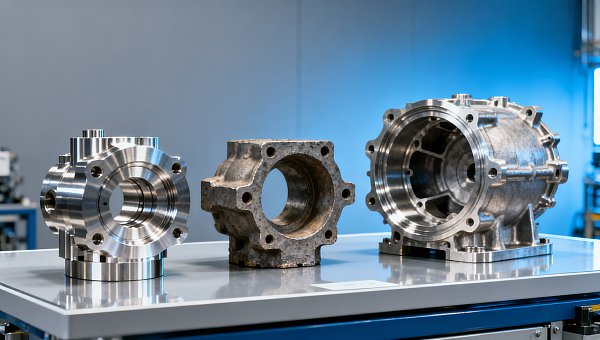
For procurement teams, engineers, project managers, and quality leaders, the choice is rarely about process preference alone. It is about fit. Precision machining removes material from forged, extruded, or billet stock to achieve tight dimensions, while casting forms the near-net shape first and often needs secondary machining afterward. The right route depends on geometry complexity, volume, tolerance band, surface finish, alloy behavior, and downstream inspection requirements.
In cross-sector manufacturing, the decision can change cost by 15%–40% over a program lifecycle when scrap, lead time, tooling, rework, and field reliability are included. A bracket for an EV subsystem, a valve body for water treatment, or a heat sink for power electronics may all look similar in CAD, yet their process economics differ significantly once porosity risk, dimensional stack-up, and batch size are assessed.
Global Industrial Matrix (GIM) helps decision-makers avoid siloed judgments. By benchmarking metal part requirements across Semiconductor & Electronics, Automotive & Mobility, Smart Agri-Tech, Industrial ESG & Infrastructure, and Precision Tooling, GIM supports a more reliable sourcing logic: match process capability to function, compliance expectation, and supply chain resilience rather than to unit price alone.
A practical first screen usually comes down to 4 questions: how tight are the tolerances, how complex is the internal geometry, how many parts are needed per month or per year, and what failure mode matters most? If the part must hold ±0.01 mm to ±0.05 mm on critical interfaces, machining is often favored. If the part has complex cavities and annual demand reaches thousands or tens of thousands, casting often becomes commercially attractive.
What each process does best
- Precision machining is strong where dimensional accuracy, positional tolerance, flatness, thread quality, and sealing surfaces are critical across 3-axis, 4-axis, or 5-axis operations.
- Casting is strong where shape complexity, internal channels, wall variation, and material utilization matter more than ultra-tight tolerance on every surface.
- Hybrid production is common. Many complex metal parts are cast first and then machined on 2–8 key datums or functional surfaces to balance cost and precision.
That hybrid model is especially relevant in industries where product architectures are converging. For example, mobility platforms, agricultural equipment, and environmental infrastructure often combine structural, thermal, and fluid-control requirements in one assembly. In such cases, buyers should evaluate not only the primary process, but also the feasibility of post-process machining, leak testing, non-destructive evaluation, and supplier process control.
Which technical differences matter most in real manufacturing programs?
Technical teams often compare machining and casting through three lenses: accuracy, material integrity, and complexity. Precision machining typically delivers better repeatability on critical dimensions, often in the range of ±0.01 mm to ±0.10 mm depending on geometry, machine condition, and inspection method. Casting tolerances vary much more by method, alloy, mold design, and feature size, and often require machining allowances on key surfaces.
Material integrity is another dividing line. Machined parts made from wrought stock usually provide more uniform grain structure and fewer internal discontinuities than cast parts. This can matter for fatigue-loaded components, pressure-bearing housings, or parts exposed to vibration cycles over 10,000 or 100,000 service events. Castings can still perform well, but they demand tighter control over porosity, shrinkage, inclusions, and heat treatment consistency.
Complexity does not always mean machining is better. If a part contains internal flow paths, ribs, bosses, or shape transitions that would require multiple setups and long cycle times, casting may unlock a better design. However, once sealing faces, bearing bores, connector interfaces, or IPC-related mounting surfaces enter the specification, post-cast machining often becomes unavoidable.
The table below gives a practical comparison framework for technical evaluators and commercial reviewers who need to align function with manufacturability.
The comparison shows why process selection should be based on critical features rather than on the whole part alone. A component may be 80% suitable for casting by geometry, but if the remaining 20% includes safety-related bores, alignment surfaces, or thermal contact planes, the sourcing model must include machining, inspection, and likely a more detailed PPAP or control-plan review where applicable.
Where tolerance and finish drive the decision
For electronics fixtures, tooling plates, connector housings, actuator interfaces, and precision drivetrain elements, surface flatness and concentricity can be more important than nominal dimensions alone. A tolerance stack across 5–7 assembled features can quickly turn a “good” casting into a costly assembly issue. In those situations, machining reduces variation earlier in the process chain.
For pump bodies, gear housings, manifold-style parts, and structural nodes, near-net casting can reduce material waste and shorten roughing time. Yet buyers should ask whether the supplier has controls for first article inspection, X-ray or dye penetrant where appropriate, and machining datum strategy. Without that discipline, a cheaper quote often produces higher total program risk.
Technical checkpoints before RFQ release
- Mark critical-to-function features separately from general dimensions so suppliers can price the right process route.
- Define inspection method for the tightest 3–5 dimensions, not just nominal values on the drawing.
- State material form expectations clearly: wrought, forged, or cast alloy condition can affect fatigue behavior and downstream certification.
- Request a process map showing casting, machining, heat treatment, and verification steps if the part is safety-related or sealing-critical.
How do cost, tooling, and lead time change the sourcing decision?
Many buyers focus on piece price, but finance approvers and sourcing managers usually need a broader view: non-recurring tooling cost, prototype speed, scrap exposure, process capability, inventory carrying cost, and the cost of engineering changes. Precision machining often has lower upfront commitment and faster design iteration. Casting usually has higher initial tooling effort, but can reduce unit cost once demand stabilizes.
A prototype machined part may be available in 7–15 days depending on material and complexity. A production-ready casting route, by contrast, may require 4–10 weeks for tooling, trial shots or pours, dimensional validation, and process adjustments before stable output is achieved. If product design is still moving, that extra lead time can create schedule compression in pilot build and qualification phases.
Volume is the main economic pivot. For low-volume programs, service parts, and products with uncertain demand, machining often wins because it avoids tooling amortization. For stable demand over 3,000–10,000 pieces annually, casting may become favorable, especially where raw material removal in machining would be high. However, the breakeven point is different for aluminum, steel, stainless, and copper-based alloys.
The table below is useful for business evaluators comparing total acquisition logic rather than only short-term quote values.
For CFOs, plant managers, and commercial reviewers, the key insight is simple: the lower quote is not always the lower cost route. If a cast part needs extra machining, leak test failures, sorting, or delayed qualification, the total landed cost can exceed a machined alternative. GIM’s benchmarking approach is designed to make those hidden costs visible before supplier nomination.
A procurement guide for mixed technical and commercial teams
- Use machining when demand is uncertain, revisions are likely within the next 1–3 design cycles, or critical dimensions cannot tolerate casting variation.
- Use casting when geometry is stable, volume is forecast with confidence, and the design benefits from near-net shaping or internal complexity.
- Use a cast-plus-machined route when the part has a large structural body but only several surfaces require precision or sealing performance.
- Request dual-sourcing feasibility for programs exposed to regional logistics or raw material volatility.
This procurement logic matters across industries. In automotive and mobility, schedule slippage in one bracket or housing can affect downstream PPAP timing. In electronics, fixture flatness and alignment errors can slow assembly yield. In water infrastructure or agri-tech, a poorly controlled casting may pass incoming inspection but fail under thermal cycling or fluid pressure months later.
Which applications are better suited to machining, casting, or a hybrid route?
Application fit is where process selection becomes most practical. Precision machining is often preferred for jigs, fixtures, mold components, transmission interfaces, precision enclosures, mounting bases, and sensor carrier parts. These components typically require predictable flatness, hole location accuracy, or repeatable alignment over multiple assemblies and maintenance cycles.
Casting is often preferred for housings, covers, pump bodies, structural brackets, manifolds, and parts with integrated ribs or flow paths. In these cases, the value comes from shape efficiency. Reducing the number of welded, bolted, or separately machined pieces can improve assembly logic and lower the number of failure points, especially when annual demand supports tooling investment.
Hybrid routes are common in modern global manufacturing because product requirements are increasingly mixed. An EV inverter housing may need cast structural geometry, machined thermal interfaces, and controlled sealing lands. An industrial filtration module may need cast fluid channels but machined ports and mounting faces. A smart agriculture drivetrain enclosure may need robust geometry with selected precision features for bearings and sensors.
GIM’s cross-sector benchmarking is useful here because the same decision pattern appears in different industries. The part category changes, but the evaluation logic stays similar: identify 3–6 critical features, define the compliance environment, compare process capability, and then align the sourcing route with field performance risk.
Application scenarios by decision priority
These scenarios show that there is no universal answer to the precision machining versus casting question. The right answer depends on whether the part’s value lies in geometry efficiency, dimensional accuracy, field reliability, or supply flexibility. Good sourcing decisions emerge when design intent and operating conditions are translated into process-specific requirements early.
Common mistakes that increase program risk
- Treating all dimensions as equal instead of distinguishing critical datums from non-critical features.
- Ignoring secondary operations such as machining, impregnation, leak testing, or balancing when comparing quotes.
- Choosing casting too early in a design that still changes every 2–4 weeks during pilot development.
- Assuming a machined part is always safer without checking raw material cost, buy-to-fly ratio, and machine cycle burden.
What standards, quality controls, and supplier checks should be reviewed before approval?
Quality approval should focus on the process controls behind the part, not just the final inspection report. In regulated or high-consequence environments, buyers should confirm how the supplier manages incoming material traceability, in-process inspection, heat treatment records, calibration intervals, and nonconformance handling. Depending on the sector, references to ISO 9001, IATF 16949, or IPC-related manufacturing discipline may be relevant to the broader program context.
For machined parts, quality teams usually review machine capability, tool wear controls, fixture repeatability, and CMM or gauge strategy. For cast parts, the review often expands to mold maintenance, process parameter stability, metallurgical verification, and defect screening methods. If the component is pressure-related, rotating, or safety-relevant, the control plan should reflect those risks explicitly.
A robust supplier review normally covers at least 5 checkpoints: drawing clarity, material specification, process flow, inspection plan, and change management. On more complex programs, teams may also request sample validation in 2–3 stages: first article, pilot lot, and early production monitoring. This staged approach helps separate one-time sample success from true process repeatability.
GIM adds value by translating these checks across industries. A sourcing manager in mobility, an engineer in electronics, and a project lead in infrastructure may use different vocabulary, but they all need evidence of repeatable process control, compliant documentation, and realistic delivery capability.
Supplier approval checklist for complex metal parts
- Confirm whether the proposed route is machining only, casting only, or casting plus machining, and match that route to the drawing revision.
- Review the control plan for the top 3 critical features, including measurement frequency, gauge type, and reaction plan.
- Check material traceability from source to finished lot, especially for pressure-bearing, fatigue-loaded, or corrosion-sensitive applications.
- Request realistic lead time commitments for prototype, pilot, and mass production rather than one blended promise.
- Verify how engineering changes are handled, including tooling modification risk and inventory exposure.
FAQ for technical and commercial evaluators
Is precision machining always more accurate than casting?
For critical dimensions, usually yes. Machining generally offers tighter and more predictable control, especially on holes, datums, threads, and sealing faces. But a cast part with selective finish machining can still meet demanding requirements if the design isolates the high-precision surfaces and the supplier controls porosity, distortion, and stock allowance correctly.
When does casting become more cost-effective?
Casting tends to become more attractive when geometry is complex, the design is stable, and annual volume is high enough to absorb tooling cost. In many programs, that shift appears once demand moves beyond low hundreds and into repeated medium or high-volume production, but the actual breakeven point depends on alloy, part size, machining time, and defect risk.
What should buyers ask in an RFQ for complex metal parts?
Ask for process route, material condition, tolerance assumptions, secondary operations, inspection method, and lead time by stage. Also ask which 3–5 dimensions drive cost most. That question often reveals whether the supplier truly understands the part or is pricing it generically.
Can one supplier handle both machining and casting?
Sometimes, but buyers should confirm whether both capabilities are in-house or subcontracted. The answer affects traceability, scheduling, and quality accountability. For complex programs, a transparent process map is more useful than a broad capability claim.
Why work with GIM when selecting machining, casting, or a hybrid manufacturing strategy?
Selecting between precision machining and casting is no longer a narrow process decision. It now touches supply chain risk, multi-industry compliance, ramp-up timing, and lifecycle economics. GIM supports this decision with a system-level view that connects component design, manufacturing capability, and sourcing strategy across electronics, mobility, agri-tech, ESG infrastructure, and precision tooling.
That matters for teams who need more than a quote comparison. Technical evaluators need process realism. Business reviewers need defensible cost logic. Quality and safety teams need traceability and control. Project leaders need timing confidence. GIM helps align these needs through technical benchmarking, cross-sector reference logic, and practical supplier assessment criteria rather than isolated process descriptions.
If you are comparing precision machining versus casting for a complex metal part, we can help you review 4 core areas: critical feature definition, process route suitability, lead time and tooling impact, and quality-control expectations. This is especially useful when a part sits between industries or when the same component must satisfy mechanical, thermal, and assembly constraints at once.
Contact GIM to discuss drawing review, tolerance prioritization, prototype-to-production strategy, supplier benchmarking, certification considerations, sample planning, and quotation alignment. Whether you need to confirm a hybrid route, reduce sourcing risk, compare suppliers across regions, or clarify inspection requirements before approval, our team can help structure the decision with data-driven, industry-aware guidance.
The Archive Newsletter
Critical industrial intelligence delivered every Tuesday. Peer-reviewed summaries of the week's most impactful logistics and market shifts.