Monday, May 22, 2024

Precision Tooling vs Standard Tooling: What Changes in Output Quality
by
Published
Views:
When output quality is judged in microns rather than millimeters, the difference between standard tooling and Precision tooling stops being theoretical. It becomes visible in part geometry, fit, finish, yield, and process stability.
That distinction matters across connected industries. A tolerance shift that seems minor in a stamped bracket may become critical in EV power electronics, HDI substrates, autonomous agricultural systems, or filtration assemblies.
In cross-sector benchmarking, output quality is never only about a single machine or tool. It reflects design intent, toolmaking discipline, material behavior, maintenance control, and the supplier’s ability to repeat results over time.
This is why Precision tooling deserves closer attention. It changes what can be produced consistently, how quickly variation appears, and how confidently performance data can be trusted during technical assessment.
Where the real difference begins
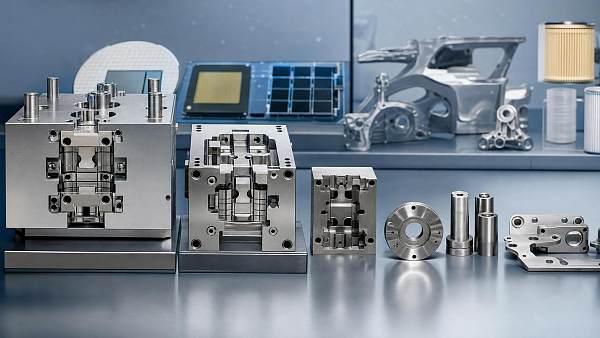
Standard tooling is usually designed to meet acceptable production targets within a practical cost envelope. It supports general manufacturing needs where moderate variation does not compromise function, safety, or downstream assembly.
Precision tooling is built for tighter control. That includes stricter dimensional tolerances, improved alignment, more predictable wear patterns, cleaner edge conditions, and stronger repeatability across long production runs.
The core issue is not simply whether one tool is “better.” It is whether the tooling system can hold performance under real process conditions, including heat, vibration, cycle time pressure, and material variation.
In practical terms, Precision tooling reduces uncertainty. It narrows the spread between nominal design values and actual production output, which directly affects quality scoring and supplier comparability.
Output quality changes in measurable ways
The impact of Precision tooling shows up in several linked performance indicators. Each one matters on its own, but their combined effect is what usually determines whether a process is stable or fragile.
Dimensional accuracy and tolerance control
Precision tooling holds critical dimensions closer to target values. That improves part interchangeability and reduces the need for rework, selective assembly, or secondary adjustment.
This is especially important in assemblies with stacked tolerances. A small drift at the tool level can create larger failures once several components interact in the final system.
Repeatability across batches
One high-quality sample does not prove capability. Precision tooling is valuable because it helps maintain the same output profile across shifts, lots, operators, and maintenance intervals.
That matters in benchmarking environments such as GIM, where cross-industry comparisons depend on verifiable consistency rather than isolated demonstrations.
Surface finish and interface quality
A better-controlled tool often produces cleaner surfaces, more accurate edges, and fewer micro-defects. Those outcomes influence sealing, coating adhesion, friction behavior, electrical contact, and fatigue performance.
In many sectors, surface quality is no longer cosmetic. It is functional, and sometimes directly tied to compliance or service life.
Scrap, rework, and process drift
Precision tooling often lowers scrap rates, but the deeper advantage is earlier control of variation. A stable tool delays the point at which wear, heat, or misalignment begin to distort output.
That gives production teams a wider operating window and gives evaluators clearer evidence of true process capability.
Why this matters across industries
The value of Precision tooling becomes clearer when manufacturing sectors are viewed together rather than in isolation. Different products may use different processes, yet they often depend on the same quality logic.
A platform like GIM is relevant here because it connects these sectors through comparable evidence. Benchmarking against ISO, IATF, and IPC frameworks only works when the underlying tooling performance is understood in context.
Precision tooling therefore supports more than production quality. It supports credible technical comparison across suppliers, sites, and applications with very different end-use requirements.
What should be evaluated beyond the tool itself
A common mistake is to treat Precision tooling as a standalone purchase decision. In reality, output quality depends on the full manufacturing chain around the tool.
- Tool design intent: critical tolerances, datum strategy, and expected wear zones
- Material interaction: hardness, springback, thermal response, and contamination sensitivity
- Machine capability: spindle stability, alignment, vibration control, and calibration discipline
- Process control: inspection frequency, compensation logic, and statistical monitoring
- Maintenance maturity: regrind standards, replacement triggers, and documented change history
Without these supporting conditions, even high-grade Precision tooling may fail to deliver its expected advantage. Conversely, well-managed standard tooling can outperform poorly controlled premium setups in less demanding applications.
That is why output quality should be judged as a system outcome. GIM’s “System of Systems” perspective is useful because it prevents narrow conclusions from isolated tooling claims.
When standard tooling is enough, and when it is not
Not every process needs Precision tooling. In lower-risk applications, standard tooling may deliver acceptable economics and sufficient quality, especially when tolerances are forgiving and downstream effects are limited.
The decision changes when one or more of the following conditions appear:
- Critical dimensions affect safety, electrical performance, or fluid integrity
- Assemblies involve tight tolerance stacking across multiple parts
- Surface condition influences sealing, bonding, conductivity, or fatigue life
- High-volume production amplifies small variation into major yield loss
- Supplier comparison requires repeatable data across lines or regions
In these cases, Precision tooling is less a premium feature than a control requirement. The cost difference should be measured against failure cost, not only against initial tooling price.
A practical framework for better decisions
A useful evaluation starts with output risk. If a defect escapes, what happens next? Does it create cosmetic loss, performance degradation, warranty exposure, certification issues, or full system failure?
Then compare that risk against evidence from the tooling process. Look for capability data, wear trend records, first-pass yield, surface inspection results, and stability across maintenance cycles.
Precision tooling should also be reviewed in relation to standards. In global manufacturing, compliance is rarely only a paperwork issue. It depends on whether the process can repeatedly achieve what the specification demands.
This is where benchmarking becomes more valuable than simple specification matching. A supplier may claim tight tolerances, but comparative data reveals whether those tolerances remain reliable at production scale.
The next step is straightforward: map critical product features, identify where output variation creates the highest downstream cost, and test whether current tooling performance is stable enough to support that risk profile.
From there, Precision tooling becomes easier to judge as a business control decision, not just a tooling upgrade. That approach leads to stronger supplier assessment, cleaner benchmarking, and more dependable manufacturing outcomes.
The Archive Newsletter
Critical industrial intelligence delivered every Tuesday. Peer-reviewed summaries of the week's most impactful logistics and market shifts.