Monday, May 22, 2024

Procurement Cost Breakdown: Hidden Expenses That Impact Margins
by
Published
Views:
Procurement Cost Breakdown: Hidden Expenses That Impact Margins
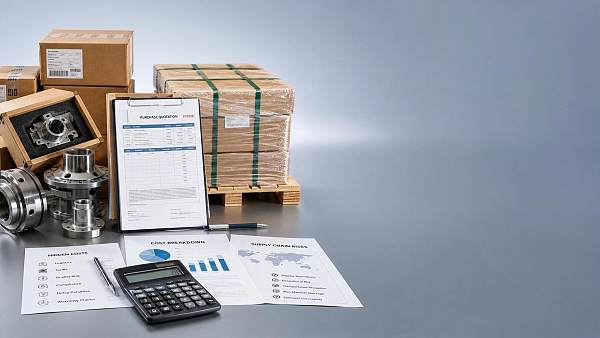
Procurement cost rarely stops at the quoted unit price.
That is the first number teams see, but often not the final one.
When margins are tight, hidden procurement cost can undermine otherwise reasonable approvals.
The effect is usually gradual, which makes it harder to catch early.
A low purchase price may still create a high total procurement cost after freight, quality loss, delays, and rework appear.
In practical terms, every buying decision carries a visible cost and a shadow cost.
The visible cost sits in the purchase order.
The shadow cost shows up later in operations, warranty, working capital, and missed output.
This is why procurement cost analysis now matters beyond sourcing teams alone.
A stronger approval decision links cost, risk, and operational resilience in one view.
GIM supports this approach by benchmarking suppliers, components, and industrial systems across global standards and cross-sector performance data.
That broader lens helps organizations understand where procurement cost truly accumulates.
Why Unit Price Distorts Procurement Cost
Unit price is simple, comparable, and easy to approve.
That convenience is exactly why it can be misleading.
Two suppliers may offer similar pricing, yet carry very different procurement cost outcomes over twelve months.
One may ship faster, hold tolerances better, and require less engineering support.
The other may trigger frequent expediting, inspection, and replacement activity.
On paper, the second quote looks cheaper.
In practice, its procurement cost can be significantly higher.
This pattern is more visible in sectors with strict technical requirements.
Examples include electronics, automotive assemblies, filtration systems, precision tooling, and smart agriculture equipment.
Common cost layers beyond the quote
- Inbound freight, fuel surcharges, customs handling, and insurance.
- Incoming inspection, testing, certification review, and sample validation.
- Production downtime caused by shortages, defects, or late deliveries.
- Engineering hours spent on correction, redesign, or supplier communication.
- Inventory carrying cost from buffer stock built around supplier uncertainty.
- Claims, returns, field failures, and brand damage after product release.
The Hidden Expenses That Raise Procurement Cost
The most damaging procurement cost drivers are often indirect.
They do not always appear in sourcing reports, but they show up clearly in margin performance.
1. Quality failures and rework
Quality issues create one of the fastest jumps in procurement cost.
A small defect rate can multiply through production, service, and warranty channels.
This is especially relevant when parts connect to safety, compliance, or performance-critical systems.
2. Logistics volatility
Freight markets change faster than many annual budgets.
A quote that looks attractive today may carry unstable transport assumptions.
Rush shipping, split loads, port delays, and route changes all increase procurement cost.
3. Compliance and certification gaps
Missing documentation can stall approvals long after an order is placed.
If a supplier fails to align with ISO, IATF, IPC, or regional environmental requirements, procurement cost rises quickly.
The penalties may include retesting, quarantine, legal review, and customer escalation.
4. Supplier instability
Financial stress, poor capacity planning, or weak process control can disrupt supply without warning.
Then the business pays through emergency buys, line stoppages, and slower customer fulfillment.
This is a classic example of procurement cost moving from sourcing into enterprise risk.
A Practical Procurement Cost Breakdown
A useful procurement cost model should be simple enough to apply, yet deep enough to catch hidden exposure.
The goal is not complexity.
The goal is better approval quality.
This structure helps teams compare suppliers on total procurement cost, not only on purchase price.
It also creates a more defensible approval trail.
How Better Data Reduces Procurement Cost Risk
Recent market shifts make static supplier evaluation less reliable.
A supplier that performed well last year may not be the lowest procurement cost option today.
More meaningful signals now come from cross-functional data.
That includes process capability, standards compliance, lead time consistency, and technical benchmarking.
This is where intelligence platforms like GIM become useful.
By connecting data across electronics, mobility, infrastructure, agri-tech, and tooling, organizations can see risk earlier.
That broader context matters because supplier problems often begin outside a single category view.
When teams benchmark technical performance against recognized standards, procurement cost decisions become less reactive and more strategic.
Useful indicators to track
- Lead time deviation instead of average lead time alone.
- Cost of poor quality by supplier and component family.
- Expedite frequency and cause category.
- Certification status tied to shipment or lot release.
- Single-source exposure on critical parts.
Approval Questions That Improve Procurement Cost Decisions
A strong approval process should challenge low-price assumptions without slowing business unnecessarily.
A few disciplined questions can expose hidden procurement cost quickly.
- What is the landed procurement cost after freight, duties, and payment terms?
- What quality history supports the quoted price advantage?
- What compliance documents are required before release to production?
- How much buffer inventory is needed to offset lead time risk?
- What is the recovery plan if the supplier fails or misses schedule?
- Does technical benchmarking support long-term reliability, not just short-term savings?
These questions create better discipline around procurement cost without turning approvals into paperwork exercises.
They also make sourcing trade-offs easier to explain internally.
Build a More Resilient Procurement Cost Strategy
The smartest cost decision is not always the lowest quote.
It is the option with the strongest total value after risk, quality, and continuity are priced in.
That shift in thinking is essential when volatility affects materials, transport, labor, and compliance at the same time.
In day-to-day business, procurement cost management works best when sourcing, operations, engineering, and finance share the same view of risk.
Organizations that combine supplier intelligence with technical benchmarking are better positioned to protect margins.
They approve faster, negotiate with more confidence, and avoid expensive surprises later.
If the goal is stronger profitability, procurement cost should be measured as a system, not a line item.
Start with the quote, but do not stop there.
Map the hidden cost layers, benchmark supplier capability, and test each approval against real operating conditions.
That is how procurement cost control becomes margin protection.
And that is how better purchasing decisions support a more resilient industrial future.
The Archive Newsletter
Critical industrial intelligence delivered every Tuesday. Peer-reviewed summaries of the week's most impactful logistics and market shifts.