Monday, May 22, 2024

Smart Warehousing Solutions That Cut Picking Errors and Delays
by
Published
Views:
Why smart warehousing becomes critical when operations grow more complex
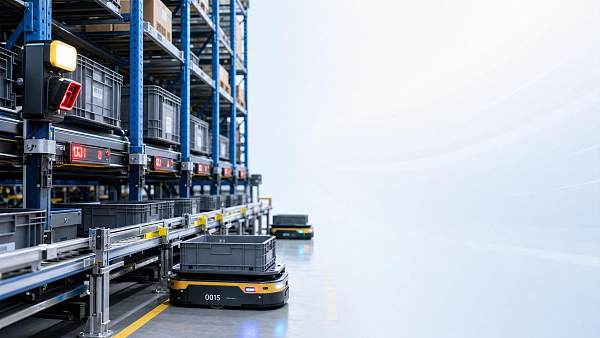
Smart warehousing now shapes delivery speed, inventory confidence, and execution stability across global industrial operations.
The pressure is no longer limited to storing parts efficiently.
Picking errors can stop an assembly line, delay field maintenance, or push a regulated shipment outside compliance windows.
That is why smart warehousing is increasingly treated as an operational control layer, not a support function.
In cross-sector environments, the same warehouse logic rarely fits every workflow.
An electronics operation may prioritize traceability and lot control.
An automotive program may care more about sequencing accuracy and line-side replenishment.
A smart agri-tech facility may need flexible storage for seasonal demand swings and mixed equipment profiles.
This is where a benchmarking view matters.
Global Industrial Matrix connects warehousing decisions to broader manufacturing conditions, standards alignment, and supply chain resilience across electronics, mobility, environmental systems, agriculture, and precision tooling.
The practical question is not whether smart warehousing is useful.
The real question is which smart warehousing model fits the operating reality, risk profile, and execution rhythm of each site.
Different facilities create different picking risks
Picking errors usually come from mismatch between process design and physical reality.
In actual deployment, delay risk grows when storage logic, worker guidance, and production urgency stop moving together.
Facilities with similar SKU counts can still need very different smart warehousing setups.
Part geometry, replenishment timing, quality documentation, and standard requirements all change the right design choice.
A high-mix warehouse handling connectors, sensors, and control boards often needs barcode discipline, location accuracy, and serial-level visibility.
A heavier industrial spare parts hub may gain more from route optimization and dynamic slotting.
Cold logic also fails in project-based operations.
When urgent kits are assembled for commissioning, maintenance, or pilot builds, the warehouse has to support exceptions without losing control.
That means smart warehousing should be judged by error prevention under pressure, not by automation level alone.
What changes from one site to another
The useful takeaway is simple.
Smart warehousing performs best when the control model reflects the real source of delay, not just the warehouse footprint.
Where smart warehousing delivers the clearest value first
One common starting point is component-intensive manufacturing.
When thousands of small parts move through tightly scheduled builds, even minor picking mistakes travel downstream quickly.
Here, smart warehousing often begins with mandatory scanning, guided picking, and real-time inventory validation.
The goal is not only faster picks.
The goal is to stop wrong components from reaching the line, especially where revision changes or compliance records matter.
A different pattern appears in assembly operations that depend on synchronized part flow.
In EV systems, mobility platforms, or modular equipment builds, delays often come from sequence breaks rather than count errors.
In that setting, smart warehousing needs to coordinate task release, replenishment timing, and line consumption signals.
Another strong use case is service and field support logistics.
Environmental infrastructure, filtration systems, and industrial tooling programs often hold slow-moving yet critical parts.
The right smart warehousing approach here emphasizes locator confidence, aging visibility, and dispatch readiness for urgent interventions.
Across these settings, automation can help, but process discipline matters more than robotics alone.
A warehouse with modest hardware and strong workflow control often outperforms a more automated site with weak data integrity.
Before choosing technology, test the fit between workflow and control depth
A recurring mistake is to evaluate smart warehousing by features instead of workflow dependencies.
Pick-to-light, AMRs, RFID, voice picking, and WMS analytics all solve different problems.
They should not be treated as interchangeable upgrades.
A practical way to judge fit is to map where errors originate.
- If wrong picks come from visual similarity, guided confirmation and image-assisted validation may matter most.
- If shortages appear despite stocked shelves, inventory timing and transaction discipline need attention first.
- If delays happen during replenishment, travel paths, slotting strategy, and priority logic deserve focus.
- If compliance is the risk, serial tracking and audit-ready data should lead the design.
This is especially relevant in operations measured against ISO, IATF, or IPC-linked requirements.
Smart warehousing cannot be separated from documentation reliability, change control, and material status accuracy.
A system that speeds picking but weakens traceability usually creates larger costs later.
Common misjudgments that weaken smart warehousing results
The first misjudgment is assuming all high-volume warehouses need the same automation depth.
In practice, a medium-volume site with high product variability may need smarter controls than a larger site with repetitive flows.
Another issue is focusing only on purchase cost.
Smart warehousing should be evaluated against training effort, data cleanup, system integration, maintenance burden, and future layout changes.
There is also a tendency to treat similar sectors as identical.
For example, electronics modules, EV subassemblies, and water treatment components may all require careful handling.
Still, their picking logic differs because shelf life, revision control, packaging, and dispatch urgency differ.
Data fragmentation creates another hidden failure point.
If ERP, WMS, MES, and quality records do not stay aligned, smart warehousing becomes faster at moving uncertainty.
That is where cross-functional benchmarking becomes useful.
Comparing process choices across sectors helps reveal whether the weakness sits in layout, system architecture, or material governance.
A practical way to align smart warehousing with site conditions
The better approach is to define fit before scaling investment.
That usually starts with a short operational baseline.
After that, smart warehousing can be phased with more confidence.
Many operations improve first through location redesign, scan rules, and exception visibility.
More advanced automation tends to work better after those basics are stable.
For organizations operating across multiple industrial domains, one added advantage comes from shared metrics.
A common benchmark for pick accuracy, delay cause, replenishment cycle, and traceability quality makes site-to-site comparison more useful.
The next step is to judge smart warehousing by execution quality
Smart warehousing creates value when it reduces avoidable mistakes under real operating pressure.
That requires more than new devices or software labels.
It requires matching warehouse control depth to inventory behavior, production rhythm, compliance needs, and service expectations.
A sensible next move is to map the highest-cost picking failures, compare them across actual workflows, and define which smart warehousing controls address those points directly.
From there, it becomes easier to evaluate implementation difficulty, integration risk, maintenance demand, and long-term operational fit.
In complex industrial networks, better warehousing decisions usually begin with sharper scenario judgment.

The Archive Newsletter
Critical industrial intelligence delivered every Tuesday. Peer-reviewed summaries of the week's most impactful logistics and market shifts.