Monday, May 22, 2024

Supplier Capability Evaluation Cost: What Drives Pricing and Hidden Risk?
by
Published
Views:
Supplier Capability Evaluation Cost: What Drives Pricing and Hidden Risk?
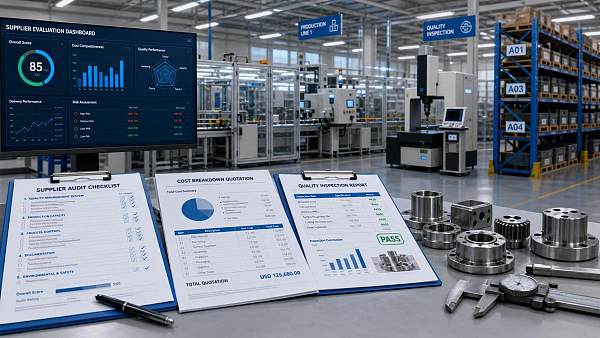
For procurement teams, supplier capability evaluation cost is never just an audit fee.
It shapes sourcing confidence, onboarding speed, and the real cost of supplier failure.
That is why pricing often feels inconsistent across providers, regions, and factory types.
One quote may look simple.
Another may be double the price for what seems like the same service.
In practice, supplier capability evaluation cost depends on scope, technical depth, evidence quality, and post-visit verification work.
The bigger issue is hidden risk.
A low-cost review can miss process instability, weak traceability, or overstated production capacity.
That usually becomes expensive later through delays, quality escapes, or emergency resourcing.
So the better question is not only how much supplier capability evaluation cost should be.
It is what level of evaluation is enough for the supplier, part, and risk profile involved.
What Usually Sits Inside Supplier Capability Evaluation Cost
Most buyers first see a daily rate or project fee.
That number rarely tells the full story.
A credible supplier capability evaluation cost usually includes several layers of work.
- Pre-assessment planning and document review
- On-site or remote capability audit time
- Technical specialist involvement by process type
- Capacity, quality, and compliance verification
- Scoring, benchmarking, and risk reporting
- Corrective action review and follow-up validation
When a quote excludes some of these steps, the initial price may look attractive.
But the total supplier capability evaluation cost often rises later through add-ons, repeat visits, or extra verification.
The Main Pricing Drivers Buyers Should Expect
From a sourcing perspective, five factors push supplier capability evaluation cost up or down most often.
1. Audit Scope
A basic factory profile review is cheaper than a full operational capability assessment.
If the review covers quality systems, process control, tooling, maintenance, and sub-tier dependence, cost rises quickly.
2. Technical Complexity
Simple assembly suppliers are easier to assess than makers of PCBs, EV components, filtration modules, or safety-critical parts.
More complex categories require stronger engineering expertise and deeper process benchmarking.
3. Compliance Depth
Checking a certificate is one thing.
Confirming that ISO, IATF, IPC, ESG, or customer-specific controls actually work on the floor is different.
That deeper validation increases supplier capability evaluation cost, but usually reduces future exposure.
4. Geography and Access
Travel, local language support, site access conditions, and security requirements all affect cost.
A remote inland plant can cost more to verify than a major industrial hub.
5. Reporting and Follow-Through
Some providers deliver a checklist and score.
Others deliver a decision-ready report with risk ranking, corrective actions, and capability benchmarking.
That difference has a direct impact on supplier capability evaluation cost and procurement usefulness.
Why the Cheapest Evaluation Often Becomes the Most Expensive
Low pricing can make sense when the supplier is low-risk and the category is simple.
The problem starts when a low-fee audit is used for a high-impact source.
In actual operations, hidden gaps are where supplier capability evaluation cost becomes misleading.
- No validation of true monthly capacity
- No cross-check of scrap, yield, or rework data
- No review of critical equipment uptime
- No visibility into outsourced processes
- No traceability test through lot history
- No follow-up on major corrective actions
These omissions lower the quote.
They also reduce confidence in the result.
When launch delays or field issues follow, the original supplier capability evaluation cost was not actually low at all.
A Practical Way to Compare Supplier Evaluation Quotes
Recent buying behavior shows that quote comparison is often too price-led.
A better method is to compare the work package behind the number.
This view makes supplier capability evaluation cost easier to compare across vendors.
It also helps defend procurement decisions internally when stakeholders ask why one quote costs more.
When to Spend More on Supplier Capability Evaluation Cost
Not every supplier needs the same level of scrutiny.
That is where a risk-based model becomes useful.
Higher supplier capability evaluation cost is usually justified when the supplier affects revenue, safety, compliance, or launch timing.
- Single-source or hard-to-replace suppliers
- New suppliers with limited operating history
- Processes with tight tolerances or regulated outputs
- Suppliers tied to customer audits or OEM approval
- Factories with major expansion or transfer plans
In these cases, deeper review reduces the chance of discovering weakness after nomination.
That is usually where supplier capability evaluation cost creates the highest return.
How Data-Led Benchmarking Improves Cost Control
One clear market shift is the move from pass-fail auditing to comparative capability benchmarking.
This matters because a supplier may pass an audit and still perform below industry expectation.
Platforms such as Global Industrial Matrix support this by connecting technical evaluation with cross-sector performance intelligence.
That broader lens is useful when procurement decisions span electronics, automotive, agri-tech, infrastructure, and precision tooling.
Instead of viewing supplier capability evaluation cost as a stand-alone fee, buyers can tie it to measurable risk reduction.
- Better supplier segmentation
- Faster go or no-go decisions
- Stronger cross-functional alignment
- Fewer avoidable qualification cycles
- Clearer evidence for risk escalation
That shift improves both sourcing speed and total evaluation efficiency.
Questions to Ask Before Approving the Budget
Before approving any supplier capability evaluation cost, buyers should pressure-test the scope.
- What exact risks will this evaluation confirm or eliminate?
- Is the assessor technically qualified for this product category?
- Will capacity claims be validated with real production evidence?
- Are sub-suppliers, special processes, and bottlenecks included?
- Does the report support a sourcing decision, or only a compliance file?
- What follow-up is included if major findings appear?
These questions make supplier capability evaluation cost more transparent.
They also reduce the chance of paying twice for incomplete work.
In the end, the best evaluation is not the cheapest one.
It is the one that fits the sourcing decision and exposes risk early enough to act.
That is how supplier capability evaluation cost becomes a controlled investment rather than a reactive expense.
For organizations managing complex global supply networks, disciplined evaluation scope, evidence quality, and technical benchmarking should move together.
When those pieces align, sourcing decisions become faster, defensible, and far less vulnerable to hidden operational surprises.
The Archive Newsletter
Critical industrial intelligence delivered every Tuesday. Peer-reviewed summaries of the week's most impactful logistics and market shifts.