Monday, May 22, 2024

Textile Engineering Trends in 2026: Materials, Automation, Compliance
by
Published
Views:
Textile engineering in 2026 sits at the intersection of materials science, automation, and regulatory control. What once looked like a narrow manufacturing discipline now affects sourcing strategy, product risk, lifecycle cost, and cross-border market access.
That shift matters because textile products increasingly serve broader industrial systems. Technical fabrics now appear in mobility, electronics protection, filtration, agricultural applications, medical environments, and infrastructure projects, where performance must be measurable, repeatable, and compliant.
In this environment, textile engineering is no longer judged only by softness, durability, or price. It is judged by data integrity, process stability, chemical traceability, and the ability to benchmark performance against international standards and adjacent sectors.
Why textile engineering is gaining strategic weight
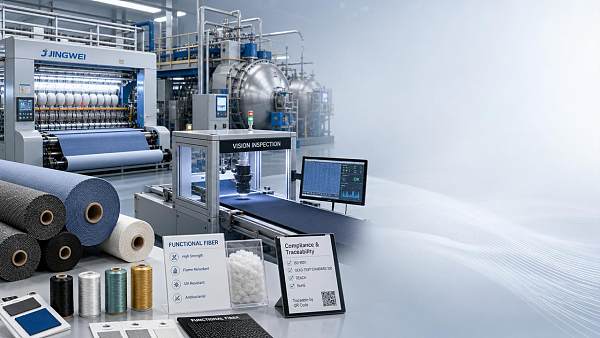
The strongest change is not only technical. It is structural. Textile engineering now operates inside a more connected industrial landscape, where fabrics are part of larger systems rather than isolated product categories.
A coated fabric for EV interiors, a geotextile for water management, or a high-strength agricultural mesh may each depend on different standards, testing methods, and supplier capabilities. Yet all require disciplined engineering logic.
This is where cross-sector benchmarking becomes useful. Platforms such as Global Industrial Matrix, or GIM, reflect a reality many supply chains already face: textile decisions are tied to electronics, automotive quality systems, ESG reporting, and precision tooling capability.
For that reason, evaluating textile engineering trends in 2026 means looking beyond fabric output alone. It means asking how material selection, factory control, and compliance readiness support resilience across the entire production network.
Materials are moving from commodity choices to engineered performance
The material story in textile engineering is becoming more specialized. Traditional fibers remain important, but value is shifting toward blends, functional coatings, recycled inputs, bio-based polymers, and technical yarn architectures.
In practical terms, buyers are asking harder questions. Does the fabric resist abrasion under repeated industrial use? Does it tolerate heat cycles? Can it maintain tensile properties after chemical exposure or UV aging?
Advanced materials also introduce trade-offs. A recycled fiber solution may improve sustainability reporting, yet create variability in color consistency or mechanical behavior. A high-performance laminate may improve durability, yet complicate recyclability and end-of-life treatment.
That is why textile engineering in 2026 relies more heavily on application-specific qualification. Material claims alone are not enough. The engineering value comes from test evidence, process compatibility, and known performance under realistic use conditions.
Material categories drawing attention
- Recycled synthetics with traceable feedstock and stable mechanical properties.
- Bio-based fibers and polymers where carbon reduction matters, but durability still needs proof.
- Functional textiles with flame resistance, antimicrobial behavior, conductivity, or barrier performance.
- Composite and multilayer structures designed for filtration, mobility, protective equipment, and infrastructure use.
The common thread is clear. Textile engineering is moving toward measurable function, not just raw material substitution.
Automation is redefining how textile quality is controlled
Automation in textile engineering is no longer limited to faster looms or larger dyeing lines. The more significant development is closed-loop process control across spinning, weaving, knitting, finishing, inspection, and packaging.
Vision systems now detect surface defects earlier. Sensor arrays monitor tension, humidity, temperature, and chemical dosing in real time. Production software links these signals to quality outcomes and maintenance decisions.
This matters because many textile defects are cumulative. A small variance in yarn tension can later appear as streaking, distortion, weak seams, or inconsistent coating coverage. Automation helps identify root causes before waste expands.
The commercial implication is equally important. Better automation improves batch repeatability, line utilization, and traceability. It can also shorten qualification cycles when customers require evidence of process discipline rather than verbal assurance.
Where automation creates the most value
For textile engineering teams, the lesson is simple. Automation is most valuable when it improves decision quality, not just output speed.
Compliance is becoming part of product design, not just final approval
Compliance pressure is rising across chemicals, emissions, labor visibility, recycled content claims, and end-market performance requirements. In textile engineering, this changes the timing of risk management.
Instead of checking regulatory fit at the end, many organizations now build compliance conditions into fiber selection, finishing chemistry, process documentation, and supplier onboarding.
Standards and certifications remain fragmented by market and application. Some products follow apparel-related chemical restrictions. Others align more closely with automotive, construction, filtration, or industrial safety requirements.
This is where a benchmarking mindset helps. GIM’s cross-disciplinary approach is relevant because textile engineering increasingly overlaps with ISO-based quality frameworks, automotive process expectations, and broader ESG infrastructure reporting.
Compliance questions that deserve early attention
- Which restricted substances or material declarations apply to the target market?
- Can the supplier provide lot-level traceability for fibers, additives, and finishing agents?
- Are test methods aligned with the actual end-use environment?
- Do sustainability claims rely on verified data or only marketing language?
- How quickly can documentation be updated after a formula or source change?
In 2026, strong textile engineering is partly the ability to reduce compliance surprises before they become commercial disruptions.
How these trends affect evaluation and sourcing decisions
From a business perspective, textile engineering trends matter because they reshape how value should be compared. Unit price still matters, but it no longer captures the full cost of a textile decision.
A lower-cost fabric may create hidden expense through unstable quality, failed audits, high scrap rates, or delayed approvals. A more expensive engineered textile may reduce lifecycle risk if it performs consistently across applications and markets.
This is especially relevant in industries that interact with electronics, mobility systems, smart agriculture, or environmental infrastructure. In these settings, textile failure can affect adjacent components, maintenance intervals, or compliance reporting.
A more mature evaluation process usually connects four dimensions: material performance, process capability, documentation quality, and supply continuity. If one dimension is weak, the apparent savings may not hold.
Useful evaluation signals in 2026
- Stable test data across multiple lots, not just one sample set.
- Clear evidence of automated process monitoring in critical production steps.
- Documented control of chemical inputs and finishing consistency.
- Traceable links between performance claims and recognized standards.
- Visibility into backup capacity, tooling readiness, and upstream material risk.
Where textile engineering is showing the clearest application shifts
Several application areas illustrate why textile engineering now belongs in wider industrial conversations. Each one places different pressure on materials, process control, and compliance logic.
These examples show how textile engineering is increasingly evaluated like a technical subsystem. The closer the fabric is to critical performance, the more rigorous the assessment becomes.
A practical way to read the market in 2026
The most reliable view of textile engineering trends comes from comparing claims with operating evidence. Market language often highlights sustainability, digitalization, and innovation, but the useful questions remain grounded.
What problem does the textile solve? Which parameters define acceptable performance? How controlled is the route from raw input to finished roll or component? How portable is the solution across regions and standards?
This is also where cross-sector intelligence becomes practical. A textile supplier serving mobility or filtration applications may already operate with stronger process discipline than one competing only on low-cost volume. Comparative benchmarking reveals that difference.
The next step is usually not a broad supplier search. It is a tighter evaluation framework: define critical properties, verify process capability, review compliance depth, and compare technical fit against long-term operational risk.
In 2026, textile engineering rewards careful judgment. The strongest decisions come from linking materials, automation, and compliance into one assessment standard, then testing each option against the realities of use, scale, and market exposure.

The Archive Newsletter
Critical industrial intelligence delivered every Tuesday. Peer-reviewed summaries of the week's most impactful logistics and market shifts.