Monday, May 22, 2024

Tooling Analysis Europe: Cost Benchmarks and Supplier Red Flags
by
Published
Views:
Tooling Analysis Europe: Cost Benchmarks and Supplier Red Flags
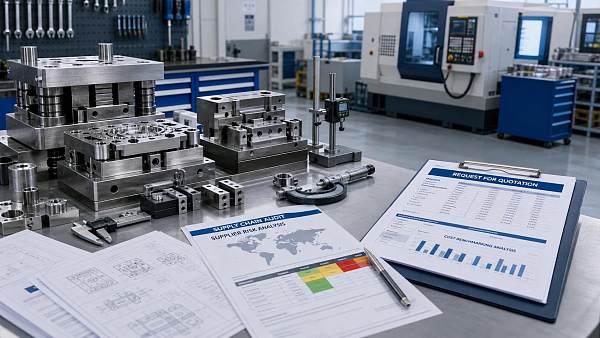
For procurement teams facing rising costs and uneven supplier performance, tooling analysis Europe offers a practical lens for smarter sourcing.
This article breaks down current cost benchmarks, hidden quote drivers, and supplier warning signs that affect quality, timing, and long-term program risk.
Across Europe, tooling decisions now sit closer to strategic sourcing than simple price comparison.
That shift is driven by energy costs, labor constraints, material volatility, and tighter customer requirements on traceability and validation.
In practical terms, tooling analysis Europe helps buyers separate a realistic quote from one that looks attractive but carries hidden exposure.
It also supports cleaner supplier comparisons across mold tools, dies, fixtures, jigs, and precision tooling used in multi-site manufacturing programs.
Why tooling analysis Europe matters more now
The old approach focused on unit price and nominal tool life.
That is no longer enough for complex industrial sourcing.
From recent market changes, a stronger signal is the widening gap between quoted price and delivered performance.
A low tool price can still lead to expensive rework, delayed PPAP, unstable cycles, and poor repeatability during ramp-up.
This is where tooling analysis Europe becomes useful as a procurement control tool.
It combines cost benchmarking with technical review, supplier capability checks, and risk signals that may not appear in the RFQ spreadsheet.
For organizations managing automotive, electronics, industrial equipment, or environmental infrastructure, that broader view is now essential.
Current cost benchmarks in Europe
Any tooling analysis Europe project should start with realistic cost ranges, not single reference prices.
Tooling cost varies by geometry, material, tolerance, cavitation, validation needs, and expected maintenance intervals.
Still, several market bands are useful for first-pass sourcing decisions.
These ranges reflect broad sourcing patterns in Western and Central Europe.
They should not replace a technical review, but they help flag quotes that sit unusually low or high.
A disciplined tooling analysis Europe exercise also compares prototype tools, bridge tools, and production tools separately.
Mixing those categories often distorts supplier selection.
What actually moves the quote
In actual sourcing work, the biggest pricing errors usually come from underestimating the quote structure.
Tool steel is only one part of the picture.
A robust tooling analysis Europe review should test the following variables before supplier nomination.
- Material specification: P20, H13, stainless grades, coatings, and hardness targets change durability and machinability.
- Tolerance stack: tighter geometric control raises machining time, inspection effort, and fitting cycles.
- Surface requirements: texture, polish, coating, and cosmetic zones often add hidden iterations.
- Validation scope: FAI, capability studies, PPAP support, and metrology reports can materially change cost.
- Tool life expectation: a 50,000-shot concept tool differs sharply from a 1,000,000-shot production tool.
- Maintenance design: replaceable inserts and standardized wear parts often cost more upfront but reduce lifecycle risk.
The more complex the program, the less useful a headline tool price becomes.
That also explains why tooling analysis Europe should include total cost of ownership, not purchase price alone.
Supplier red flags that deserve immediate attention
Not every low quote is a problem, but certain patterns appear repeatedly in failed tooling programs.
A practical tooling analysis Europe process should screen for these signals early.
- Incomplete quote breakdown. If machining, assembly, tryout, and validation costs are bundled without detail, comparison becomes unreliable.
- Weak change control. Suppliers who cannot define engineering revision handling often create cost disputes later.
- Vague tool life claims. Numbers without material assumptions, maintenance plans, or wear-part strategy should be treated cautiously.
- Limited metrology evidence. Capability claims without CMM reporting, gauge strategy, or traceable inspection records are weak.
- Unclear subcontracting. Hidden outsourcing of EDM, heat treatment, or polishing can create schedule and quality instability.
- Optimistic lead times. Promises that ignore design freeze dates, material procurement, and tryout loops often slip first.
- No structured risk log. Mature suppliers usually identify critical features, process risks, and contingency actions before award.
These issues rarely stay isolated inside the tooling shop.
They usually surface later as line stoppages, scrap spikes, repeat tool corrections, or disputed warranty responsibility.
How to compare suppliers more effectively
Good sourcing discipline means building a like-for-like comparison model.
Without that, tooling analysis Europe becomes distorted by different assumptions hidden inside each quote.
A useful evaluation structure includes both commercial and technical criteria.
- Quoted tool price and payment milestones
- Lead time to T1 samples and production-ready approval
- Included validation activities and documentation package
- Expected maintenance intervals and spare-part strategy
- Material certificates, heat treatment records, and traceability depth
- Program management responsiveness and engineering communication quality
This also means buyers should score technical transparency, not just quoted cost.
A slightly higher quote may represent lower lifecycle cost when corrective actions and downtime are included.
Where GIM adds value in tooling analysis Europe
Global Industrial Matrix approaches tooling analysis Europe as part of a wider manufacturing intelligence model.
That matters because tooling risk rarely exists on its own.
Tooling quality connects directly with downstream process capability, supply continuity, and cross-sector compliance requirements.
By benchmarking tooling against international standards and comparable industrial programs, GIM helps clarify whether a quote reflects true capability.
This is especially relevant for organizations sourcing across automotive, electronics, infrastructure, and precision hardware categories.
The practical outcome is better sourcing visibility, faster escalation of weak suppliers, and stronger control over cost-to-performance decisions.
A workable sourcing checklist
To make tooling analysis Europe actionable, use a short pre-award checklist.
- Confirm the tool category and expected production life.
- Request a line-by-line quotation with validation scope clearly separated.
- Verify steel grade, hardness plan, and critical purchased components.
- Review metrology capability and sample reporting format.
- Check whether external processes are subcontracted and how they are controlled.
- Score lead-time realism against design maturity and approval milestones.
- Document red flags before nomination, not after kickoff.
The main value of tooling analysis Europe is not more paperwork.
It is better judgment at the point where cost, timing, and supplier risk meet.
When benchmark data, quote structure, and technical evidence are reviewed together, sourcing decisions become more stable and easier to defend.
That is the real advantage of tooling analysis Europe in a tighter and more demanding manufacturing market.
The Archive Newsletter
Critical industrial intelligence delivered every Tuesday. Peer-reviewed summaries of the week's most impactful logistics and market shifts.