Monday, May 22, 2024

Tooling Analysis Methods That Expose Hidden Mold Issues Early
by
Published
Views:
For quality and safety teams, hidden mold issues can trigger dimensional drift, surface defects, unplanned downtime, and compliance risks long before failure becomes visible. This article explains how tooling analysis helps expose those early warning signs through data-driven inspection, performance benchmarking, and root-cause validation, enabling faster corrective action and more reliable production outcomes across complex manufacturing environments.
When professionals search for tooling analysis methods that reveal hidden mold problems early, they are usually not looking for a generic definition. They want practical ways to detect wear, instability, cooling imbalance, venting failure, alignment loss, and process-to-tool interaction before scrap rates spike or safety incidents occur. For quality control and safety managers, the real question is simple: how can a team identify mold-related risk early enough to prevent defective output, line disruption, and audit exposure?
The short answer is that effective tooling analysis combines measurement, process data, physical inspection, and comparative benchmarking. No single test catches every hidden issue. The most reliable approach connects dimensional trends, cavity pressure behavior, thermal patterns, maintenance history, and part defect mapping to identify where the mold is drifting away from its intended performance window.
This matters across modern manufacturing because tooling is no longer an isolated asset. In sectors ranging from automotive to electronics and industrial components, mold condition affects capability, traceability, customer returns, operator safety, and even ESG performance through material waste and energy inefficiency. For teams working in high-accountability environments, early detection is not only a maintenance concern. It is a production control and risk management priority.
What quality and safety teams really need from tooling analysis
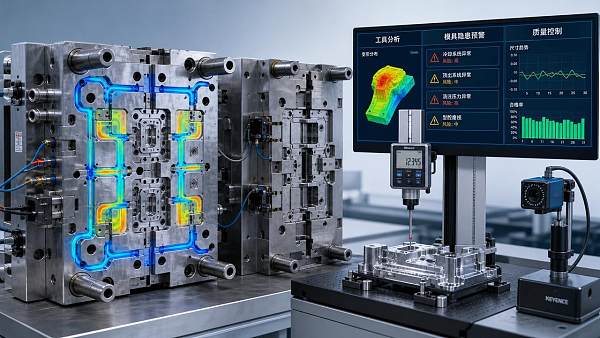
The core search intent behind this topic is operational: readers want to know which tooling analysis methods provide early, actionable visibility into hidden mold issues and how those methods support faster decisions. They are trying to reduce uncertainty before a visible failure forces downtime, containment action, or customer escalation.
Quality personnel often care most about dimensional consistency, recurring defect patterns, Cp/Cpk decline, first-pass yield, and complaint prevention. Safety managers are more focused on failure modes that create unstable production conditions, abnormal press behavior, overheating, ejection hazards, flash-related trimming risks, or maintenance situations that could expose technicians to preventable incidents.
Because of that, the most useful article is not one that lists analysis techniques in isolation. It should explain which hidden problems each method can reveal, what signals indicate elevated risk, how to validate findings, and when intervention is justified. Readers need decision support, not theory alone.
That is why the strongest sections focus on early warning indicators, comparative methods, inspection hierarchy, root-cause logic, and implementation priorities. General background on what a mold is or broad manufacturing overviews should remain secondary. The value lies in helping professionals distinguish normal variation from tool-driven deterioration.
Which hidden mold issues appear first, before obvious failure
Many mold failures do not begin as dramatic events. They start as subtle performance shifts that are easy to dismiss if teams monitor only visible defects. In practice, early-stage issues often include minor parting line wear, localized vent restriction, cooling channel imbalance, cavity-to-cavity variation, ejection friction increase, gate erosion, insert movement, and clamp face alignment drift.
These problems may show up indirectly as changing cycle times, unstable fill patterns, rising cosmetic defects, short-term dimensional recoveries followed by renewed drift, or unexplained parameter sensitivity. For example, a process that suddenly requires tighter setup control to maintain acceptable output may indicate the mold is losing robustness, even if parts still pass initial inspection.
Another common hidden issue is thermal inconsistency. If one cavity or one side of a tool runs hotter than expected, the result may be warpage, sink variation, gloss differences, or resin degradation. Because temperature effects can interact with machine settings and ambient conditions, teams sometimes blame the process first when the deeper source is tooling condition.
Likewise, venting degradation rarely announces itself clearly. It may first appear as burn marks, trapped gas, unstable fill, or pressure spikes in specific cavities. Without structured tooling analysis, a team may respond by adjusting injection speed or packing pressure, unintentionally masking the symptom while worsening long-term wear and variability.
Tooling analysis methods that expose hidden issues early
The most effective tooling analysis strategy uses multiple layers. Each method contributes different evidence, and the combined picture is what exposes hidden mold issues before catastrophic failure. Quality and safety teams should think in terms of a progressive diagnostic stack rather than a single inspection activity.
Trend analysis of dimensional data is one of the best starting points. If critical dimensions drift gradually over time, especially in a repeatable direction, the mold may be wearing, shifting, or cooling unevenly. The key is not just to review out-of-spec parts, but to examine trend slope, cavity-specific behavior, and correlation with maintenance intervals. Stable processes can still hide a degrading tool if the mean shifts slowly within tolerance.
Cavity-to-cavity comparison is equally powerful. When only one or two cavities show recurring deviation, the issue is often local to inserts, gates, vents, or cooling circuits rather than a global machine problem. A cavity map of dimensional defects, flash occurrence, short shots, or cosmetic variation often reveals patterns that general batch averages hide.
Mold temperature analysis helps identify cooling imbalance, blockage, scale buildup, and heat concentration zones. Teams can use thermal imaging, mold surface temperature checks, and cooling circuit flow verification to compare expected versus actual thermal behavior. Uneven temperatures often explain quality instability long before visible tool damage is found.
Cavity pressure monitoring adds another important layer. Changes in fill pressure signature, peak cavity pressure, pressure decay, and cavity-to-cavity response can indicate venting issues, gate wear, viscosity sensitivity, or changing resistance in the tool. For high-value or high-risk production, cavity pressure data is one of the clearest ways to separate machine variation from tooling-driven instability.
Visual and metrological inspection of the mold itself remains essential. This includes checking parting lines, shutoffs, vents, gate geometry, ejector pin wear, insert seating, runner condition, corrosion signs, and surface damage. Measurement tools such as portable CMMs, optical scanners, replicas, or profile instruments can quantify wear instead of relying on subjective judgment.
Process window sensitivity analysis is another underused method. A healthy mold generally supports a reasonable operating window. If acceptable quality now depends on unusually narrow settings, frequent offsets, or operator intervention, the tooling may no longer be performing as designed. In other words, reduced process robustness is itself a warning sign.
Maintenance history and event correlation often completes the picture. Teams should compare defect emergence, scrap increases, and downtime events with tool service records, insert replacements, cleaning frequency, and previous repairs. Repeated return of the same issue after maintenance can signal that the original root cause was not fully identified.
How to tell whether the problem is the process, the material, or the mold
One of the biggest frustrations in manufacturing is misdiagnosis. A defect may look like a process issue, but repeated tuning fails because the mold is the real source. Strong tooling analysis helps teams separate these factors systematically instead of relying on trial and error.
Start by asking whether the issue is global or localized. If all cavities shift in the same way after a material lot change or ambient change, the problem may be process or material related. If the issue remains concentrated in specific cavities, specific features, or specific regions of the part, the mold becomes a stronger suspect.
Next, test for repeatability under controlled settings. If machine parameters are held constant and the defect still appears intermittently in the same cavity or zone, hidden tooling variation is likely involved. If the issue moves with material lots or processing conditions, material-process interaction may be dominant instead.
Teams should also review whether corrective actions only mask symptoms. For instance, increasing packing pressure may reduce sink temporarily, but if the underlying problem is cooling restriction or gate wear, the gain will be unstable and may create other defects. A recurring need for compensating adjustments is often a clue that the mold is deteriorating.
Root-cause validation should include at least one independent confirmation method. If dimensional drift suggests insert wear, confirm with direct measurement. If cavity pressure indicates venting restriction, inspect vents physically and compare with defect locations. This discipline matters because premature maintenance on the wrong cause wastes cost, extends downtime, and undermines confidence in the analysis system.
What early warning indicators deserve immediate action
Not every variation requires shutdown, but some signals should trigger rapid review because they indicate elevated risk to quality, safety, or compliance. One example is a sudden increase in cavity imbalance. If one cavity begins behaving differently from the others without an intentional process change, the tool may be developing localized wear, blockage, or alignment issues.
Another high-priority signal is abnormal thermal behavior. Unexpected hot spots, cooling flow reduction, or increasing temperature spread between cavities can accelerate defect formation and damage-sensitive materials. In safety-critical applications, thermal instability may also raise the risk of sticking, ejection problems, or operator exposure during troubleshooting.
Recurring flash in a specific region is also important. Flash may seem manageable at first, but it often points to parting line wear, shutoff damage, or clamp-related distortion. Left unaddressed, it can lead to trimming hazards, dimensional nonconformance, and progressive tool degradation.
Teams should act quickly as well when process capability drops without clear external cause. A steady reduction in Cpk, increasing adjustment frequency, or growing dependence on one skilled operator suggests that the tool-process system is losing stability. That is often the point where hidden issues become business risks, even before formal nonconformance rises sharply.
Finally, any pattern that combines quality loss with maintenance burden deserves escalation. If the same mold repeatedly generates defects, cleaning demand, sensor alarms, or intervention events, the cost of delayed diagnosis usually exceeds the cost of deeper analysis.
How to build a practical tooling analysis workflow
For quality and safety teams, the goal is not to create a complex laboratory program. It is to establish a repeatable workflow that catches high-risk tooling issues early. A practical model starts with baseline definition, then moves into routine monitoring, trigger-based escalation, root-cause validation, and post-correction verification.
Step one: define the baseline. Record dimensional capability, approved cavity behavior, standard thermal ranges, normal pressure signatures if available, cycle time profile, and acceptable visual conditions for critical mold features. Without baseline data, early deterioration is much harder to identify objectively.
Step two: monitor trend indicators. Use SPC for critical dimensions, defect mapping by cavity, downtime coding, and maintenance records tied to tool ID. If possible, add automated data from temperature, flow, or cavity pressure systems. The point is not to collect everything, but to monitor variables that reflect tool health.
Step three: define escalation triggers. Examples include recurring defects in one cavity, capability decline beyond a set threshold, repeated thermal anomalies, or increasing intervention frequency between preventive maintenance cycles. Clear triggers prevent debates about whether a problem is “serious enough” to investigate.
Step four: validate the root cause. Combine data review with physical inspection and comparative testing. The best tooling analysis programs do not stop at symptom recognition; they document the mechanism, affected features, and evidence chain that supports the conclusion.
Step five: verify after correction. Once repair or adjustment is completed, compare performance against the original baseline. If the same drift returns quickly, the fix was incomplete or the diagnosis missed a deeper factor such as machine alignment, material contamination, or unsuitable maintenance intervals.
Business value: why early tooling analysis matters beyond defect reduction
For management, the value of tooling analysis is often first expressed in scrap reduction, but the real impact is broader. Early detection of hidden mold issues protects schedule reliability, lowers reactive maintenance costs, supports customer confidence, and reduces the chance of shipping latent defects into regulated or safety-sensitive applications.
It also improves resource allocation. When teams know which molds are truly degrading and why, they can prioritize repairs based on risk instead of intuition. That leads to better spare-part planning, smarter preventive maintenance timing, and fewer unnecessary teardown events.
From a safety standpoint, stable tooling reduces exposure to emergency intervention, jam clearing, repeated setup changes, and unplanned maintenance under production pressure. That is especially important in environments where hot surfaces, moving components, and compressed systems create risk during troubleshooting.
There is also a strategic advantage. In cross-sector manufacturing environments such as those benchmarked by Global Industrial Matrix, tooling performance data helps connect shop-floor observations with broader procurement, supplier quality, and asset strategy decisions. A mold that repeatedly loses capability may not just need repair; it may require design revision, material upgrade, or supplier requalification.
What a strong tooling analysis culture looks like
The best results come when tooling analysis is treated as a cross-functional discipline rather than a maintenance-only task. Quality, production, tooling, process engineering, and safety teams should share the same language for defect mapping, escalation thresholds, and validation evidence.
Organizations with strong performance usually do three things well. First, they standardize what “normal” tool behavior looks like. Second, they link part data to cavity and tool condition instead of reviewing product defects in isolation. Third, they close the loop after corrective action so that every tooling issue becomes a source of learning rather than a repeated surprise.
They also avoid a common mistake: overreliance on machine setting changes to keep output acceptable. Skilled processors can often keep production running despite a degrading mold, but that short-term success can delay intervention until the problem becomes more expensive and more disruptive.
In practical terms, strong culture means teams ask better questions earlier. Is this defect cavity-specific? Has process sensitivity increased? Are thermal patterns changing? Did the last repair actually restore baseline performance? These questions turn tooling analysis into a preventive system instead of a reactive response.
Conclusion: better tooling analysis leads to earlier control and lower risk
Hidden mold issues rarely stay hidden forever. The real challenge is whether a manufacturing team can detect them while there is still time to correct the problem with minimal cost, low disruption, and reduced risk. That is exactly where tooling analysis delivers value.
For quality and safety professionals, the most effective approach is evidence-based and layered: monitor dimensional trends, compare cavities, assess thermal behavior, use pressure or process signatures where possible, inspect critical mold features directly, and validate root cause before acting. This is how teams distinguish normal variation from meaningful deterioration.
When implemented well, tooling analysis does more than find defects. It improves decision quality, strengthens preventive maintenance, protects operator safety, and supports more reliable production performance across complex industrial environments. The earlier hidden mold issues are exposed, the more control the organization keeps over quality, cost, and operational resilience.
The Archive Newsletter
Critical industrial intelligence delivered every Tuesday. Peer-reviewed summaries of the week's most impactful logistics and market shifts.