Monday, May 22, 2024

Tooling solutions that cut rework without raising unit cost
by
Published
Views:
In modern manufacturing, the right tooling solutions can reduce rework, protect margins, and improve consistency without inflating unit cost. From PCBA manufacturing and tech hardware to a plastic injection mold factory, global teams now need data-driven methods aligned with engineering standards, industrial sustainability, and global manufacturing demands. This article shows how smarter tooling decisions strengthen quality, speed, and industrial infrastructure across complex operations.
For most readers searching for tooling solutions that cut rework without raising unit cost, the real question is not whether tooling matters. It does. The real question is which tooling investments actually lower total cost, how to identify them early, and how to avoid “upgrades” that increase capital expense without improving process capability. The short answer: the best tooling decisions are usually the ones that stabilize variation at the source, shorten setup and correction time, and improve repeatability across operators, lines, and suppliers.
What decision-makers really need to know before changing tooling
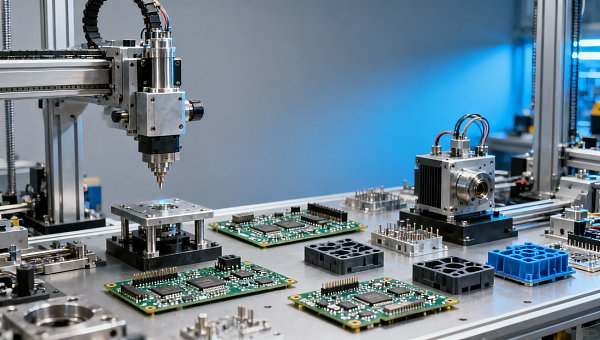
Across electronics, automotive components, precision plastics, and industrial assemblies, rework rarely comes from a single dramatic failure. It usually comes from small, recurring process inconsistencies: misalignment, poor fixture repeatability, tool wear, inconsistent clamping, unstable thermal behavior, difficult part handling, and inspection gaps that detect defects too late.
That is why the strongest tooling solutions do not simply add complexity. They reduce variation in ways that operators can sustain, quality teams can verify, and finance teams can justify. For business and technical stakeholders, the key evaluation standard is this: will the tooling reduce the total cost of poor quality more than it adds to piece cost, maintenance, or cycle time?
In many cases, the answer is yes when tooling improvements deliver one or more of the following:
- Lower defect and rework rates at the highest-loss process step
- Better first-pass yield without adding manual inspection labor
- Reduced setup sensitivity between shifts, operators, or plants
- Improved dimensional consistency and process capability
- Fewer handling-related defects, scratches, warpage, or soldering errors
- Less downtime caused by adjustment, misfeeds, wear, or unstable positioning
For procurement officers, project leads, and financial approvers, this shifts the conversation from tool price to costed process impact. A fixture, mold insert change, alignment aid, poka-yoke device, or automated verification feature may appear to add cost upfront, but if it eliminates repeated scrap, operator intervention, warranty exposure, or customer returns, it often lowers real unit economics.
Where rework usually starts and which tooling changes have the highest payoff
Not all rework sources deserve the same attention. The most valuable tooling projects target process steps where defects are frequent, hard to detect early, or expensive to recover later. In cross-sector manufacturing, several patterns show up repeatedly.
1. Positioning and alignment errors
In PCBA manufacturing, precision assembly, and molded-part secondary operations, small placement deviations can trigger cascading failures. Better nests, datum control features, hard stops, guided loading, and vision-assisted fixtures can dramatically reduce misalignment-based rework.
2. Inconsistent clamping or support
Thin-wall plastic parts, stamped components, and electronics subassemblies are often vulnerable to deformation during processing. Tooling that distributes force properly, supports critical geometry, or prevents local stress can reduce cosmetic and dimensional defects without changing the base material or process recipe.
3. Tool wear that goes unnoticed too long
In a plastic injection mold factory or high-volume machining environment, wear-related variation often creeps in gradually. Replaceable wear elements, better tool life monitoring points, and standardized maintenance triggers can reduce rework more effectively than simply increasing final inspection.
4. Manual handling and transfer damage
Parts that are technically “good” at one station may be damaged before the next. Purpose-built trays, end-effectors, transfer tooling, anti-scratch contact surfaces, and orientation control features often generate fast returns because they prevent defects that quality systems may otherwise record too late.
5. Late defect detection
Some tooling solutions create value not by changing the process physics, but by identifying drift before large batches are affected. In-tool sensing, go/no-go checks, fixture-embedded verification, and mistake-proofing features can stop rework from accumulating across a shift or lot.
The highest-payoff opportunities usually occur where the process has one or more of these characteristics:
- High volume with recurring minor defects
- Complex assemblies with expensive downstream value-add
- Operator-dependent setups
- Multi-site production requiring consistent replication
- Strict quality or compliance requirements under ISO, IATF, or IPC frameworks
How to reduce rework without increasing unit cost
This is the concern behind the title, and it is where many companies hesitate. They assume better tooling means a direct increase in cost per part. In reality, the outcome depends on how the tooling is designed, deployed, and measured.
There are five practical ways to cut rework while protecting unit economics.
Design for process stability, not tool sophistication
Over-engineered tooling can increase maintenance burden and slow changeovers. The better approach is to solve the dominant failure mode with the simplest robust intervention. A low-complexity locating improvement may outperform an expensive fully automated fixture if the defect source is basic repeatability.
Target the largest hidden cost bucket
Rework cost is often underestimated because it is spread across labor, downtime, line imbalance, extra inspection, expedited shipping, sorting, and customer risk. When teams quantify the full burden, a tooling improvement that looks expensive may actually be cost-neutral or cost-reducing at the shipped-unit level.
Reduce adjustment time and training sensitivity
Tooling that is easier to set correctly lowers indirect cost. If a fixture or mold setup can be repeated quickly with less dependence on expert operators, the plant gains more than defect reduction. It gains scheduling reliability, faster ramp-up, and lower variability across teams.
Build maintenance logic into the tooling plan
A good tool becomes a bad investment if it requires unpredictable downtime or specialized support. Standardized spare parts, clear preventive maintenance intervals, and visual wear criteria are essential if the improvement is expected to hold unit cost steady over time.
Validate with pilot data before full-scale rollout
Decision-makers should ask for controlled comparisons: baseline defect rate, first-pass yield, cycle time, setup time, maintenance hours, and scrap or rework cost before and after implementation. This creates a fact-based case for scale and reduces internal resistance from operations or finance.
What technical evaluators and quality teams should look for
Technical and quality stakeholders often carry the burden of proving whether a tooling change creates real capability improvement or just shifts problems elsewhere. Their evaluation should go beyond vendor claims and focus on measurable process outcomes.
Useful validation criteria include:
- Repeatability and reproducibility under normal operating conditions
- Impact on Cp/Cpk or equivalent process capability metrics
- Effect on first-pass yield and defect escape rate
- Performance across multiple operators and changeovers
- Compatibility with existing line balance and takt requirements
- Alignment with product tolerances and inspection strategy
- Ease of cleaning, calibration, and preventive maintenance
- Compliance implications for regulated or customer-audited production
In sectors such as semiconductor packaging, automotive electronics, mobility systems, and infrastructure hardware, tooling decisions should also be checked against the broader manufacturing ecosystem. A local fixture improvement that disrupts upstream feeding or downstream automation may not produce net value. The strongest solutions improve flow as well as local quality.
What business leaders, procurement teams, and finance approvers should ask
For non-technical stakeholders, the challenge is not understanding the mechanics of the tool. It is approving the right project with confidence. That means asking questions that connect tooling performance to business outcomes.
Key questions include:
- Which defect category does this tooling change address, and how large is that loss today?
- Is the current cost burden visible only in scrap, or also in labor, delays, customer claims, and capacity loss?
- Will the tooling reduce dependence on highly skilled manual correction?
- Can the solution be standardized across plants, product families, or suppliers?
- What is the payback period under conservative assumptions?
- What new maintenance, calibration, or spare part commitments will it create?
- What happens if we do not fix this issue now?
These questions are especially important in global manufacturing environments where margin pressure is constant. A tooling solution that appears to add 1% to conversion cost may still be the better choice if it avoids a 3% to 5% quality loss, protects customer scorecards, or prevents repeated disruption in launch programs.
Best-fit tooling strategies across common manufacturing environments
Although the core logic is similar, the right tooling strategy varies by production environment.
PCBA and electronics assembly
Priority areas often include support fixtures for warp-sensitive boards, selective solder or test fixtures, placement alignment aids, and ESD-safe handling solutions. Here, the best rework reduction often comes from better repeatability and earlier defect containment.
Plastic injection molding
For a plastic injection mold factory, common gains come from venting optimization, interchangeable wear zones, cooling consistency improvements, part ejection stability, and offline validation fixtures for critical dimensions. The goal is to stabilize output without extending cycle time or creating excessive mold maintenance complexity.
Automotive and mobility components
Given tighter traceability and reliability requirements, tooling that supports poka-yoke assembly, torque or position verification, and robust gauging often has strong business value. The cost of downstream failure is simply too high to rely on operator correction alone.
Industrial infrastructure and ESG-related equipment
In filtration modules, pump components, structural housings, and process assemblies, tooling value is often tied to leak prevention, sealing consistency, dimensional repeatability, and service-life reliability. Rework here affects not only cost but field performance and sustainability metrics.
How to make the final call on a tooling investment
If the goal is to cut rework without raising unit cost, the final decision should be based on total operational economics, not just purchase price. The best tooling investments usually share four traits: they solve a clearly defined defect mechanism, they are simple enough to sustain, they improve measurable process consistency, and they create value faster than they create overhead.
A practical decision framework is:
- Identify the highest-cost recurring rework source
- Confirm the physical process cause, not just the visible symptom
- Compare multiple tooling concepts, including low-complexity options
- Estimate total cost impact, including hidden quality losses
- Pilot the solution with clear baseline and post-change metrics
- Scale only if repeatability and economics hold in real production
When teams follow this approach, tooling stops being a capital debate and becomes a measurable lever for quality, throughput, and resilience.
In today’s interconnected industrial landscape, smarter tooling is not just about making parts more accurately. It is about building a manufacturing system that is easier to control, easier to scale, and less vulnerable to hidden quality losses. For operators, engineers, quality leaders, and executives alike, the most effective tooling solutions are the ones that reduce variability where it starts, prove their value with data, and strengthen performance without eroding margin. That is how rework comes down while unit cost stays competitive.
The Archive Newsletter
Critical industrial intelligence delivered every Tuesday. Peer-reviewed summaries of the week's most impactful logistics and market shifts.