Monday, May 22, 2024

What Sets a Reliable Industrial Cutting Tools Manufacturer Apart
by
Published
Views:
Choosing a reliable industrial cutting tools manufacturer is not just about price—it is about consistency, precision, and supply chain confidence. For procurement professionals, the right partner can reduce downtime, improve machining performance, and support long-term operational efficiency. This article explores the key qualities that distinguish dependable manufacturers in a competitive global market.
Why a Checklist-Based Evaluation Matters First
When buyers compare an industrial cutting tools manufacturer, the biggest risk is making decisions based on a narrow metric such as unit price, catalog breadth, or brand familiarity. In practice, tooling performance affects scrap rates, machine uptime, spindle load, tool change frequency, and delivery reliability across the entire production system. A structured checklist helps procurement teams verify what truly supports long-term value instead of reacting to short-term quotes.
This matters even more in today’s cross-sector manufacturing environment, where a supplier may serve automotive, electronics, agricultural equipment, energy infrastructure, and general industrial machining at the same time. A capable industrial cutting tools manufacturer must show technical repeatability, documented quality systems, application support, and resilience under global supply pressure. For sourcing teams, a checklist reduces selection bias and creates a more auditable, benchmark-driven decision process.
The Core Buyer Checklist: What to Confirm Before You Shortlist
Before moving into pricing negotiations, procurement professionals should confirm the following decision points. These are the practical standards that often separate a dependable industrial cutting tools manufacturer from a vendor that only looks competitive on paper.
- Material and application fit: Check whether the manufacturer can match tool geometry, substrate, coating, and edge preparation to your workpiece materials such as stainless steel, hardened steel, cast iron, aluminum alloys, composites, or difficult-to-machine superalloys.
- Process stability: Verify documented performance under real machining conditions, including cutting speed, feed rate, tool life, chip evacuation, heat resistance, and dimensional repeatability.
- Quality management: Confirm ISO-based systems, in-process inspection methods, final inspection standards, traceability practices, and corrective action procedures for nonconforming batches.
- Manufacturing capability: Review whether the supplier controls grinding, coating, heat treatment, edge honing, and metrology internally or depends heavily on outsourced processes.
- Tool consistency across lots: Ask for tolerance control data and lot-to-lot repeatability. Reliable production matters more than one strong sample batch.
- Customization readiness: Determine whether the industrial cutting tools manufacturer can adapt flute design, corner radius, coating type, shank dimensions, and other features for your machines and part drawings.
- Lead time reliability: Evaluate standard lead times, emergency order handling, safety stock options, and regional warehousing support.
- Technical service response: Confirm whether application engineers can support troubleshooting, parameter optimization, trial runs, and root-cause analysis when field issues occur.
- Commercial transparency: Review quotation structure, tooling life assumptions, warranty terms, replacement policy, and total cost of ownership rather than piece price alone.
- Supply chain resilience: Check upstream sourcing risk for carbide, cermet, PCD, CBN, and coating inputs, especially if your business operates across multiple regions.
How to Judge Manufacturing Reliability, Not Just Product Availability
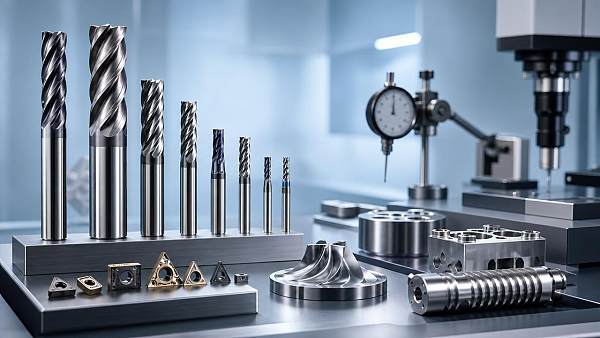
A broad catalog can be useful, but reliability comes from process discipline. A trustworthy industrial cutting tools manufacturer should be able to explain how tooling is made, measured, and released. Buyers should ask specific questions: What are the tolerance bands for diameter, concentricity, helix angle, and edge preparation? How is coating adhesion validated? What statistical methods are used to monitor batch variation?
Strong manufacturers also provide evidence, not claims. That may include inspection reports, test cuts, wear analysis, microscope images, sample trial data, or comparative case studies. For procurement teams working with engineering, this documentation helps convert supplier evaluation from subjective impressions into measurable technical criteria. In sectors where downtime is costly, process evidence is often more valuable than aggressive discounting.
Useful proof points to request
- Certificate and quality system documentation
- Dimensional inspection records for recent batches
- Tool life comparison under defined machining conditions
- Customer references in comparable industries
- Failure analysis examples and corrective action reports
The Most Important Technical Standards Procurement Should Review
Procurement does not need to become the engineering department, but buyers should understand the standards that indicate seriousness. Depending on product type and customer industry, a reliable industrial cutting tools manufacturer should align with internationally recognized quality and process frameworks. While not every standard applies equally to every tool family, certification and structured compliance are signs of operational maturity.
How Priorities Change by Industry and Machining Scenario
Not every buyer should use the exact same scorecard. The right industrial cutting tools manufacturer for general fabrication may not be the best fit for EV drivetrain machining, aerospace alloys, or precision electronics components. Procurement should adjust the checklist according to the application environment.
For automotive and mobility programs
Focus on high-volume repeatability, PPAP-style documentation where needed, stable lead times, and predictable wear behavior across automated production lines. Tool consistency and traceability are critical because a small dimensional drift can affect entire batches.
For electronics and precision components
Prioritize micro-tool geometry control, burr minimization, fine surface finish, and support for small-diameter tools operating at high spindle speeds. Application engineering is often as important as manufacturing quality.
For heavy equipment, agriculture, and infrastructure parts
Tool toughness, coating durability, and reliable performance in mixed material conditions often matter more than chasing maximum speed. A practical industrial cutting tools manufacturer should help balance cost per part with robustness on less controlled shop floors.
Commonly Overlooked Risks When Selecting an Industrial Cutting Tools Manufacturer
Many sourcing problems do not come from obvious supplier failure. They come from gaps in early evaluation. The following risk areas are often missed until production is already affected.
- Assuming sample success guarantees scale consistency. A strong prototype batch does not prove stable serial production.
- Ignoring regrinding and lifecycle support. For some operations, value comes from tool management, not only new tool supply.
- Overlooking communication speed. Slow technical feedback during a machining issue can create more cost than a higher purchase price.
- Comparing quotes without parameter alignment. Tool life and cost-per-part comparisons are invalid unless cutting conditions are normalized.
- Missing regional logistics exposure. Long transit routes, customs delays, and single-source raw material dependency can undermine otherwise good suppliers.
- Failing to evaluate digital support. Tool data integration, labeling accuracy, and order traceability increasingly matter in modern procurement systems.
A Practical Vendor Evaluation Framework Procurement Can Use
To make supplier comparison more objective, build a weighted scorecard. This approach is particularly useful when several suppliers appear technically acceptable but differ in service depth and operational maturity. A procurement team can assign weighted categories and then validate scores through plant audits, trial orders, and engineering review.
- 30% Technical performance: tool life, machining stability, dimensional accuracy, coating performance
- 20% Quality assurance: certifications, traceability, inspection capability, corrective action speed
- 20% Delivery capability: lead time, fill rate, inventory planning, multi-region support
- 15% Engineering support: application response, trial support, design customization, problem-solving depth
- 15% Commercial value: total cost of ownership, payment terms, warranty, long-term pricing transparency
This kind of framework helps identify whether an industrial cutting tools manufacturer is merely acceptable or truly strategic. It also creates a documented basis for supplier approval, dual-sourcing strategy, and internal alignment between procurement, quality, and production.
Execution Tips Before You Issue an RFQ or Start a Trial
A reliable supplier selection process starts with better buyer preparation. If you want accurate quotations and meaningful technical recommendations, provide complete operating information. Vague RFQs often produce misleading prices and unsuitable tool proposals.
Prepare a sourcing package that includes workpiece material grade, hardness range, machine type, spindle capability, coolant condition, target cycle time, current tool performance, annual demand, drawing tolerances, and any compliance requirements. When this information is shared early, a serious industrial cutting tools manufacturer can recommend suitable geometries, coatings, and stocking strategies instead of defaulting to generic catalog items.
FAQ: Quick Questions Buyers Commonly Ask
Is the lowest quote ever the best sourcing decision?
Usually no. The best decision is based on cost per part, uptime impact, and supply reliability. A lower-priced tool with unstable life can increase hidden production cost.
How many samples should be tested?
More than one batch is ideal. Buyers should test repeatability, not only first-piece performance, especially before approving a new industrial cutting tools manufacturer for serial production.
What is the fastest signal of a dependable manufacturer?
Clear technical communication backed by data. Reliable suppliers answer application questions with evidence, limits, and practical recommendations rather than broad sales claims.
Final Procurement Takeaway and Next Step
A reliable industrial cutting tools manufacturer stands apart through controlled quality, documented consistency, application-specific expertise, and dependable delivery performance. For procurement professionals, the smartest approach is to use a checklist: confirm technical fit, verify process discipline, test lot consistency, review service responsiveness, and compare total ownership value instead of unit price alone.
If your team is moving toward supplier qualification or resourcing, the next step is simple: prepare your machining parameters, target volumes, quality expectations, inventory requirements, and budget boundaries before supplier discussions begin. With that information ready, you can ask sharper questions about tool design, performance guarantees, delivery planning, customization, and cooperation models—and identify the industrial cutting tools manufacturer most capable of supporting long-term operational resilience.

The Archive Newsletter
Critical industrial intelligence delivered every Tuesday. Peer-reviewed summaries of the week's most impactful logistics and market shifts.