Monday, May 22, 2024

Agri-Drone Technology for Crop Scouting and Spray Planning
by
Published
Views:
Agri-drone technology is changing field scouting and spray planning by giving operators faster visibility, more precise field data, and better control over application decisions. For users in daily operations, the real value is practical: finding crop problems earlier, planning sprays with less guesswork, reducing overlap and waste, and improving consistency under changing field conditions. To use these systems well, operators need to understand not just what drones can do, but how drone data translates into better action in the field.
What operators really want from agri-drone technology
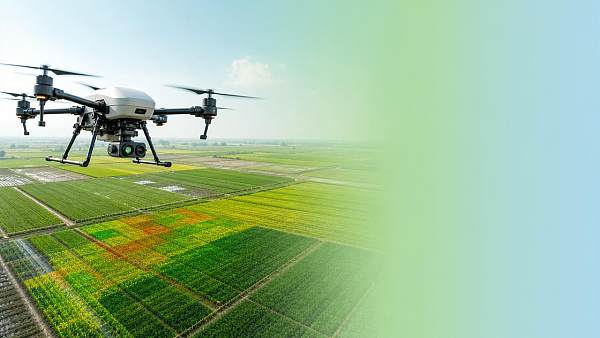
When users search for agri-drone technology, they are usually not looking for abstract innovation claims. They want to know whether the system can help them scout faster, detect issues earlier, and support better spray planning.
For operators, the key question is simple: will this tool improve field decisions without adding unnecessary complexity? That means performance must be measured in usable maps, clear targets, reliable flight results, and practical action steps.
In crop scouting and spray planning, the best drone systems reduce uncertainty. They help users identify weak zones, assess crop variability, detect water stress, track pest pressure, and define priority areas before sending labor or equipment into the field.
This is why agri-drone technology matters most when it fits into routine operations. If data collection is too slow, image processing is too difficult, or outputs are too technical, field teams may not use the system consistently.
How agri-drone technology improves crop scouting in real field conditions
Traditional scouting depends on walking, visual checks, and sampling across selected points. That approach still matters, but it can miss developing patterns between rows, across elevations, or in hard-to-access sections of larger fields.
Agri-drone technology expands that view. A properly planned drone mission can capture field-wide information quickly, revealing patterns that are difficult to detect from the ground alone. This gives operators better situational awareness before making treatment decisions.
RGB imaging is often the first step because it is straightforward and cost-effective. High-resolution visual images can reveal lodging, emergence issues, standing water, weed patches, skipped rows, storm damage, and visible disease symptoms.
Multispectral sensors add another layer of insight by detecting reflectance differences linked to plant vigor. These tools help operators identify stressed crop zones earlier, even when symptoms are not yet obvious during a standard visual inspection.
Thermal imaging can also support advanced scouting in some operations. It may help reveal irrigation inconsistency, drainage issues, or crop stress patterns related to temperature differences, especially where water management affects productivity.
The practical benefit is not just more data. It is faster prioritization. Operators can stop treating every acre as equally urgent and instead focus field checks, agronomic review, and spray resources where conditions actually justify intervention.
What drone data is most useful for spray planning
Not every image or vegetation index leads to a better spray decision. For operators, useful drone data must answer specific planning questions: where to spray, when to spray, how much area needs treatment, and what constraints may affect execution.
One of the most valuable outputs is a clear treatment map. This can show hotspots of weed pressure, insect activity, nutrient stress, or disease-like symptoms that require further checking before a blanket application is scheduled.
Boundary accuracy is another important advantage. Drone mapping can define edges, internal obstacles, waterways, tree lines, wet spots, and irregular field geometry with more precision, helping teams plan routes and reduce missed sections or repeated passes.
Elevation and terrain information can also support spray planning. Slopes, depressions, and uneven field surfaces may affect runoff risk, spray coverage, equipment access, and flight stability, especially in more complex or fragmented farm layouts.
Timing is where agri-drone technology often creates the most value. By scouting close to the intended application window, operators can confirm whether pressure is expanding, stable, or localized, which helps avoid unnecessary or poorly timed treatments.
Good spray planning also depends on weather alignment. Drone scouting data becomes more useful when combined with wind, humidity, temperature, and rainfall forecasts, allowing operators to schedule applications with a clearer view of both urgency and risk.
Key capabilities operators should evaluate before choosing a system
Many users assume any agricultural drone platform will deliver similar results. In reality, performance varies widely based on sensor quality, flight stability, mapping software, ease of use, battery efficiency, and output compatibility with farm workflows.
Ease of mission planning should be a top priority. Operators need software that simplifies route setup, altitude control, overlap settings, return-to-home functions, and geofencing without requiring advanced remote sensing knowledge for every flight.
Image quality matters because poor-resolution or inconsistent data can make interpretation unreliable. Sharp, stable imagery with accurate geotagging improves confidence when identifying stress zones and converting observations into workable spray plans.
Processing speed is equally important. If maps take too long to generate, the scouting value drops, especially during narrow treatment windows. Operators often need same-day or next-day outputs to support actionable decisions in changing crop conditions.
Another critical factor is the usefulness of the final output. A system should deliver maps and reports that field teams can actually interpret. Clear orthomosaics, simple indices, area estimates, and exportable files are usually more valuable than overly complex dashboards.
Durability and field practicality should not be overlooked. Dust, heat, variable light, transport conditions, and repeated setup all affect reliability. A drone that performs well in demonstrations but struggles in daily field use may create more friction than value.
Operational workflow: turning flights into better field action
Successful use of agri-drone technology depends on repeatable workflow, not isolated flights. Operators get the best results when scouting follows a clear sequence from mission planning to data review, field verification, and spray decision support.
The process usually starts with defining the scouting goal. That may be emergence assessment, weed mapping, disease monitoring, irrigation review, or pre-spray targeting. Clear objectives help determine the right sensor, flight height, and mission timing.
Next comes flight execution. Consistent overlap, stable altitude, and suitable weather are essential for usable imagery. Strong winds, low light, or hurried setup can reduce data quality and make later interpretation less reliable.
After collection, image processing converts raw data into maps that can be analyzed. At this stage, operators should focus on anomalies, patterns, and treatment zones rather than assuming every visible variation requires immediate spray intervention.
Ground truthing remains necessary. Drone imagery is powerful, but it works best when combined with targeted field checks. A suspicious pattern may indicate pest pressure, nutrient stress, compaction, drainage problems, or simple varietal differences.
Once the cause is verified, operators can use the information to refine spray timing, prioritize zones, or support variable management strategies where practical. This is where drone scouting moves from observation to operational value.
Common concerns: accuracy, complexity, regulation, and return on effort
Operators often hesitate because they worry that agri-drone technology may be hard to use or may not deliver enough measurable benefit. These concerns are valid, especially when systems are marketed with unrealistic promises.
Accuracy depends on matching the platform to the task. A drone is excellent for rapid field visibility, pattern detection, and targeted planning, but it does not replace agronomic judgment, field inspection, or sound application practice.
Complexity can be reduced with proper training and standardized workflow. Most operational difficulties come from inconsistent procedures, poor flight timing, weak data management, or lack of clarity about what outputs are actually needed.
Regulatory compliance is another important issue. Operators must understand local rules on pilot certification, flight permissions, altitude limits, privacy, and agricultural application requirements if drones are used beyond scouting into direct spraying operations.
Return on effort is often strongest where scouting delays are costly, labor coverage is limited, or fields are too large or irregular for frequent manual inspection. In those cases, better timing and better targeting can justify the system quickly.
The gains may appear through reduced blanket spraying, fewer missed hotspots, faster response after weather events, improved field documentation, and more confidence in planning decisions rather than through a single dramatic yield change.
Best-use scenarios for crop scouting and spray planning
Agri-drone technology is especially useful in operations where field variability is high. Crops with uneven emergence, localized disease pressure, weed escapes, irrigation inconsistency, or topographic variation often benefit most from aerial scouting support.
It is also valuable when scouting windows are short. After storms, during rapid vegetative growth, or when pest pressure can spread quickly, drones help operators assess more acres in less time and set priorities before conditions worsen.
Fields with access limitations are another strong fit. Wet soils, fragmented parcels, or difficult terrain can slow manual checks and delay treatment decisions. Drone coverage allows teams to assess conditions without entering every problem area physically.
For spray planning, the technology is particularly useful when operators need better boundary definition, more accurate area estimates, and clearer identification of treatment zones. This reduces planning errors and supports more disciplined resource use.
However, not every farm needs the same level of capability. Some users benefit from basic RGB scouting alone, while others may justify multispectral analysis, terrain mapping, or deeper integration with precision agriculture systems.
How to get better results as an operator
Operators who gain the most from agri-drone technology usually begin with a narrow, practical use case. Instead of trying to map everything, they focus on one recurring problem such as weed hotspots, drainage stress, or pre-spray verification.
It also helps to build a repeatable flight schedule. Scanning the same fields at similar crop stages and under comparable conditions improves trend analysis and makes it easier to recognize unusual changes that deserve immediate attention.
Use simple outputs first. Clear visual maps, labeled zones, and concise field notes often drive better action than highly technical reports. The goal is operational clarity, not data volume for its own sake.
Coordinate closely with agronomy and spray teams. Drone findings become more valuable when the people making treatment decisions understand what the imagery shows, what has been verified on the ground, and what action is recommended.
Finally, review outcomes after each cycle. Compare drone observations, spray decisions, and field results. Over time, this feedback loop helps operators improve flight timing, interpretation accuracy, and confidence in how the technology supports crop management.
Conclusion: practical value comes from usable insight
For operators, the real strength of agri-drone technology is not novelty. It is the ability to see more, sooner, and act with better precision. In crop scouting and spray planning, that means fewer blind spots and more disciplined decisions.
When chosen carefully and used within a clear workflow, these systems can improve scouting efficiency, sharpen spray timing, reduce unnecessary application, and support more reliable field execution. The value is highest when drone data leads directly to better action.
Users evaluating agri-drone technology should focus on practical performance: image quality, workflow simplicity, output usefulness, turnaround speed, and fit with real field demands. If those factors align, drone-based scouting becomes a strong operational asset.
The Archive Newsletter
Critical industrial intelligence delivered every Tuesday. Peer-reviewed summaries of the week's most impactful logistics and market shifts.