Monday, May 22, 2024

How Automated Sprinklers Cut Water Waste in Large Fields
by
Published
Views:
For large-scale agricultural operations, reducing water waste is no longer just an environmental goal—it is a strategic business priority. Automated sprinklers help enterprises improve irrigation precision, lower operating costs, and support more resilient field management across changing climate conditions. For decision-makers seeking measurable efficiency gains, understanding how automated sprinklers perform in large fields is essential to building smarter, more sustainable agricultural systems.
Why do automated sprinklers matter in large-field irrigation strategy?
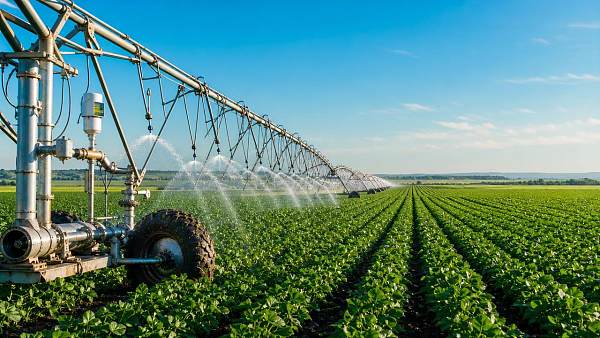
In large fields, water waste rarely comes from one obvious failure. It usually results from uneven distribution, delayed irrigation timing, pressure loss, overspray, and poor coordination between pumps, valves, and crop demand. Automated sprinklers address these issues by turning irrigation from a manual routine into a controlled operating system.
For enterprise buyers, the value is not only agronomic. It affects energy use, labor scheduling, compliance reporting, maintenance planning, and long-term land productivity. In many regions, water availability is now tied directly to operating permits, ESG targets, and input-cost stability.
This is where a cross-sector perspective matters. At GIM, irrigation technology is not viewed in isolation. Automated sprinklers interact with sensors, drive systems, filtration units, control electronics, telecom infrastructure, and sustainability metrics. A strong procurement decision depends on understanding that full system relationship.
- They reduce overwatering by applying water based on timing, zone control, and field conditions rather than fixed manual habits.
- They support more predictable operating costs by lowering unnecessary pump runtime, labor hours, and emergency maintenance events.
- They improve management visibility through data logs that help procurement teams, farm operators, and ESG managers align performance expectations.
What decision-makers should measure first
The right starting point is not the sprinkler head alone. It is field-level water efficiency. That includes distribution uniformity, pressure stability across zones, evaporation loss risk, labor dependence, and compatibility with digital control architecture.
A procurement team that buys only on upfront equipment price often misses the larger cost structure. In large fields, water transport, downtime, nozzle replacement, controller interoperability, and service response often determine whether the project delivers real savings.
Where do automated sprinklers cut water waste most effectively?
Automated sprinklers are most effective where field size, crop value, labor constraints, and variable weather create complexity that manual irrigation cannot manage consistently. The system advantage grows as operations scale.
The following table helps enterprise buyers compare common large-field scenarios and understand where automated sprinklers typically create the strongest operational return.
The pattern is clear: the larger and more distributed the operation, the more automated sprinklers become a control asset rather than a simple irrigation device. Their strongest benefit appears when management needs consistency across multiple variables at once.
Scenarios where automation is often underused
- Fields with mixed topography, where runoff and dry spots are treated as unavoidable instead of addressable through zoning and pressure balancing.
- Operations facing seasonal labor shortages, where delayed valve switching and inconsistent start-stop timing lead to invisible water loss.
- Sites with unstable utility costs, where excess pumping and night-day inefficiencies inflate irrigation expense beyond water volume alone.
Automated sprinklers vs conventional irrigation: what should buyers compare?
A useful comparison goes beyond “manual versus automatic.” Buyers should evaluate controllability, data visibility, serviceability, and lifecycle performance. In industrial agriculture, irrigation equipment increasingly behaves like integrated infrastructure.
The table below outlines the practical differences that usually matter most during capital planning and supplier review.
This comparison also explains why GIM’s benchmarking approach matters. Electronics reliability, pump compatibility, controller architecture, and maintenance access all influence actual field results. A system that looks efficient on paper can still waste water if component interoperability is poor.
The hidden comparison many teams miss
Many buyers compare sprinkler hardware but not decision latency. In practice, water waste often grows when teams cannot react quickly to weather shifts, pipe pressure changes, or zone-specific failures. Automated sprinklers reduce that latency by embedding rules into the system.
Which technical factors determine water-saving performance?
Not all automated sprinklers deliver the same outcome. Water savings depend on how the solution performs under real field conditions, especially when fields are large, pressure varies, and seasonal operating windows are tight.
Core performance factors
- Pressure regulation: stable pressure is essential for even coverage and reduced misting, especially across long distribution lines.
- Nozzle selection: droplet size, spray angle, and wear resistance affect both crop absorption and wind-related drift losses.
- Zone automation: sectional control prevents unnecessary irrigation in low-demand or already saturated areas.
- Control logic: systems that can respond to weather data, moisture readings, or scheduled thresholds typically outperform fixed-cycle automation.
- Filtration and maintenance access: clogged nozzles and uneven flow can silently erase expected water savings over time.
Why standards thinking improves field outcomes
Enterprise procurement increasingly requires structured evaluation. Even when a single universal irrigation certification is not the deciding factor, buyers still benefit from reviewing component quality against recognized industrial practices, material durability expectations, electrical safety considerations, and system documentation discipline.
GIM’s value lies in translating cross-industry benchmarking logic into procurement clarity. A controller should be assessed like any mission-relevant industrial electronics module. A pump or valve assembly should be reviewed for lifecycle reliability, not just short-term function. That broader lens reduces risk.
How should enterprises select automated sprinklers for large fields?
The best procurement process starts with field conditions, operating targets, and service realities. Automated sprinklers should fit the enterprise workflow, not force the field team into a new set of unmanaged exceptions.
This selection table can be used as a practical checklist during supplier shortlisting and technical review.
A disciplined selection process helps buyers avoid false savings. The lowest-cost automated sprinklers may create integration gaps, poor spare-part availability, or weak control functionality that reduce water-saving impact after deployment.
A practical procurement sequence
- Map field zones, crop profiles, water source conditions, and existing infrastructure constraints.
- Define target outcomes such as water reduction, labor savings, or irrigation consistency.
- Request supplier data on pressure range, control flexibility, service intervals, and integration options.
- Compare total operating impact, not only capital price, across a multi-season view.
What costs, risks, and implementation issues should be evaluated early?
Automated sprinklers can reduce waste, but they do not remove operational risk by themselves. The main challenge is implementation discipline. If design assumptions are weak, the system may automate inefficiency instead of correcting it.
Common risk points
- Underspecified pressure conditions that lead to uneven application and recurring nozzle performance issues.
- Insufficient filtration, which increases clogging risk and weakens distribution accuracy across large irrigation cycles.
- Overreliance on automation without setting exception protocols for weather events, leaks, or power interruptions.
- Poor spare-parts planning, especially in remote operations where a small valve or controller failure can affect wide field areas.
Budget questions executives should ask
Ask whether the budget includes controls, valves, pressure regulation, communication hardware, filtration upgrades, installation support, and training. Water savings depend on the complete operating package. Partial procurement often causes performance gaps.
Also ask how quickly the supplier can support replacements during peak season. In large fields, downtime cost is rarely limited to repair expense. It can affect crop uniformity, labor redeployment, and water-use targets at the same time.
FAQ: what do enterprise buyers often ask about automated sprinklers?
Are automated sprinklers suitable for all large fields?
Not automatically. Suitability depends on field geometry, water pressure stability, crop type, wind exposure, and the level of control the operator needs. In some cases, hybrid irrigation strategies may be more effective than using one method everywhere.
What should buyers prioritize first: hardware durability or control intelligence?
Both matter, but durability without usable control logic limits water savings, while advanced controls on weak hardware increase maintenance risk. The strongest choice is a balanced system with reliable field components and adaptable automation architecture.
How do automated sprinklers support ESG or compliance objectives?
They can improve recordkeeping, reduce avoidable water consumption, and support clearer reporting on resource efficiency. For enterprises managing sustainability commitments, logged irrigation activity is often more actionable than informal manual records.
What is a common mistake during procurement?
A common mistake is assuming that automated sprinklers deliver savings immediately after installation. In reality, savings depend on calibration, zoning logic, filtration quality, maintenance routines, and the match between design assumptions and field conditions.
Why choose us for irrigation benchmarking and decision support?
GIM helps enterprise decision-makers evaluate automated sprinklers within the broader realities of modern industrial agriculture. Our advantage is not limited to irrigation knowledge alone. We connect Smart Agri-Tech with electronics reliability, infrastructure logic, procurement risk analysis, and standards-based benchmarking.
That matters when your team needs more than supplier brochures. Large-field irrigation projects often require coordinated judgment across controls, field equipment, maintenance planning, ESG reporting, and capital allocation. GIM supports that decision path with verifiable, cross-sector technical perspective.
- Request parameter confirmation for pressure range, zone logic, filtration needs, and control architecture fit.
- Discuss product selection options based on crop profile, field scale, remote management needs, and service expectations.
- Review delivery timing, spare-parts considerations, and implementation sequencing before peak irrigation periods.
- Consult on certification expectations, documentation requirements, and benchmarking against relevant industrial standards.
- Open a quotation discussion for tailored solutions, sample evaluation paths, and comparative supplier assessment.
If your organization is assessing how automated sprinklers can cut water waste in large fields, a structured technical review is the fastest way to avoid overspending and underperforming. Contact GIM to align water-saving goals with procurement logic, system compatibility, and long-term operational resilience.
The Archive Newsletter
Critical industrial intelligence delivered every Tuesday. Peer-reviewed summaries of the week's most impactful logistics and market shifts.