Monday, May 22, 2024

How to Vet a Smart Farming Technology Manufacturer
by
Published
Views:
Selecting a smart farming technology manufacturer requires more than comparing product catalogs or quoted prices. For technical evaluators, the real challenge is verifying sensor accuracy, platform interoperability, field durability, cybersecurity readiness, and compliance with global manufacturing standards. As agriculture becomes increasingly data-driven and connected, procurement decisions must balance agronomic performance with engineering reliability and long-term scalability. This guide outlines the key evaluation criteria needed to identify manufacturers capable of supporting resilient, intelligent, and future-ready farming operations.
What Should Technical Evaluators Verify First?
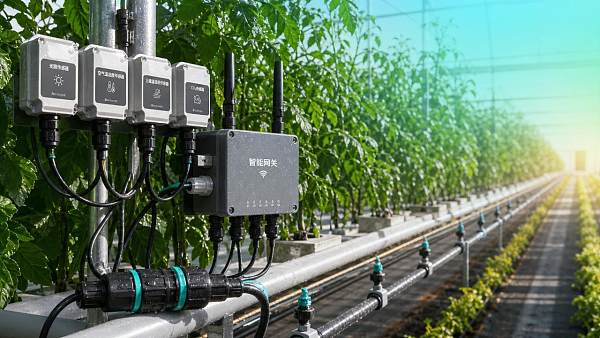
A smart farming technology manufacturer should be evaluated as an industrial systems partner, not only as a device supplier. Sensors, controllers, gateways, software, and service models all affect field reliability.
Technical evaluators often face conflicting claims from vendors. One manufacturer may highlight AI analytics, while another emphasizes rugged hardware or lower acquisition cost.
The first screening step is to separate measurable engineering evidence from sales language. Ask for documented specifications, test methods, integration references, and lifecycle support policies.
Core verification checklist
- Confirm sensor measurement ranges, calibration intervals, accuracy tolerance, drift behavior, and operating temperature limits under realistic field conditions.
- Review communication protocols, including LoRaWAN, NB-IoT, LTE-M, Ethernet, CAN, Modbus, MQTT, or REST API availability.
- Validate enclosure ratings, corrosion protection, UV resistance, vibration tolerance, and cable management for irrigation, greenhouse, or open-field deployment.
- Check whether firmware updates, security patches, device provisioning, and remote diagnostics are handled through documented procedures.
A credible smart farming technology manufacturer can explain how its products behave when networks fail, batteries degrade, humidity rises, or operators change configurations.
How to Compare Hardware, Software, and Field Performance
Smart agriculture is a system-of-systems challenge. A technically strong vendor must combine electronics, mechanical design, data infrastructure, agronomic usability, and manufacturing control.
The following comparison table helps evaluators structure early-stage reviews when multiple suppliers appear similar on brochures or demonstrations.
This table is useful because it converts a broad smart farming technology manufacturer review into traceable questions. It also exposes gaps before costly pilot programs begin.
Do not evaluate devices in isolation
A soil probe with good laboratory accuracy can still fail if the cable seal degrades or the gateway loses packets during peak irrigation hours.
Likewise, advanced analytics are not useful if the underlying data model cannot identify field zones, crop stages, or actuator response history.
Which Application Scenarios Demand Different Vetting Priorities?
The right smart farming technology manufacturer depends heavily on deployment context. Greenhouses, orchards, livestock operations, and large open fields impose different technical constraints.
A manufacturer that performs well in controlled environments may not be suitable for dusty, remote, or high-vibration agricultural machinery installations.
Scenario-based selection logic
Use scenario mapping to prioritize evidence. This prevents overpaying for unnecessary functions while missing conditions that determine long-term uptime.
A scenario table also supports cross-functional discussion. Agronomists, automation engineers, IT teams, and procurement officers can align around measurable acceptance criteria.
What Standards, Compliance, and Cybersecurity Questions Matter?
A smart farming technology manufacturer may not need every industrial certification, but its quality and compliance approach should match the risk profile of the project.
Technical evaluators should ask how the manufacturer handles design verification, incoming inspection, production traceability, firmware management, and field issue escalation.
Relevant standard families to consider
- ISO 9001 can indicate structured quality management, although buyers should still examine actual process records and change-control discipline.
- IEC 60529 IP ratings help compare dust and water ingress protection for outdoor sensors, gateways, cabinets, and connectors.
- IEC 62443 concepts are useful when assessing industrial cybersecurity practices for connected controllers, gateways, and cloud platforms.
- Regional radio, EMC, and electrical safety requirements should be confirmed before importing wireless agricultural devices into target markets.
Cybersecurity is especially important because smart farms connect operational technology with cloud analytics. Weak identity management can expose actuator controls and sensitive production data.
Ask whether the smart farming technology manufacturer supports role-based access, encrypted communication, secure boot, vulnerability reporting, and clear end-of-support timelines.
How Should Buyers Judge Total Cost, Not Only Unit Price?
Low unit price can hide higher integration, maintenance, calibration, cloud subscription, training, and replacement expenses. Total cost must be calculated across the deployment lifecycle.
The following cost lens helps compare proposals from a smart farming technology manufacturer with offers from system integrators or regional distributors.
Cost analysis should not automatically favor the lowest bid. It should identify which proposal creates the least operational friction after installation.
When alternatives may be reasonable
A distributor may be suitable for small deployments with standard sensors. A specialized integrator may fit complex retrofits involving legacy irrigation or machinery systems.
However, direct engagement with a smart farming technology manufacturer is often valuable when customization, firmware alignment, volume scaling, or technical traceability matters.
A Practical Vetting Process for Technical Teams
A structured process reduces subjective supplier selection. It also helps evaluators defend decisions to finance, operations, sustainability, and executive stakeholders.
Recommended evaluation sequence
- Define the agronomic and operational problem before reviewing devices, including crop type, field size, decision frequency, and automation level.
- Create minimum technical requirements for accuracy, connectivity, power, enclosure protection, cybersecurity, data access, and service response.
- Shortlist suppliers based on documented evidence rather than presentations, trade show claims, or generic smart agriculture messaging.
- Run a controlled pilot with acceptance criteria, baseline measurements, environmental notes, operator feedback, and integration checkpoints.
- Convert pilot findings into a deployment plan covering spare parts, training, support channels, firmware updates, and expansion phases.
The pilot phase should test failure modes, not only ideal performance. Disconnect networks, simulate sensor faults, and check alert behavior under practical conditions.
A capable smart farming technology manufacturer will welcome transparent testing because it clarifies requirements and reduces support problems after commercial rollout.
Common Mistakes When Choosing a Smart Farming Technology Manufacturer
Many failed deployments are not caused by weak technology alone. They result from unclear requirements, incomplete integration planning, or underestimated field maintenance.
Mistakes to avoid
- Choosing a vendor because its dashboard looks polished while ignoring sensor calibration, data latency, and equipment ruggedness.
- Assuming wireless coverage will be stable across orchards, greenhouses, livestock sheds, and remote pumping stations.
- Ignoring data portability, which can lock operators into one platform and complicate future analytics or procurement decisions.
- Treating cybersecurity as an IT-only issue instead of an operational risk affecting valves, pumps, tractors, and production records.
Another mistake is evaluating agriculture technology separately from adjacent industries. Manufacturing quality, electronics reliability, mobility systems, and ESG reporting now overlap.
This is where a cross-sector benchmarking perspective becomes useful, especially for teams comparing connected farm equipment with automotive-grade or industrial infrastructure expectations.
FAQ for Technical Evaluators
How do I know whether a smart farming technology manufacturer is technically mature?
Look for repeatable engineering evidence: documented specifications, production traceability, calibration procedures, firmware release notes, integration documents, and clear after-sales escalation paths.
What should be tested during a pilot deployment?
Test accuracy, connectivity recovery, battery behavior, environmental durability, operator usability, API access, alarm timing, and maintenance effort over representative field conditions.
Is cloud-based farm management always better than local control?
Not always. Cloud analytics support multi-site visibility, but critical irrigation or climate controls may require local fallback when internet connections are unavailable.
How long should supplier evaluation take?
For complex deployments, allow time for document review, pilot testing, integration validation, commercial negotiation, and compliance checks before full rollout approval.
Why Work With Global Industrial Matrix for Supplier Benchmarking?
Global Industrial Matrix supports technical evaluators who need cross-sector clarity before selecting a smart farming technology manufacturer or connected agriculture solution.
GIM benchmarks smart agri-tech alongside electronics, automotive mobility, industrial ESG infrastructure, and precision tooling. This wider lens helps identify hidden reliability risks.
Our approach is useful when procurement teams must compare sensor hardware, autonomous tractors, control platforms, data infrastructure, and manufacturing processes against recognized standards.
Consult GIM when you need decision-grade evidence
- Parameter confirmation for sensors, gateways, controllers, autonomous equipment, and environmental monitoring devices.
- Supplier comparison based on interoperability, durability, cybersecurity, quality systems, and lifecycle support expectations.
- Project-specific selection guidance for greenhouses, open-field irrigation, livestock monitoring, machinery automation, or ESG-linked agriculture infrastructure.
- Support discussions around sample evaluation, pilot scope, delivery schedule, certification requirements, customization options, and quotation review.
If your team is comparing smart agriculture suppliers, GIM can help convert technical uncertainty into a structured evaluation framework.
Contact Global Industrial Matrix to discuss manufacturer vetting, product selection, compliance expectations, pilot planning, delivery timelines, sample support, and quotation priorities.
The Archive Newsletter
Critical industrial intelligence delivered every Tuesday. Peer-reviewed summaries of the week's most impactful logistics and market shifts.