Monday, May 22, 2024

Smart Farming ROI: Sensors, Water, and Labor
by
Published
Views:
Smart Farming ROI: Sensors, Water, and Labor
Smart Farming investments are no longer judged by technology appeal alone; they must prove measurable ROI in water savings, labor efficiency, yield stability, and risk reduction.
For capital planning, the practical question is simple: which field conditions justify sensors, automation, analytics, and connected irrigation platforms?
Global Industrial Matrix evaluates Smart Farming through cross-sector benchmarking, linking agricultural technology with electronics, mobility systems, ESG infrastructure, and precision hardware performance.
Where Smart Farming ROI Starts: Scenario Before Technology
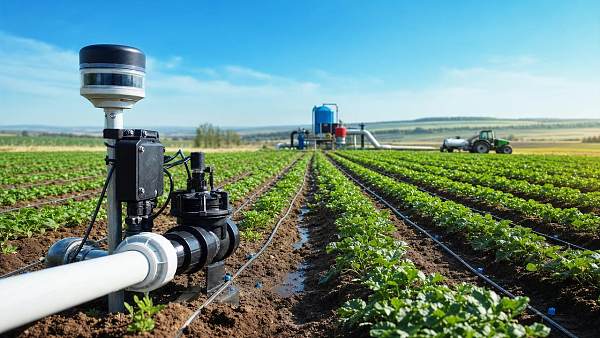
Smart Farming ROI depends on the operating scenario before it depends on device specifications, dashboard design, or automation sophistication.
A sensor network in a water-stressed orchard delivers different returns than the same network in rain-fed grain production.
A labor-saving automation project also changes value when seasonal workforce availability, crop timing, and compliance requirements shift.
The strongest Smart Farming cases connect one technology investment to a clear operational constraint, measured baseline, and realistic payback window.
That means ROI modeling should begin with water cost, labor intensity, yield volatility, equipment utilization, and data reliability.
Scenario Background: Why Farm Conditions Change the ROI Equation
Smart Farming is often discussed as one category, yet farm economics vary sharply across crop types and regional constraints.
High-value crops usually reward precision faster because small yield improvements create larger financial gains per hectare.
Broadacre operations may need larger coverage, rugged connectivity, and lower device cost to make Smart Farming viable.
Greenhouses and controlled environments require dense monitoring, but they can show faster payback through tighter climate control.
Livestock-integrated farms may prioritize water quality, feed efficiency, equipment uptime, and environmental reporting over crop yield alone.
This is why scenario-based evaluation is essential. It prevents overinvestment in fashionable tools and underinvestment in critical bottlenecks.
Scenario 1: Water-Stressed Fields Need Irrigation Intelligence First
In arid regions, Smart Farming ROI often starts with water measurement, soil moisture data, pump scheduling, and irrigation control.
The core judgment point is whether current irrigation decisions are based on fixed schedules or actual field demand.
If water is scarce, expensive, regulated, or energy-intensive to pump, sensor-driven irrigation can create immediate operational value.
Useful indicators include water applied per hectare, pump energy cost, crop stress frequency, and irrigation labor hours.
Smart Farming platforms should connect soil sensors, weather data, flow meters, and valve automation into one decision loop.
The ROI case becomes stronger when reduced water use does not reduce yield, fruit size, or crop uniformity.
Key ROI Metrics for Water Optimization
- Water savings per hectare or per production unit.
- Energy reduction from optimized pump operation.
- Lower crop stress during critical growth stages.
- Reduced manual inspection and irrigation adjustment time.
- Improved compliance with water-use reporting rules.
Scenario 2: Labor-Constrained Operations Need Task Automation
Where labor availability is unstable, Smart Farming ROI depends on fewer manual checks, faster task allocation, and reduced rework.
Connected systems can prioritize scouting, spraying, irrigation repairs, harvesting preparation, and equipment maintenance using real-time field alerts.
The core judgment point is whether repetitive tasks consume skilled labor that could support higher-value operational decisions.
Automation does not always mean replacing workers. Often, it means reducing low-value travel, inspection delays, and manual data entry.
Smart Farming tools should be evaluated by labor hours avoided, response time improvement, and the accuracy of work orders.
Mobile alerts, machine telemetry, and field mapping become valuable when they shorten the gap between detection and action.
When Labor ROI Is Most Defensible
- Large fields require frequent physical inspection.
- Seasonal workforces face training and retention pressure.
- Manual reporting causes delayed agronomic decisions.
- Equipment downtime disrupts narrow fieldwork windows.
- Compliance documentation consumes operational capacity.
Scenario 3: High-Value Crops Need Yield Stability and Quality Control
For orchards, vineyards, vegetables, and specialty crops, Smart Farming ROI often comes from protecting crop quality rather than maximizing volume.
Small improvements in size, color, sugar content, disease control, or harvest timing can justify higher monitoring investment.
The core judgment point is whether crop value is sensitive to microclimate variation, pest pressure, or irrigation inconsistency.
Smart Farming systems can combine canopy sensors, localized weather stations, imaging, and disease-risk models.
The strongest business cases track rejected yield, quality premiums, input efficiency, and harvest predictability.
This scenario benefits from dense data, but only when the data supports timely decisions during critical crop windows.
Scenario 4: Broadacre Farms Need Scalable Coverage and Machine Integration
Broadacre Smart Farming projects must handle large areas, variable connectivity, heavy machinery, and tight seasonal operating windows.
The ROI case may depend less on dense sensors and more on scalable field intelligence across equipment fleets.
Yield maps, variable-rate application, satellite imagery, and machine guidance can reduce input waste across large acreage.
The core judgment point is whether variability inside fields is large enough to reward differentiated treatment.
Smart Farming investment should also account for data compatibility between tractors, implements, agronomy software, and reporting systems.
Poor interoperability can weaken payback, even when individual devices perform well under technical testing.
Different Scenarios, Different Smart Farming Requirements
This comparison shows why Smart Farming decisions should not use one universal ROI formula across all production models.
Each scenario requires different evidence, different technical depth, and different implementation sequencing.
Scenario Adaptation: How to Build a Defensible Investment Case
A strong Smart Farming investment case begins with a baseline that reflects actual operating losses, not generic industry averages.
Baseline data should include water use, labor hours, input rates, downtime, yield variation, quality losses, and compliance effort.
The next step is choosing a pilot boundary that is large enough to prove results but small enough to control risk.
- Define one priority constraint, such as water cost or labor shortage.
- Measure the current baseline for at least one operating cycle.
- Select sensors and platforms that match the field scenario.
- Set payback metrics before deployment begins.
- Review results against weather, crop stage, and operational changes.
Smart Farming ROI becomes more credible when assumptions are documented, exceptions are tracked, and results are compared with untreated areas.
Recommended Fit by Payback Horizon
Common Misjudgments That Weaken Smart Farming ROI
One frequent mistake is buying more data points without defining which decisions will change because of that data.
Another mistake is ignoring installation quality, especially sensor depth, calibration, connectivity, enclosure durability, and power reliability.
Smart Farming also fails when dashboard outputs are not linked to field routines, staff responsibilities, or equipment control.
A technically advanced system can still underperform if alerts are too frequent, unclear, or poorly timed.
Interoperability is another overlooked issue. Farm data must move reliably between sensors, machines, agronomy tools, and enterprise reports.
Cybersecurity and data ownership also matter as connected agriculture becomes part of broader industrial digital infrastructure.
Finally, ROI models should include maintenance, subscriptions, training, replacements, and seasonal support, not only initial hardware cost.
How GIM Benchmarks Smart Farming Across Industrial Systems
Global Industrial Matrix treats Smart Farming as part of a wider industrial system, not an isolated agricultural trend.
Sensor reliability depends on electronics quality, enclosure design, power systems, wireless performance, and environmental durability.
Irrigation automation depends on pumps, valves, filtration, control logic, and infrastructure resilience under field conditions.
Autonomous tractors and connected implements depend on mobility engineering, embedded systems, safety controls, and serviceability.
This cross-sector view helps compare Smart Farming hardware and platforms against measurable technical standards, not marketing claims.
It also supports procurement transparency when agriculture, electronics, ESG infrastructure, and mobility supply chains overlap.
Action Plan: Turning Smart Farming Spending Into Measurable ROI
The practical next step is not a full digital transformation program. It is a focused ROI diagnostic.
Start with the scenario where financial leakage is most visible: water loss, labor bottlenecks, quality variation, or input waste.
Then select a Smart Farming pilot with clear boundaries, verified baseline data, and decision rules before installation.
Track savings, operational changes, yield impact, and staff adoption through the same reporting structure used for capital review.
If results are strong, scale by scenario, not by technology category. Expand where the same constraint and evidence pattern repeat.
With disciplined benchmarking, Smart Farming becomes more than connected equipment. It becomes a measurable path to resilient, efficient agriculture.

The Archive Newsletter
Critical industrial intelligence delivered every Tuesday. Peer-reviewed summaries of the week's most impactful logistics and market shifts.