Monday, May 22, 2024

Water-Saving Irrigation: Cost Payback and Field Results
by
Published
Views:
For financial decision-makers, water-saving irrigation is no longer just a sustainability upgrade—it is a measurable capital strategy. This article examines cost payback timelines, field performance data, and operational impacts to help evaluate whether investment in efficient irrigation systems can reduce resource risk, improve yield stability, and deliver stronger long-term returns across modern agricultural operations.
In capital approval meetings, irrigation projects often compete with storage, mechanization, energy, and compliance investments. That is why the case for water-saving irrigation must be built on more than agronomic promise. It must translate into cash flow visibility, operating resilience, and controllable implementation risk.
For buyers working across integrated industrial and agricultural systems, the decision is also tied to supply chain reliability, utility exposure, labor efficiency, and asset life. A modern assessment should therefore connect field results with procurement standards, maintenance realities, and multi-year return scenarios.
Why Water-Saving Irrigation Has Become a Financial Issue
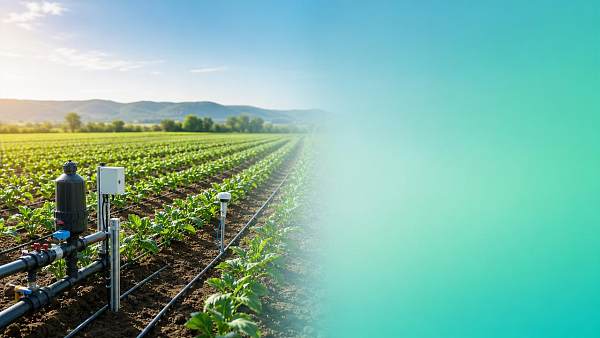
Water-saving irrigation now sits at the intersection of input cost inflation, climate volatility, and infrastructure modernization. In many operations, irrigation can account for 20% to 40% of seasonal variable cost exposure when water purchase, pumping energy, filtration, repair parts, and labor are combined.
For finance teams, the key question is not whether efficient systems save water in theory. The question is whether those savings convert into a payback window of 2 to 5 years, with acceptable installation disruption and predictable service requirements.
Cost pressure extends beyond water bills
Traditional irrigation losses usually appear in at least four places: excess water application, uneven crop performance, higher pumping hours, and more labor interventions. Even a 10% to 15% improvement in distribution uniformity can influence both yield quality and operating stability.
In broad-acre and high-value crop systems alike, under-irrigated zones reduce output while over-irrigated zones increase disease pressure, nutrient leaching, and field traffic inefficiency. That means water-saving irrigation should be evaluated as a system optimization tool, not only as a utility reduction measure.
The financial lens procurement teams should apply
A disciplined review usually covers five dimensions before approval:
- Capital outlay per hectare or per irrigated zone
- Expected reduction in water use, often modeled in the 15% to 35% range
- Energy savings from lower pumping duration or reduced pressure demand
- Yield stability under dry periods, especially across 2 to 3 critical growth stages
- Maintenance burden, including filter cleaning frequency, emitter inspection, and controller reliability
In cross-sector benchmarking environments such as GIM’s Smart Agri-Tech and Industrial ESG framework, these dimensions are strongest when linked to verifiable operating conditions: field size, water quality, pressure profile, labor availability, and standard compliance expectations.
Typical Payback Timelines by Irrigation Upgrade Path
Not all water-saving irrigation investments behave the same way financially. Some deliver rapid returns through control upgrades, while others depend on higher crop values or larger water tariffs to justify installation costs.
The comparison below outlines common upgrade paths that financial approvers can use as a screening model before requesting a site-specific analysis.
These ranges are not universal guarantees, but they reflect common decision thresholds used in B2B agricultural procurement. Faster payback typically appears where water pricing is high, pumping head is significant, or crop value supports precision application.
What changes the payback calculation
Three variables usually shift the return profile more than any others. First, water source economics matter. Metered utility supply, borewell pumping, and canal allocation each create different savings logic. Second, field variability affects recoverable waste. Third, maintenance discipline determines whether modeled savings persist after year 1.
A project that cuts water use by 25% but increases unplanned maintenance by 8 to 10 service events per season may underperform financially. Conversely, a lower-cost retrofit delivering only 12% water reduction may still outperform if uptime, labor efficiency, and yield consistency improve together.
Practical approval benchmark
Many financial teams use a simple gate before deeper modeling: can the project show a realistic path to breakeven within 36 months under a conservative yield assumption, and within 24 months under a base-case operating scenario? If not, the proposal usually requires stronger risk-adjusted justification.
Field Results That Matter More Than Headline Water Savings
Water-saving irrigation should never be judged only by percentage reduction in application volume. Financially relevant field results come from a wider set of outcomes: output quality, yield variance, pumping hours, nutrient efficiency, and the number of manual interventions required during the season.
In many field evaluations, the most valuable result is not the highest water saving figure. It is the narrower performance spread between strong and weak zones, because lower variability supports more reliable revenue planning and inventory commitments.
Operational metrics worth tracking over 1 to 2 seasons
A robust evaluation should measure at least six indicators before and after implementation. This creates a more balanced view than relying on a single seasonal cost line.
- Water applied per hectare or per production block
- Pumping energy per irrigation cycle
- Distribution uniformity or pressure consistency across zones
- Yield per hectare and grade distribution
- Labor hours for monitoring, flushing, and repairs
- Crop stress incidents during peak heat or restricted supply periods
Where digital monitoring is available, weekly or biweekly data collection is often sufficient for financial review. Daily granularity is useful in pilot phases, but for mature operations it may create reporting burden without adding proportional decision value.
Typical field result patterns by system type
The table below summarizes common field-level effects seen in different water-saving irrigation approaches. The ranges are directional benchmarks used for planning, not fixed guarantees.
The key takeaway is that field performance must be judged as a package. A 15% water reduction combined with more uniform yield can outperform a 30% reduction that introduces clogging risk, labor strain, or downtime during critical irrigation windows.
What finance teams should request from field pilots
Before scaling, ask for a pilot that spans at least one full irrigation cycle and ideally one complete season. The pilot should compare baseline and upgraded zones, use a common reporting template, and document at least 3 categories of variance: water, labor, and crop response.
How to Build a Reliable Investment Case
A credible investment case for water-saving irrigation combines engineering feasibility with financial discipline. It should not rely on optimistic agronomic assumptions alone. Procurement and finance teams need a structured framework that can survive sensitivity testing.
A four-part evaluation model
- Establish the baseline cost per hectare, including water, energy, labor, and seasonal repairs.
- Model conservative, base, and upside savings scenarios over 3 to 5 years.
- Add implementation costs such as training, filtration upgrades, spare parts, and commissioning.
- Stress-test the model against weak harvest conditions, water allocation limits, and maintenance overruns.
This approach is especially useful for diversified operations where irrigation investments must align with broader capital planning. It also fits the GIM perspective, where industrial benchmarking is strongest when technical performance and risk transparency are viewed across connected systems rather than isolated departments.
Selection criteria that reduce approval risk
When comparing vendors or solution packages, decision-makers should focus on controllable variables rather than marketing claims. The checklist below can shorten procurement cycles and improve post-installation results.
- Compatibility with existing pumps, filters, and field layouts
- Availability of wear parts within 7 to 21 days
- Commissioning support and operator training scope
- Monitoring capability for pressure, flow, and scheduling history
- Documented maintenance intervals and cleaning procedures
- Clear responsibility split between hardware, installation, and software support
Common approval mistakes
One frequent mistake is using peak-season performance assumptions for every month of the year. Another is excluding service complexity from total cost of ownership. A third is failing to budget for filtration quality, even though poor water treatment can erode performance within the first 6 to 12 months.
Water-saving irrigation succeeds financially when the installation is matched to water quality, crop pattern, and operating capability. It underperforms when a technically advanced system is deployed into a weak maintenance environment without adequate training or spare parts planning.
Implementation, Risk Control, and Long-Term Value
After approval, the real determinant of return is execution quality. Even a well-priced system can lose value if commissioning is rushed, zone balancing is incomplete, or operators lack basic diagnostic routines.
A practical rollout sequence
Most successful projects follow a 5-step path: field audit, hydraulic review, pilot installation, staff training, and phased expansion. Depending on site complexity, the full rollout may take 4 to 12 weeks, while optimization can continue through the first season.
For multi-site operators, it is often better to standardize data reporting before standardizing hardware. That allows finance and procurement teams to compare performance across locations even when crop types or water sources differ.
Risk controls that protect ROI
The strongest long-term returns usually come from a small number of discipline-based controls rather than expensive add-ons.
- Scheduled pressure checks at predefined intervals, such as every 2 weeks
- Filter maintenance records tied to flow reduction thresholds
- Seasonal inspection of emitters, regulators, and valves before peak demand periods
- Backup protocols for controller failure or connectivity loss
- Annual review of savings versus original approval assumptions
These controls help preserve the value of water-saving irrigation as an operating asset. They also improve accountability when finance teams revisit asset performance after 12, 24, or 36 months.
Who benefits most from investing now
The strongest candidates are operations facing one or more of these conditions: rising water costs, unstable supply allocation, energy-intensive pumping, high-value crops, labor shortages, or pressure from ESG and resource reporting. In those environments, the investment case tends to strengthen quickly.
For lower-margin operations, targeted retrofits may be more appropriate than full replacement. A staged approach can still capture 8% to 18% savings while reducing upfront exposure and creating a cleaner data trail for future expansion.
Water-saving irrigation is best understood as a capital decision with operational consequences, not as a standalone environmental initiative. The most durable returns come from matching system type to field conditions, validating results through measurable pilots, and evaluating total ownership costs over a 3 to 5 year horizon.
For financial approvers, the objective is clear: reduce water and energy risk, stabilize yield performance, and improve asset efficiency without introducing hidden maintenance liabilities. GIM supports this decision process by connecting technical benchmarking, procurement transparency, and cross-sector industrial insight.
If you are assessing water-saving irrigation for a new project or an existing operation, contact us to discuss a tailored evaluation framework, compare upgrade pathways, and explore solution options aligned with your cost, risk, and performance targets.

The Archive Newsletter
Critical industrial intelligence delivered every Tuesday. Peer-reviewed summaries of the week's most impactful logistics and market shifts.