Monday, May 22, 2024

Farming Innovation in 2026: What Will Scale First?
by
Published
Views:
As farming innovation moves toward 2026, scale will not be decided by novelty alone.
The fastest winners will be systems that reduce risk, fit existing operations, and prove returns under real field conditions.
Across the broader industrial landscape, farming innovation now intersects with electronics, mobility, water infrastructure, software, and standards-based manufacturing.
That convergence changes how adoption should be evaluated.
In 2026, the most scalable farming innovation will likely be practical combinations of precision sensing, connectivity, autonomous assistance, and resource-efficient infrastructure.
This article examines what will scale first, what may lag, and which signals matter for strategic industrial assessment.
A practical definition of farming innovation in 2026
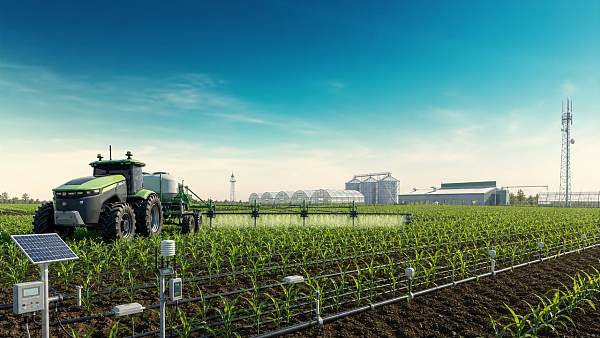
Farming innovation is no longer limited to a single machine or digital tool.
It increasingly refers to integrated systems that improve yield, labor efficiency, input control, traceability, and environmental performance.
In current industrial terms, farming innovation spans five connected layers.
- Field hardware, including tractors, sprayers, planters, and autonomous implements
- Sensor networks, such as soil probes, weather stations, machine vision, and remote imaging
- Control software for mapping, prescriptions, diagnostics, and fleet coordination
- Water and nutrient systems, including irrigation automation and dosing platforms
- Data and compliance infrastructure supporting traceability, ESG reporting, and benchmarking
This broader definition matters because scale often comes from interoperability, not from isolated product performance.
A technology can be technically impressive yet commercially slow if it depends on fragile supply chains or incompatible data formats.
Therefore, farming innovation should be assessed as an industrial stack rather than a trend headline.
Industry signals shaping early scale
Several market signals suggest which categories of farming innovation are positioned to expand first by 2026.
The common pattern is straightforward deployment with measurable operational impact.
These signals favor farming innovation that can attach to current equipment, current workflows, and current compliance needs.
That is why retrofit-friendly and data-light solutions may outscale more advanced but infrastructure-heavy alternatives.
What will likely scale first
The first wave of scalable farming innovation is likely to center on technologies with short learning curves and visible savings.
1. Precision sensing and variable application
This category includes soil moisture sensing, nutrient monitoring, weather-linked prescriptions, and variable-rate application systems.
It scales well because the value equation is easy to track against seed, fertilizer, chemical, and water costs.
It also benefits from mature components sourced from the electronics and industrial controls sectors.
2. Smart irrigation and water infrastructure
Water-efficient systems may become one of the strongest forms of farming innovation by 2026.
The drivers are structural, not temporary.
Remote valve control, filtration monitoring, pressure optimization, and leak detection offer direct operational benefits.
They also align with environmental infrastructure investment and sustainability reporting requirements.
3. Assisted autonomy before full autonomy
Autonomous tractors and robotic field equipment receive significant attention.
However, the first broad scale may come from assisted autonomy rather than fully driverless systems.
Examples include auto-steering, guided path optimization, obstacle detection, and semi-autonomous implement control.
These functions reduce labor burden without demanding a complete operational redesign.
4. Farm data platforms tied to action
Software alone will not scale simply because it centralizes dashboards.
The stronger path is action-linked software that generates prescriptions, maintenance alerts, traceability records, and inventory decisions.
This kind of farming innovation works when data moves directly into field execution.
Why some farming innovation may scale more slowly
Not every promising technology will expand quickly.
The limiting factors are often industrial, not scientific.
- High capital intensity with uncertain payback
- Dependence on scarce semiconductors or specialized components
- Weak compatibility with legacy machinery
- Difficult servicing in distributed field environments
- Limited validation against recognized standards
For example, fully autonomous multi-machine fleets may remain selective until reliability, regulation, connectivity, and field safety frameworks mature further.
Similarly, advanced biological platforms may show technical promise yet scale unevenly without stable formulation, logistics, and storage conditions.
The lesson is clear.
Farming innovation scales when the surrounding industrial ecosystem is ready.
Business value across the industrial chain
The significance of farming innovation extends beyond crop output.
It affects sourcing strategy, hardware design, digital architecture, and infrastructure planning across multiple industries.
This cross-sector view helps explain why farming innovation is now a broader manufacturing and infrastructure topic.
It is increasingly shaped by benchmarkable hardware quality, software interoperability, and system-level resilience.
Typical scaling scenarios by technology type
Different forms of farming innovation will scale in different operational contexts.
- Open-field row crop systems favor guidance, sensing, and variable-rate technologies.
- Water-stressed regions prioritize irrigation automation, monitoring, and filtration upgrades.
- High-value horticulture supports robotics, machine vision, and controlled application tools.
- Large mixed operations adopt modular platforms that connect machinery, water, and traceability data.
The most scalable farming innovation usually matches a clear operational bottleneck.
Where the bottleneck is labor, assisted automation leads.
Where the bottleneck is water, infrastructure intelligence leads.
Where the bottleneck is input volatility, precision application leads.
Evaluation criteria for 2026 adoption decisions
A disciplined framework is essential when comparing farming innovation options.
The following criteria help separate scalable solutions from interesting pilots.
- Payback visibility within one to three operating cycles
- Compatibility with current machinery, software, and workflows
- Component sourcing resilience and maintenance access
- Data portability, cybersecurity, and integration quality
- Conformance with relevant ISO, IPC, IATF, or sector-specific standards
- Measured performance in real operating environments
Farming innovation should also be reviewed at the subsystem level.
Sensor durability, connector integrity, filtration life, software update control, and power stability often decide long-term success.
Practical next steps for tracking what scales first
For 2026 planning, the most useful approach is selective monitoring rather than broad trend chasing.
Start by mapping farming innovation categories against three questions.
- Does the technology solve a current cost or reliability problem?
- Can it integrate with existing hardware and data systems?
- Is its performance verifiable through repeatable field metrics?
The strongest near-term candidates are likely precision sensing, smart irrigation, assisted autonomy, and action-linked farm software.
These areas combine practical ROI with broader industrial readiness.
In short, farming innovation in 2026 will scale first where engineering maturity meets operational urgency.
A cross-sector benchmarking lens helps identify those points earlier and with greater confidence.

The Archive Newsletter
Critical industrial intelligence delivered every Tuesday. Peer-reviewed summaries of the week's most impactful logistics and market shifts.