Monday, May 22, 2024

Self-Driving Tractors: Key Performance Metrics to Compare
by
Published
Views:
As autonomous farming moves from pilot programs to field-scale deployment, comparing self-driving tractors requires more than headline specs. For technical evaluators, the real differentiators lie in performance metrics such as navigation accuracy, implement control stability, fuel efficiency, uptime, and data interoperability. This guide outlines the key benchmarks that matter when assessing reliability, productivity, and long-term integration value across modern agricultural operations.
Which self-driving tractor metrics matter most in technical evaluation?
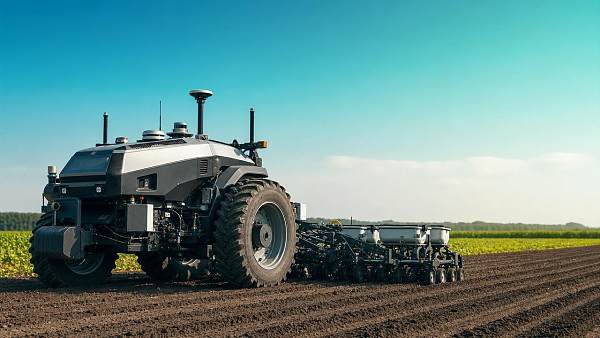
For technical assessment teams, self-driving tractors are not simply agricultural vehicles with autonomous steering. They are integrated cyber-physical platforms combining GNSS positioning, perception hardware, drive-by-wire control, implement communication, telematics, and fleet software. A weak point in any one layer can reduce field productivity or increase operating risk.
This is why procurement and engineering teams need a metric-based framework instead of relying on marketing claims. A machine that promises autonomy but lacks repeatable line tracking, stable implement depth control, or robust fault recovery can create agronomic loss even if it performs well during a demonstration.
In cross-sector manufacturing, autonomous tractors should also be evaluated like other high-value industrial systems. GIM approaches self-driving tractors through the same benchmarking logic used across automotive mobility, electronics, precision tooling, and industrial infrastructure: measurable performance, standards alignment, lifecycle risk visibility, and interoperability under real operating constraints.
- Navigation performance determines whether the machine can hold path accuracy through varying terrain, canopy conditions, dust, and satellite signal changes.
- Control performance determines whether the tractor can maintain speed, heading, and implement response under dynamic load.
- Operational efficiency determines whether automation reduces labor intensity without creating fuel penalties, idle time, or avoidable service stops.
- Data interoperability determines whether machine outputs can be integrated with farm management systems, dealer diagnostics, and wider digital procurement workflows.
Core benchmark categories
Before comparing brands or platforms, technical evaluators should normalize the scorecard around common categories. The table below summarizes key self-driving tractor benchmarks that support apples-to-apples assessment across different operating environments and machine classes.
These categories help move the conversation beyond autonomous branding. In practice, the best self-driving tractors are not always those with the most sensors, but those with balanced, verifiable performance under seasonal pressure and mixed implement conditions.
How should you compare navigation, control, and field accuracy?
Navigation accuracy is often the first metric buyers request, but it is only meaningful when tied to real task execution. A self-driving tractor may achieve strong straight-line guidance yet still underperform on headland turns, slope compensation, or re-entry after temporary signal disruption.
Technical evaluators should distinguish between static accuracy claims and dynamic field behavior. Soil variation, wheel slip, mounted or trailed implements, and line-of-sight limits for perception systems all influence operational precision. The machine should therefore be assessed under load, not just in empty guidance tests.
Critical sub-metrics to verify
- Pass-to-pass deviation across long working periods, especially during changing light or dust conditions.
- Turn execution accuracy at headlands, where time loss and crop damage often accumulate.
- Boundary recognition and geofence compliance for mixed-use fields or environmentally sensitive zones.
- Implement tracking offset, since guidance precision at the tractor does not guarantee precise soil or crop engagement behind the tractor.
Why implement control can outweigh pure guidance numbers
A self-driving tractor used for seeding, nutrient application, or precision spraying must synchronize motion control with implement behavior. If speed fluctuates or hydraulic response lags, seed spacing, application uniformity, and depth consistency will drift. In those cases, nominal GNSS accuracy becomes less valuable than integrated control stability.
For this reason, many evaluation teams now treat tractor-implement coupling as a primary benchmark. The machine should maintain agronomic repeatability while accelerating, cornering, climbing, or traversing uneven fields. This mirrors how industrial automation teams evaluate robotics: task outcome matters more than isolated subsystem specification.
What performance table helps compare self-driving tractors side by side?
When comparing self-driving tractors across suppliers, a weighted matrix is more useful than a feature list. The following table gives technical evaluators a practical comparison structure for field validation, supplier discussion, and procurement scoring.
A matrix like this helps technical teams avoid one of the most common purchasing errors: overvaluing autonomy features while underestimating supportability, integration effort, and exception handling. In large operations, the cost of data fragmentation or delayed service can exceed the value of marginal guidance improvements.
Which operating scenarios reveal the real strengths of self-driving tractors?
Performance claims become meaningful only when mapped to specific farm tasks. Self-driving tractors used for broadacre tillage face different constraints from machines dedicated to row-crop planting, orchard work, or repetitive haul operations. Scenario-based testing is therefore essential.
Typical use cases and evaluation focus
The table below links common deployment scenarios for self-driving tractors to the metrics that most influence technical fit and operational risk.
Scenario testing also helps separate mature autonomy from limited automation. A self-driving tractor that performs well in straight-field preparation may still struggle in tasks requiring repeated stop-start behavior, variable implement loads, or precise field-edge actions.
How do uptime, energy efficiency, and serviceability affect total value?
Technical evaluators often face pressure to justify capital cost quickly. However, the long-term economics of self-driving tractors usually depend more on uptime quality, service access, software support, and fuel or energy behavior than on the initial purchase price alone.
A machine with modest autonomy but stable daily availability may outperform a more advanced platform that requires frequent calibration resets, connectivity troubleshooting, or proprietary dealer intervention. This is especially relevant in narrow weather windows, where one lost day can materially affect seasonal output.
Key lifecycle questions
- How many operator checks or manual confirmations are required per shift for autonomous mode to remain available?
- What is the documented procedure if GNSS correction is lost, a camera lens becomes obstructed, or an implement communication fault occurs?
- Are software updates validated against existing attachments, and can rollback be managed if a new release affects task stability?
- What spare parts, consumables, and field-service capabilities are realistically available during peak operating months?
From a benchmarking perspective, this is where GIM’s system-level view becomes valuable. The same logic used to assess electronics reliability, mobility subsystems, and industrial maintenance planning can be applied to self-driving tractors: mean interruption patterns, diagnostic visibility, subsystem dependencies, and vendor response structure all shape real operational value.
What standards, interfaces, and compliance signals should buyers review?
Self-driving tractors operate at the intersection of machinery safety, control electronics, software, connectivity, and agricultural compliance. Even when one universal certification framework does not cover every aspect of autonomy, technical buyers should still examine how well the platform aligns with recognized industrial practices and interface standards.
- ISO-related machinery and safety concepts can help frame risk analysis, operator interaction, and emergency behavior expectations.
- ISOBUS compatibility remains important for implement communication, job data exchange, and reducing integration friction across mixed fleets.
- Telematics and software interface documentation should be reviewed as carefully as mechanical specifications.
- Environmental and infrastructure considerations, such as geofencing around drainage, protected zones, or chemical handling protocols, should be incorporated into deployment planning.
Common compliance misconception
A frequent mistake is assuming that if a self-driving tractor is commercially available, its integration risk is automatically low. Commercial availability does not confirm seamless compatibility with local attachments, enterprise software, remote service expectations, or internal safety procedures. Buyers still need structured validation.
How should technical evaluators build a practical procurement decision?
A disciplined buying process for self-driving tractors should combine engineering verification with operational realism. The goal is not to identify the machine with the longest feature sheet, but to select the platform with the best risk-adjusted fit for the target fleet, field pattern, and support environment.
Recommended decision workflow
- Define the primary autonomous tasks first, including working speeds, implement types, expected acreage, and supervision model.
- Set mandatory thresholds for guidance repeatability, fault recovery, data export, and service response before supplier discussions begin.
- Run scenario-based demonstrations under real load, not only ideal weather or empty-tractor test conditions.
- Review digital ownership, update policy, and interface openness to avoid long-term platform lock-in.
- Model total cost across purchase, subscriptions, calibration, training, downtime risk, and expected utilization.
This process is particularly useful for multinational procurement teams and industrial strategists comparing agriculture equipment as part of a wider manufacturing and infrastructure portfolio. Cross-sector transparency helps ensure that autonomy investments support not only field output, but also digital governance and supply-chain resilience.
FAQ: common questions when comparing self-driving tractors
How accurate do self-driving tractors need to be for practical farm use?
The answer depends on the task. Tillage may tolerate more deviation than precision planting or input application near boundaries. Evaluators should focus on repeatable in-field performance under load, not only advertised positioning figures. Turn accuracy, re-entry alignment, and implement tracking are often more important than a single static accuracy number.
What is the most overlooked metric in a self-driving tractor comparison?
Implement control stability is frequently underestimated. Many buyers concentrate on autonomy hardware, but inconsistent speed control, hydraulic lag, or weak implement communication can reduce agronomic quality even when navigation appears strong.
Are self-driving tractors suitable for mixed-brand fleets?
They can be, but only if interface compatibility is validated. Buyers should confirm implement communication behavior, telematics export options, diagnostic access, and software integration requirements. Mixed fleets raise the value of open documentation and structured interoperability testing.
What should procurement teams ask about support before purchase?
Ask about remote diagnostics, field service availability during peak season, update procedures, spare parts planning, and escalation paths for autonomy-related faults. For self-driving tractors, support quality can be as important as machine capability.
Why work with GIM when benchmarking self-driving tractors?
GIM helps technical evaluators assess self-driving tractors as part of a broader industrial system, not as isolated equipment purchases. Our cross-disciplinary benchmarking perspective connects smart agri-tech with electronics, mobility engineering, infrastructure constraints, and international standards language. That matters when the real decision involves integration risk, lifecycle transparency, and operational comparability across suppliers.
If you are comparing self-driving tractors for procurement, platform qualification, or technical due diligence, you can consult GIM for parameter confirmation, evaluation matrix design, interface review, standards-oriented benchmarking, delivery-risk analysis, and supplier comparison support. We also help teams structure discussions around field validation scope, data interoperability, service readiness, customization boundaries, and quote-level requirement alignment.
Contact GIM when you need a more disciplined basis for product selection, sample or trial planning, certification-related review, implementation scoping, or cross-sector technical benchmarking. For autonomous equipment, the right question is rarely just which machine is available now. The better question is which system will remain measurable, supportable, and valuable over time.

The Archive Newsletter
Critical industrial intelligence delivered every Tuesday. Peer-reviewed summaries of the week's most impactful logistics and market shifts.