Monday, May 22, 2024

IPC Class 3 Compliance: Key Quality Risks to Check
by
Published
Views:
Why does IPC Class 3 compliance attract so much attention?
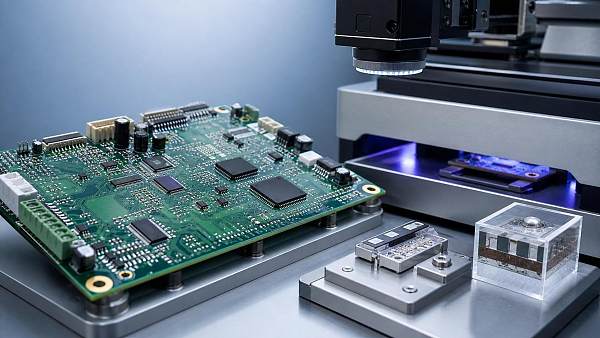
IPC Class 3 compliance is usually discussed when failure is not acceptable.
That includes control electronics, transport systems, energy infrastructure, medical support devices, and other assemblies exposed to harsh duty cycles.
In simple terms, Class 3 is tied to high-performance electronic products that must keep working under demanding conditions.
The risk is not limited to one factory or one sector.
A solder void in an EV control board, contamination in an agricultural sensor module, or weak traceability in filtration controls can create the same reliability problem.
That is why ipc-class 3 compliance matters across a broader industrial landscape.
GIM approaches this from a cross-sector view.
When electronics, mobility, smart agri-tech, ESG infrastructure, and precision tooling intersect, quality risks move with them.
So the real question is not whether the label is important.
The real question is where hidden nonconformities appear before field failure makes them expensive.
Which defects usually break IPC Class 3 compliance first?
Most problems start with basics that were treated as routine.
For ipc-class 3 compliance, routine is exactly where discipline must be highest.
Solder joint quality is the first checkpoint.
Insufficient wetting, disturbed fillets, voiding, icicles, and head-in-pillow conditions can all weaken long-term performance.
Some defects pass functional test and still fail under vibration, thermal cycling, or power loading.
Plated through-holes and vias are another common issue.
Barrel cracks, insufficient copper thickness, misregistration, or resin recession can reduce structural integrity before anyone notices it on the line.
Contamination also deserves more attention than it often receives.
Flux residues, handling contamination, and cleaning chemistry imbalance can drive electrochemical migration and leakage over time.
In actual production, these are often linked to upstream control gaps rather than a single operator mistake.
- Pad damage after rework or repeated heating
- Lifted conductors caused by poor adhesion or excessive stress
- Component misalignment that changes mechanical loading
- Base material variation that affects delamination resistance
- Marking and lot traceability gaps that block root cause analysis
If the objective is reliable ipc-class 3 compliance, these defects should be checked as system risks, not isolated events.
How do you judge whether a Class 3 risk is cosmetic or truly critical?
This is where many inspections lose consistency.
A defect may look minor but still signal a deeper process instability.
A practical way to judge ipc-class 3 compliance is to combine appearance criteria with service-condition thinking.
Ask three things.
Will the defect reduce electrical continuity, mechanical endurance, or environmental resistance?
Will it worsen under heat, moisture, shock, or cyclic loading?
Can the process reliably prevent recurrence?
The table below works as a quick review tool during audits or supplier checks.
A useful judgment principle is this: if a defect affects durability under real operating stress, treat it as critical even when visual impact seems small.
Where do factories usually underestimate the implementation challenge?
Many teams assume ipc-class 3 compliance is mainly an inspection issue.
More often, the weak point is process discipline across design, sourcing, assembly, and change control.
For example, a compliant board design can still fail if stencil design, reflow profile, or handling methods drift.
Likewise, approved materials can still create risk if moisture exposure, shelf life, or lot segregation is poorly managed.
The harder part is consistency across sites and suppliers.
That matters in complex industrial networks, where one assembly may combine electronics, machined parts, plastics, coatings, and embedded controls from different regions.
GIM’s benchmarking model is useful here because it compares process evidence, not just declarations.
Across automotive modules, sensor platforms, and environmental control systems, the same pattern appears.
Documentation may say Class 3, while inspection capability and process window control say something else.
Need-to-check areas usually include:
- Engineering change records that do not fully assess reliability impact
- Mixed acceptance standards between internal lines and subcontractors
- Training records that show certification but not repeatable judgment quality
- Test plans focused on function, while long-term endurance receives limited coverage
So the implementation challenge is not only passing an audit.
It is building repeatable evidence that ipc-class 3 compliance holds under production pressure.
What does a stronger inspection and verification routine look like?
A stronger routine starts before final inspection.
Incoming materials, process validation, and defect escalation rules should already reflect ipc-class 3 compliance priorities.
In practice, the most reliable programs use layered verification.
Visual inspection is supported by AOI, X-ray, microsection analysis, cleanliness testing, and traceability review.
The goal is to catch both visible defects and hidden process drift.
A workable review cadence
- Verify high-risk joints and hidden solder areas with sample-based X-ray checks
- Trend cleanliness data by product family, not only by isolated lot
- Use microsections when plating quality or via integrity is in doubt
- Review rework frequency as a process warning, not a repair statistic
- Link nonconformities to material lots, machine settings, and operator events
A common mistake is measuring only defect counts.
A better method is to watch defect mechanism, recurrence pattern, and exposure severity.
That gives ipc-class 3 compliance a stronger operational basis.
How should the next review be prioritized?
If the current program already references Class 3, the next step is not more paperwork.
The better move is to test whether evidence, controls, and inspection depth match the claimed reliability level.
Start with assemblies exposed to vibration, heat, moisture, current density, or limited service access.
Then review the process stages where latent defects are most likely to escape.
That usually means soldering, cleaning, rework, material handling, and traceability handoff points.
For organizations managing multi-sector supply chains, a benchmarking approach helps separate declared compliance from demonstrated control.
That is where cross-industry intelligence becomes practical rather than theoretical.
IPC Class 3 compliance is ultimately a reliability decision.
When quality risks are checked through defect behavior, process evidence, and traceable control, the standard becomes easier to sustain.
A useful next move is to map current inspection points, compare them against real failure modes, and tighten any gap that depends too heavily on visual pass judgment alone.

The Archive Newsletter
Critical industrial intelligence delivered every Tuesday. Peer-reviewed summaries of the week's most impactful logistics and market shifts.