Monday, May 22, 2024

Nasdaq Adds SanDisk to Nasdaq-100 Index
by
Published
Views:
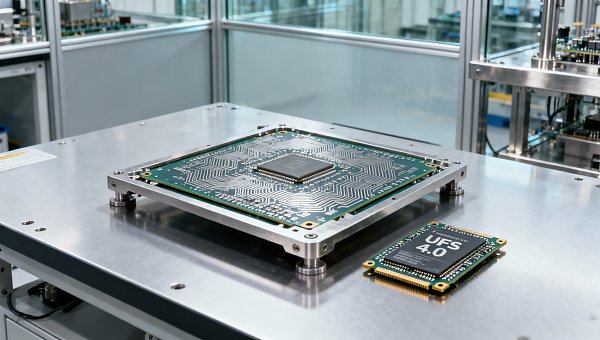
Nasdaq officially included SanDisk in the Nasdaq-100 Index on May 4, signaling renewed global strategic emphasis on high-performance storage devices. This development warrants close attention from suppliers of automotive UFS 4.0 modules, industrial-grade eMMC, and SMT Precision Metrics test carriers — particularly those engaged with Tier-1 automotive OEMs in North America and Europe.
Event Overview
On May 4, Nasdaq announced the inclusion of SanDisk in the Nasdaq-100 Index. Publicly confirmed information indicates this change reflects heightened institutional recognition of storage semiconductor value chains. As a result, leading Chinese OSAT (outsourced semiconductor assembly and test) providers have reported urgent inquiries from Tier-1 automotive manufacturers in the U.S. and Europe, with requested delivery timelines compressed to within six weeks.
Industries Affected
OSAT Providers (Packaging & Test Facilities)
The inclusion underscores demand acceleration for high-reliability, automotive-qualified storage packaging solutions. SanDisk’s index placement elevates visibility and investor scrutiny of its supply chain partners — especially those delivering UFS 4.0 modules and precision test carriers meeting automotive AEC-Q200 or similar reliability standards.
Automotive Electronics Suppliers
Tier-1 and Tier-2 automotive electronics suppliers are experiencing intensified procurement pressure for storage-integrated modules. The shift correlates with increased validation requirements for embedded storage in ADAS, infotainment, and vehicle data logging systems — where UFS 4.0 and industrial eMMC variants are gaining traction over legacy eMMC 5.1 or SD-based solutions.
SMT Test Carrier Manufacturers
Suppliers of SMT Precision Metrics test carriers — used in high-accuracy burn-in and functional testing of NAND-based storage modules — are seeing direct downstream demand uplift. These carriers require tight dimensional tolerances (
What Enterprises and Practitioners Should Monitor and Act On
Track official index rebalancing communications from Nasdaq
Nasdaq publishes quarterly index methodology updates and constituent changes. Firms should monitor upcoming announcements (e.g., June and September rebalancing windows) for potential follow-on effects — such as increased investor interest in other storage-related index constituents or adjacent suppliers.
Monitor order patterns for UFS 4.0 and industrial eMMC in automotive applications
Current inquiries reflect early-stage design-win momentum rather than mass production volume. Companies should distinguish between sample requests, qualification orders, and firm purchase orders — especially given the six-week delivery window, which suggests urgency at the pre-production validation stage.
Assess capacity readiness for automotive-grade test carrier production
Given compressed timelines, OSATs and test carrier makers should review current yield rates, material lead times (e.g., for ceramic substrates or specialized solder mask), and AEC-Q200 certification status — not just for finished carriers but also for their base materials and plating processes.
Engage proactively with Tier-1 engineering procurement teams on specification alignment
Early engagement helps clarify evolving interface requirements (e.g., JEDEC UFS 4.0 v2.0 vs. v2.1), thermal derating expectations, and traceability documentation needed for IATF 16949 compliance — all of which influence qualification duration and ramp feasibility.
Editorial Observation / Industry Perspective
Observably, SanDisk’s inclusion in the Nasdaq-100 is less a reflection of standalone corporate performance and more an indicator of broader capital market recalibration toward mission-critical storage infrastructure. Analysis shows that index inclusions often precede tighter integration expectations across the storage supply chain — particularly where automotive and industrial use cases demand higher validation rigor than consumer applications. From an industry perspective, this event functions primarily as a signal: it does not yet represent widespread commercial scale-up, but it does mark a threshold where storage component reliability and qualification pathways become strategically visible to equity investors and OEM procurement leaders alike. Continued attention is warranted — not because the index change itself alters technical specifications, but because it amplifies downstream demand signals across qualified manufacturing nodes.
In summary, SanDisk’s Nasdaq-100 inclusion highlights growing investor and OEM focus on high-assurance storage components — especially those serving automotive and industrial applications. It is best understood not as an isolated corporate milestone, but as a marker of tightening alignment between financial market valuation and hardware supply chain readiness for next-generation embedded storage. Current interpretation should emphasize signal detection over immediate operational impact — with practical response centered on qualification preparedness, timeline discipline, and specification clarity.
Source: Nasdaq official index announcement (May 4); verified reports from multiple Chinese OSAT providers regarding Tier-1 automotive inquiries. Note: Ongoing observation is recommended for subsequent Nasdaq rebalancing notices and OEM public procurement roadmaps — neither of which are confirmed at time of publication.
The Archive Newsletter
Critical industrial intelligence delivered every Tuesday. Peer-reviewed summaries of the week's most impactful logistics and market shifts.