Monday, May 22, 2024

SMT Process Control: Common Defect Risks and Fixes
by
Published
Views:
SMT process control is the frontline defense against recurring defects that disrupt quality, safety, and throughput in electronics manufacturing. Stable control matters across modern industry because electronics now support vehicles, tools, agri-tech systems, filtration controls, and connected infrastructure. When SMT process control weakens, defect costs rise quickly through scrap, rework, delayed delivery, and compliance exposure. This guide answers the most common questions about defect risks, root causes, and practical fixes that improve consistency on real production lines.
What does SMT process control really cover?
SMT process control covers every variable that influences printed circuit assembly quality. It starts before printing and continues through placement, reflow, inspection, and feedback correction.
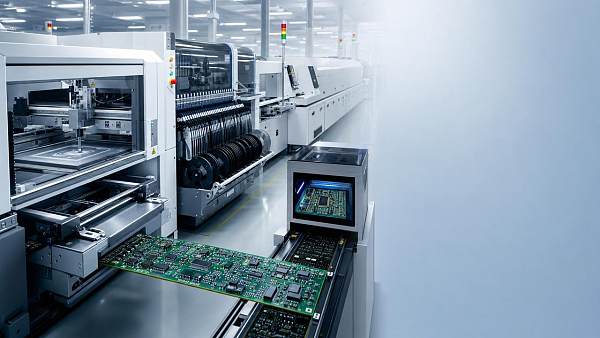
Many teams limit SMT process control to machine settings alone. That view is incomplete. Material behavior, board design, operator discipline, and environmental stability also shape defect rates.
A strong control system focuses on measurable inputs. These include solder paste viscosity, stencil condition, placement accuracy, thermal profile, moisture exposure, and inspection thresholds.
It also defines response rules. When a trend appears, the line should not wait for major failure. Corrective action must begin before defects exceed limits.
Why is this important beyond consumer electronics?
Electronics assemblies now operate in vibration, heat, moisture, and chemical exposure. That includes EV modules, industrial controls, smart agriculture devices, and environmental monitoring systems.
In these sectors, poor SMT process control can create intermittent faults, unsafe field failures, or shortened service life. Defect prevention therefore supports both product reliability and operational resilience.
- Controls incoming material variation
- Reduces hidden solder joint risk
- Protects throughput and first-pass yield
- Supports IPC, ISO, and traceability expectations
Which defect risks appear most often when SMT process control slips?
The most frequent risks usually begin with solder paste printing. Printing errors often cause more defects than placement or reflow because every downstream step inherits that starting condition.
1. Solder paste variation
Common issues include insufficient deposits, slumping, bridging, and inconsistent release from stencil apertures. These defects often trace back to paste age, storage, contamination, or poor print settings.
Fixes include tighter thaw time control, regular viscosity checks, stencil cleaning intervals, and verification of squeegee pressure and speed.
2. Component misalignment and tombstoning
Misalignment comes from offset printing, nozzle wear, feeder error, warped boards, or poor fiducial recognition. Tombstoning often results from uneven wetting forces during reflow.
Fixes include feeder calibration, pickup nozzle maintenance, better pad balance, and thermal profile tuning that promotes even solder wetting.
3. Reflow instability
A drifting profile can cause voiding, cold joints, solder balls, or component damage. Causes include overloaded ovens, weak zone control, poor conveyor consistency, or wrong recipe selection.
Fixes include profile confirmation by product family, periodic thermocouple studies, oven maintenance, and clear changeover discipline.
4. Moisture and handling damage
Moisture-sensitive devices may crack or delaminate during reflow. Improper handling can also contaminate pads, bend leads, or introduce electrostatic risk.
Fixes include MSL control, bake procedures, ESD discipline, and protected storage conditions from receiving to line-side use.
How can SMT process control reduce printing defects first?
If one area deserves priority, it is printing. Effective SMT process control begins by making solder paste deposits repeatable across shifts, products, and board locations.
Start with stencil design review. Aperture shape, wall finish, thickness, and area ratio strongly influence transfer efficiency on fine-pitch assemblies.
Next, control the paste itself. Track lot number, refrigeration history, thaw time, pot life, and kneading practice. Paste should behave consistently before release testing begins.
Printer settings must be product-specific, not copied blindly. Snap-off, separation speed, pressure, and understencil cleaning intervals should follow measured results.
Useful print control checkpoints
- Verify stencil wear and aperture blockage daily
- Standardize paste thaw and floor-life timing
- Use SPI trend limits, not only pass or fail
- Investigate edge-board and center-board variation
- Separate machine drift from material drift
This is where SMT process control becomes predictive. SPI data can reveal gradual movement before bridges, opens, and skewed components appear at AOI.
What is the best way to control placement and reflow together?
Placement and reflow should never be treated as isolated stations. Good SMT process control links machine accuracy, board support, and thermal behavior into one feedback loop.
For placement, confirm fiducial readability, nozzle condition, feeder indexing, and component package library accuracy. A small library mistake can repeat across thousands of boards.
Board support matters more than many lines expect. Flexing during placement can distort coplanarity and change solder joint formation during reflow.
For reflow, profile by thermal mass and component sensitivity. One profile rarely fits high-density control boards and heavier power assemblies equally well.
The strongest SMT process control systems compare SPI, placement, AOI, and reflow data together. That linkage reduces false assumptions and shortens root-cause time.
Which inspection and data methods improve SMT process control fastest?
Inspection adds value only when it drives correction. Many lines gather data but fail to convert it into stable action limits and preventive responses.
SPI should be the earliest gate. It catches volume, height, area, and offset issues before expensive components are placed.
AOI should then classify true defect families clearly. If categories are vague, trend analysis becomes weak and repeated failures remain hidden.
X-ray is essential for BGAs, QFNs, and void-sensitive applications. It supports SMT process control where visual inspection cannot verify hidden joints.
Data practices that create real improvement
- Use common defect codes across all stations.
- Track defects by product, shift, lot, and machine.
- Set trend alarms before specification failure.
- Close corrective actions with verification data.
- Review recurring escapes against field performance feedback.
For cross-sector assemblies, this discipline matters even more. Electronics used in mobility, precision tooling, and environmental systems often demand tighter traceability and risk visibility.
What mistakes weaken SMT process control during implementation?
A common mistake is reacting only to final inspection defects. By that stage, scrap and rework have already consumed time, materials, and line capacity.
Another mistake is overreliance on machine recipes without validating real material behavior. Two approved paste lots may still perform differently on the same stencil.
Some lines also separate engineering changes from production discipline. If setup sheets, libraries, and control limits are not synchronized, defect recurrence becomes likely.
Training gaps create hidden variation as well. Even automated lines depend on consistent cleaning, loading, storage, and response habits.
Quick FAQ table
Strong SMT process control does not depend on one perfect tool. It depends on linked controls, fast feedback, and verified corrective action at every critical step.
The practical next step is to map the top three recurring defects, connect them to upstream variables, and define measurable response limits. That approach turns SMT process control into a stable improvement system rather than a reactive inspection routine.
Within complex global manufacturing, the value is clear: fewer escapes, stronger compliance, better reliability, and more predictable throughput across interconnected industrial applications.

The Archive Newsletter
Critical industrial intelligence delivered every Tuesday. Peer-reviewed summaries of the week's most impactful logistics and market shifts.