Monday, May 22, 2024

Tesla Terafab Breaks Ground, Redrawing Auto Chip Supply
by
Published
Views:
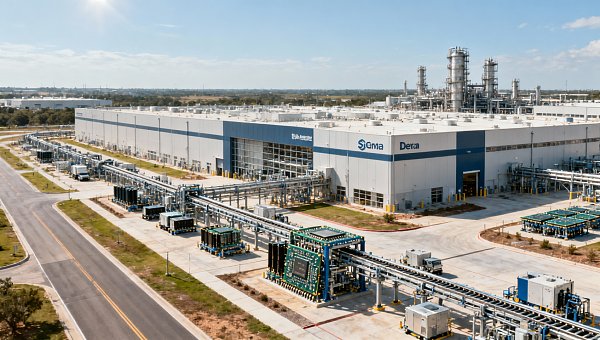
On August 10, 2026, Tesla and SpaceX announced the start of construction on “Terafab” in Grimes County, Texas, a large-scale semiconductor manufacturing site focused on vehicle-grade MCU production, SiC power devices, and AI edge chips. What deserves closer attention is not only the factory itself, but the way it ties chip supply more directly to ADAS sensors, electric-drive control modules, and smart chassis systems, with implications for auto electronics, power semiconductors, and overseas Tier-1 suppliers that rely on China-based PCBA and SMT precision manufacturing.
What Tesla and SpaceX said about Terafab
According to the announcement, Terafab is being built in Grimes County, Texas, as a hyperscale semiconductor manufacturing facility. The stated production focus is on automotive MCU devices, SiC power components, and AI edge chips. The project is also described as part of vertical integration for ADAS sensors, electric-drive control modules, and intelligent chassis systems.
The same announcement links the facility to a broader shift in vehicle electronics supply arrangements. Rather than treating chips as upstream components only, the project positions semiconductor manufacturing closer to core vehicle subsystems that depend on stable technical coordination and tightly sequenced delivery.
Where the supply chain pressure may show up
Auto electronics and Tier-1 integration
From an industry perspective, the most immediate attention should go to Tier-1 suppliers that assemble ADAS, drive-control, and chassis-related modules. If a vehicle platform increasingly depends on vertically integrated chip supply, then module design, qualification timing, and release coordination may become more tightly coupled to the chipmaker’s own production schedule.
For suppliers that depend on Chinese PCBA and SMT precision manufacturing, the challenge is not just component sourcing. It also includes interface alignment, delivery rhythm, and how quickly engineering changes can be absorbed without interrupting downstream assembly windows.
SiC power devices and electric-drive systems
The Terafab announcement explicitly includes SiC power devices. That matters because SiC devices sit at the center of electric-drive control and power conversion architectures. Any shift in manufacturing control over such devices can affect sourcing decisions, validation cycles, and the way OEMs and suppliers split responsibility between chip procurement and module assembly.
In practice, businesses involved in power electronics will want to watch whether procurement structures become more centralized around a smaller number of vertically integrated programs. Even without assuming immediate volume changes, this kind of project can alter how buyers evaluate second-source planning and delivery resilience.
AI edge chips and subsystem coordination
The inclusion of AI edge chips suggests that Terafab is not limited to conventional automotive semiconductors. That expands the relevance of the project beyond one component category and into the coordination of sensing, compute, and control functions inside the vehicle.
For engineering and supply teams, the key question is how far this integration will extend into specification control, validation ownership, and change management. Those are the points where upstream chip decisions can reshape downstream manufacturing behavior.
What companies should watch next
Follow the official wording, not only the headline
What deserves closer attention is any follow-up from Tesla or SpaceX on scope, product definitions, and implementation rules. The current announcement establishes direction, but not every practical detail of how procurement, qualification, or supply allocation will work. Companies should track whether later statements narrow or expand the role of Terafab in vehicle programs.
Focus on the interfaces between chip supply and module assembly
For suppliers, the most useful preparation is to review where chip-related dependencies sit inside ADAS, electric-drive, and chassis programs. That includes part approval timing, packaging and test handoffs, and the points where PCBA or SMT work depends on upstream design freezes. These are the places where delays usually surface first.
Recheck customer communication and delivery assumptions
Businesses that serve overseas Tier-1 accounts should treat this as a signal to revisit delivery assumptions. If customers begin to rebalance sourcing around Terafab-linked programs, then prior lead-time estimates, change-order cadence, and documentation requirements may no longer match the actual pace of execution.
Keep an eye on qualification and sourcing discipline
For manufacturers and service providers, supplier qualification, compliance documents, and handover clarity may matter more than broad strategic messaging. The practical test will be whether this project changes how buyers validate origin, process capability, and delivery stability across their semiconductor-to-module chain.
A signal that still needs follow-through
Analysis shows this is best read as a meaningful strategic signal rather than a completed market shift. The announcement is already enough to matter because it connects semiconductor manufacturing directly to vehicle subsystem integration. At the same time, the operational effect on procurement, manufacturing, and delivery will depend on how the project is executed and how surrounding supply partners adapt.
It is more appropriate to understand this as a longer-term industry indicator with short-term attention value. The headline is about a factory start, but the deeper issue is the direction of travel: tighter control over automotive chips, closer integration with vehicle systems, and a harder coordination environment for suppliers built around multi-country manufacturing chains.
Why this matters now
Terafab’s construction adds another layer to the discussion around vehicle semiconductors, especially where MCU, SiC, and edge-compute demand meets module-level integration. For the market, the main takeaway is not an immediate conclusion about supply disruption, but a clearer sign that procurement, engineering, and production planning in auto electronics may need to be managed with shorter feedback loops and less room for cross-border friction.
At this stage, the safer conclusion is that the project should be watched as a strategic development with real supply-chain implications, while the actual impact on global sourcing patterns remains something to verify as construction, qualification, and rollout continue.
Source basis and what still needs verification
This article is based on the user-provided title, event date, and event summary. Related source types for later verification typically include official company announcements, corporate filings or press materials, industry association updates, and authoritative media reports. No specific official source link was provided in the input, so the announcement details should continue to be verified against primary releases and subsequent technical or procurement updates.
Further attention should be given to any official follow-up on product scope, production timing, supplier coordination, and the relationship between the Texas site and downstream automotive programs.

The Archive Newsletter
Critical industrial intelligence delivered every Tuesday. Peer-reviewed summaries of the week's most impactful logistics and market shifts.