Monday, May 22, 2024
Health Updates That Matter Most in 2026
by
Published
Views:
In 2026, health updates carry weight far beyond hospitals and consumer wellness. They now signal how labor availability, regulatory pressure, digital infrastructure, and supply continuity may shift across multiple industries.
That wider meaning matters because public health patterns increasingly affect production planning, component sourcing, environmental compliance, and investment timing. The most useful health updates are no longer isolated headlines. They are operating signals.
Viewed through a platform like Global Industrial Matrix, those signals become easier to compare across electronics, mobility, agri-tech, water systems, and precision tooling. This cross-sector lens helps connect healthcare change with industrial resilience.
Why Health Updates Matter More in 2026
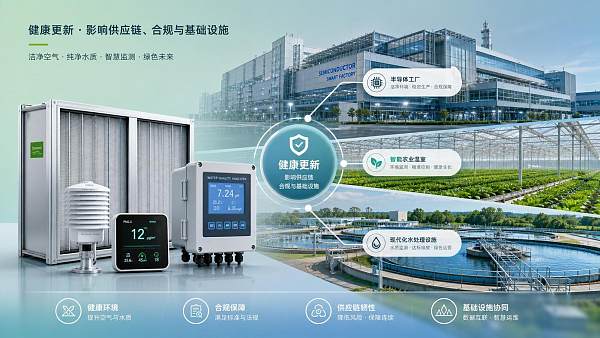
The biggest shift is that health updates now influence both social stability and technical operations. A disease trend, workplace exposure rule, or care technology rollout can alter output just as quickly as a logistics disruption.
This is especially visible in globally connected manufacturing. Semiconductor fabs, battery plants, smart farms, and water treatment infrastructure all depend on healthy workforces, dependable maintenance cycles, and predictable regulatory environments.
More importantly, the boundary between health and infrastructure is thinner than it was a few years ago. Air quality systems, sanitation technology, occupational monitoring, and remote diagnostics all sit at that intersection.
That is why health updates in 2026 are not just informative. They help explain where stress may appear first in a supply network, a plant footprint, or a regional labor market.
What Counts as a Meaningful Health Update
Not every medical headline deserves equal attention. The health updates that matter most tend to share one feature: they change decisions, not just awareness.
In practice, that includes updates tied to workforce readiness, public health regulation, occupational exposure, digital care adoption, environmental safety, and supply-demand shifts for critical materials or equipment.
A useful distinction is whether the update changes an operating assumption. If it affects staffing continuity, compliance thresholds, equipment standards, insurance costs, or facility design, it belongs on the strategic watchlist.
High-signal categories in 2026
- Infectious disease surveillance that may disrupt regional labor pools.
- Occupational health rules affecting plant ventilation, noise, or chemical handling.
- Telehealth and remote monitoring systems changing care access for distributed workforces.
- Mental health and fatigue indicators linked to retention and productivity.
- Water quality, sanitation, and environmental exposure alerts tied to industrial sites.
- Medical device and pharmaceutical supply updates with cross-sector material implications.
The Industrial Link Behind the Headlines
Health updates become more useful when matched with industrial dependencies. That is where cross-disciplinary benchmarking provides context instead of noise.
GIM’s value is not in treating health as a separate topic. It helps show how one development moves through semiconductors, mobility systems, agri-tech assets, infrastructure equipment, and technical standards.
For example, stricter indoor air guidance can affect fab filtration requirements, cabin air systems in vehicles, greenhouse controls, and treatment processes in environmental infrastructure. One health-related shift can touch several engineering domains.
The same applies to data governance. As digital care expands, demand rises for sensors, edge devices, secure connectivity, substrate quality, battery reliability, and high-performance components built to recognized standards.
Where the cross-sector effects appear
The Main Health Updates Shaping Decisions This Year
Several health updates stand out because they affect multiple planning layers at once. They touch policy, workforce management, sourcing, and technical design.
Workforce health has become a continuity issue
Absenteeism is no longer the only concern. Organizations now watch fatigue, heat stress, respiratory exposure, and mental strain because they influence error rates, machine downtime, and retention.
The strongest health updates in this area combine epidemiological data with workplace metrics. That pairing helps separate temporary noise from structural risk.
Care technology is expanding into operations
Remote diagnostics, wearables, connected sensors, and AI-supported triage are changing how health events are detected and managed. Their influence extends into device manufacturing, cybersecurity, and data integrity.
For industrial observers, these health updates matter because care technology relies on hardware quality, connectivity resilience, and standards alignment.
Environmental health is moving to the center
Water safety, contamination control, and air handling are receiving more attention. This is partly regulatory, but it is also tied to broader resilience planning.
A wastewater alert, for instance, may look local at first. Yet it can quickly affect food systems, municipal infrastructure, industrial permits, and public trust.
How to Read Health Updates in a Business Context
A common mistake is treating health updates as isolated compliance notes. A better approach is to read them across three levels: immediate disruption, medium-term adaptation, and longer-term system redesign.
The immediate level covers staffing, site access, temporary controls, and supply delays. The next level includes procurement adjustments, equipment upgrades, and policy revisions.
The longer view asks whether standards, facility layouts, or digital architectures need to change. That is often where the real cost and competitive difference appear.
Questions worth asking
- Does this update change a regulatory threshold or reporting expectation?
- Could it alter labor availability by region or facility type?
- Does it increase demand for specific components, filtration, sensors, or treatment modules?
- Are international standards such as ISO, IATF, or IPC indirectly affected?
- Is the signal temporary, cyclical, or part of a structural transition?
From Monitoring to Better Judgment
The volume of health updates in 2026 makes passive monitoring less useful. What matters is building a repeatable way to rank relevance and connect signals across sectors.
That means pairing public health data with technical benchmarks, regional exposure patterns, equipment dependencies, and standards-based performance comparisons. A health signal becomes actionable when it can be tested against operations.
GIM’s system-level perspective is useful here because it places health updates inside a broader industrial map. It becomes easier to judge whether a development is local, sector-specific, or likely to cascade.
The next step is straightforward. Track the health updates that influence labor, infrastructure, and technical compliance first. Then compare those signals against current dependencies, exposed geographies, and critical hardware pathways.
That kind of disciplined review does more than improve awareness. It helps shape sourcing priorities, resilience planning, and more credible decisions in a year when health is closely tied to industrial performance.
The Archive Newsletter
Critical industrial intelligence delivered every Tuesday. Peer-reviewed summaries of the week's most impactful logistics and market shifts.