Monday, May 22, 2024

Power Solutions for Grid Stability: Key Options Compared
by
Published
Views:
Power Solutions for Grid Stability: Key Options Compared
As grid volatility, electrification, and sustainability pressures intensify, choosing the right power solutions has become a strategic priority for industrial leaders.
This comparison looks at practical paths to stronger grid stability across manufacturing, mobility, agriculture, and infrastructure operations.
The core question is no longer whether to invest.
It is which power solutions deliver the best balance of resilience, speed, cost, and integration value.
Why Grid Stability Now Drives Operational Strategy
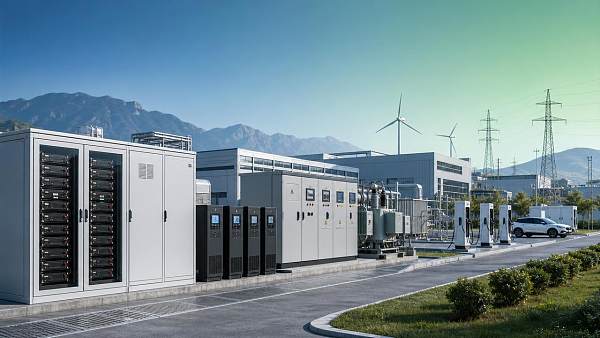
Power quality issues now affect far more than utilities.
They disrupt robotics, semiconductor tools, EV charging, cold-chain assets, irrigation controls, and water treatment systems.
From recent market shifts, the clearer signal is this.
Grid stability has become an operational KPI, not just an engineering concern.
Voltage dips, peak demand spikes, and renewable intermittency can quietly raise downtime risk.
They also complicate energy planning across global facilities with different compliance and reliability profiles.
That is why more companies are reviewing power solutions with a system-level lens.
The right answer often depends on load criticality, outage tolerance, digital maturity, and future expansion plans.
Five Leading Power Solutions for Grid Stability
Not every option solves the same problem.
Some power solutions protect sensitive loads in milliseconds.
Others optimize peak demand, add redundancy, or stabilize distributed energy resources over longer intervals.
1. Battery Energy Storage Systems
Battery storage is now one of the most flexible power solutions for grid stability.
It supports peak shaving, backup power, frequency response, and renewable smoothing.
For sites with variable tariffs, it also improves energy cost control.
- Best for facilities with high peak charges or on-site solar.
- Responds quickly to short-duration instability events.
- Requires strong EMS integration and thermal safety planning.
2. Uninterruptible Power Supply Systems
UPS platforms remain essential where even brief disruptions create major losses.
Think cleanrooms, data systems, automated lines, precision tooling, and laboratory equipment.
Among power solutions, UPS delivers the fastest protection against sags and momentary outages.
- Best for critical loads with near-zero interruption tolerance.
- Provides high power quality at the point of use.
- Usually covers shorter durations than larger storage systems.
3. On-Site Generation and Microgrids
Microgrids combine local generation, controls, and often storage into coordinated power solutions.
They can island during disturbances and support business continuity across larger campuses.
Gas engines, CHP, solar, and storage can all be part of the mix.
- Best for complex sites needing resilience and local energy control.
- Improves continuity during longer outages.
- Involves higher capital cost and more integration complexity.
4. Demand Response and Smart Load Management
Some of the most cost-effective power solutions do not add generation at all.
They make existing loads more flexible.
Demand response, automated load shedding, and process scheduling can reduce stress on both the site and the grid.
- Best for multi-load facilities with digital controls already in place.
- Lowers peak demand and supports tariff optimization.
- Needs reliable data visibility and operator alignment.
5. Power Conditioning Equipment
Voltage regulators, harmonic filters, and STATCOM-type technologies address specific stability weaknesses.
These power solutions matter when the issue is poor power quality rather than energy shortage.
They are often overlooked until sensitive assets begin showing fault patterns or shortened service life.
- Best for facilities facing harmonics, voltage fluctuation, or reactive power issues.
- Protects equipment health and process consistency.
- Works best when paired with detailed site diagnostics.
How to Compare Power Solutions in Real Operations
A side-by-side comparison becomes more useful when tied to real operating conditions.
The table below highlights how key power solutions typically perform.
In practice, the strongest architecture often combines several power solutions.
For example, a plant may use UPS for control systems, batteries for peak shaving, and load management for noncritical assets.
What Decision-Makers Should Evaluate First
A smart shortlist starts with operational truth, not vendor claims.
Before selecting power solutions, clarify what kind of instability causes the most business damage.
- Map critical loads by outage tolerance, restart time, and financial impact.
- Review historical data on sags, harmonics, peaks, and unplanned shutdowns.
- Check whether future EV charging, automation, or electrified heat will change demand profiles.
- Assess integration readiness across SCADA, EMS, BMS, and facility controls.
- Compare total lifecycle value, not only capital cost.
This matters because the cheapest power solutions can become expensive if they create hidden maintenance, training, or downtime burdens.
A cross-functional review usually produces better results than an energy-only assessment.
Operations, procurement, engineering, finance, and compliance teams should all shape the decision.
Cross-Sector Lessons from Industrial Benchmarking
Across sectors, one pattern keeps appearing.
Facilities that treat power solutions as isolated equipment often underperform.
Facilities that treat them as part of a larger operating system usually gain more resilience and clearer returns.
In electronics manufacturing, milliseconds matter, so UPS and power conditioning dominate.
In automotive and mobility, rising charging loads make batteries and smart load orchestration more attractive.
In smart agriculture, remote operations often benefit from hybrid microgrids that reduce exposure to weak local grids.
In water and environmental infrastructure, power solutions must support uptime, regulatory continuity, and asset longevity at the same time.
This is where technical benchmarking helps.
A platform such as Global Industrial Matrix brings cross-sector transparency to the decision process.
By comparing hardware performance, standards alignment, and system compatibility, teams can choose power solutions with less guesswork.
Choosing the Right Power Solutions for Long-Term Stability
There is no single best answer for every site.
The best power solutions are the ones that match your load profile, resilience targets, digital capabilities, and growth roadmap.
If outages are short but costly, start with UPS and power quality controls.
If peaks and renewable volatility are the bigger issue, storage and load management may create faster value.
If continuity through longer disruptions is essential, microgrid-based power solutions deserve serious attention.
A practical next step is to run a site-level stability audit, rank loads by business impact, and compare integrated scenarios.
That approach turns power solutions from a reactive purchase into a strategic operating advantage.
The Archive Newsletter
Critical industrial intelligence delivered every Tuesday. Peer-reviewed summaries of the week's most impactful logistics and market shifts.