Monday, May 22, 2024

Renewable Energy Manufacturer Trends for 2026
by
Published
Views:
As global industry accelerates toward decarbonization, every renewable energy manufacturer faces rising pressure to scale efficiently, secure resilient supply chains, and meet stricter technical and ESG standards. For enterprise decision-makers, understanding the key trends shaping 2026 is essential to identifying reliable partners, reducing operational risk, and capturing long-term competitive advantage.
In 2026, the renewable energy manufacturer landscape will be defined less by headline capacity and more by execution quality. Output stability, traceable sourcing, digital quality control, and cross-sector compliance now influence supplier selection as much as price.
This matters across the broader industrial chain. Energy hardware increasingly connects with electronics, mobility systems, smart agriculture, water infrastructure, and precision tooling. A weak manufacturing link in one sector can disrupt performance in another.
Why a Checklist Matters for Renewable Energy Manufacturer Evaluation
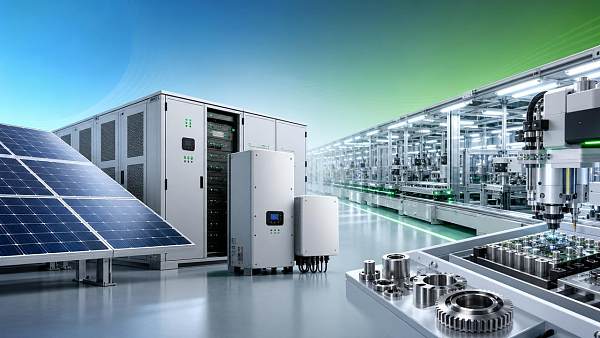
A checklist helps separate marketing claims from operational reality. It creates a repeatable method to compare a renewable energy manufacturer across technical capability, delivery resilience, lifecycle cost, and sustainability performance.
It also reduces blind spots. Many supplier reviews still focus on unit pricing, while missing process capability, component localization, embedded software maturity, or end-of-life obligations that affect total program risk.
For integrated industrial platforms like GIM, checklist-based evaluation supports benchmarking across adjacent sectors. The same discipline used to assess EV modules, filtration systems, or HDI substrates increasingly applies to renewable energy equipment.
2026 Checklist: What to Verify First
- Confirm production scalability through audited capacity data, line utilization history, bottleneck mapping, and expansion timelines rather than relying on announced gigawatt targets or investor presentations.
- Verify supply chain traceability for wafers, rare earths, battery materials, inverters, castings, resins, and power electronics using serialized records and upstream compliance documentation.
- Check process quality systems against ISO, IATF, IPC, IEC, and internal control plans, including SPC discipline, yield data, field failure analysis, and corrective action closure rates.
- Assess digital manufacturing maturity by reviewing MES integration, machine connectivity, predictive maintenance, digital twins, and cybersecurity controls around factory and product data.
- Measure localization strategy to understand geopolitical exposure, tariff vulnerability, logistics lead times, and the ability to dual-source critical subassemblies across regions.
- Review engineering depth in thermal management, power conversion, structural durability, corrosion resistance, and environmental sealing for harsh operating conditions.
- Examine lifecycle economics instead of purchase price alone, including maintenance intervals, efficiency degradation, spare parts planning, repowering options, and recycling obligations.
- Audit ESG performance using measurable indicators such as energy intensity, water use, waste recovery, labor governance, and third-party verified emissions reporting.
- Test after-sales responsiveness through service SLAs, commissioning support, firmware update procedures, field technician coverage, and root-cause escalation protocols.
- Benchmark innovation relevance by checking whether R&D investment improves manufacturability, uptime, interoperability, or grid integration rather than producing isolated prototype claims.
Key Renewable Energy Manufacturer Trends for 2026
1. Vertical integration is becoming selective
A leading renewable energy manufacturer is no longer integrating everything by default. In 2026, selective integration is the stronger model. Companies are securing control over strategic modules while outsourcing lower-risk components.
This improves agility. It also helps balance cost, quality, and regional sourcing requirements. The best operators know where vertical control creates resilience and where ecosystem partnerships create speed.
2. Power electronics quality is now a front-line differentiator
Inverters, converters, controls, and battery interfaces increasingly determine system uptime. A renewable energy manufacturer with weak electronics validation can undermine otherwise strong mechanical design.
Cross-sector benchmarking matters here. Lessons from automotive electrification and semiconductor packaging are moving directly into renewable energy production and reliability engineering.
3. Compliance is shifting from static certification to live data
Certificates still matter, but static documents are no longer enough. Buyers increasingly expect live quality dashboards, traceability logs, supplier risk mapping, and updated carbon reporting.
That trend favors any renewable energy manufacturer able to expose structured data without compromising IP or cybersecurity. Transparency is becoming part of product value.
4. Circularity is moving into contract language
End-of-life design, material recovery, and component reuse are entering formal sourcing criteria. This is especially visible in batteries, turbine components, composites, and mounting systems.
A renewable energy manufacturer that cannot define recovery pathways may face higher commercial friction, even when near-term pricing remains attractive.
How These Trends Apply Across Industrial Scenarios
Utility-scale solar and storage
In this scenario, the renewable energy manufacturer must prove inverter reliability, thermal stability, and dispatch performance. Grid interconnection compatibility and firmware governance are as important as module efficiency.
Long-term field support also matters. Delays in replacement parts or software validation can create avoidable revenue loss over the asset life.
Wind and environmental infrastructure
For wind-adjacent systems, corrosion resistance, gearbox durability, composite consistency, and remote monitoring become critical. Environmental infrastructure projects add water treatment, pumping, and control integration requirements.
A renewable energy manufacturer serving this segment benefits from proven experience with harsh-site maintenance and multi-system interoperability.
Agricultural and distributed energy systems
Distributed energy in agriculture requires rugged enclosures, simple service access, stable power conversion, and compatibility with irrigation, cold storage, and smart equipment loads.
Here, a renewable energy manufacturer must combine industrial durability with localized service capability. Design that works in theory but fails under field dust, heat, or voltage fluctuation will not scale.
Commonly Overlooked Risks
Overrating nameplate capacity
Announced expansion does not equal stable output. Check ramp history, scrap rates, and utility reliability at manufacturing sites before treating capacity claims as bankable.
Ignoring software dependency
Many renewable energy systems now depend on firmware, remote diagnostics, and data interfaces. Weak software governance can create operational and cybersecurity risk long after installation.
Assuming ESG reports equal ESG performance
Some disclosures remain broad and unaudited. A credible renewable energy manufacturer should provide plant-level evidence, methodology clarity, and improvement targets tied to operations.
Missing tooling and maintenance readiness
Spare parts, calibration discipline, and field tooling often receive too little attention. Yet they strongly influence uptime, warranty closure speed, and service cost.
Practical Execution Steps for 2026
- Build a weighted scorecard that ranks each renewable energy manufacturer across capacity, quality, traceability, service, localization, and lifecycle cost.
- Request process evidence, not just certificates, including PFMEA summaries, yield trends, warranty return data, and supplier corrective action records.
- Run cross-functional reviews that connect mechanical, electrical, digital, ESG, and logistics criteria before supplier approval or contract renewal.
- Pilot with a defined validation window and failure reporting method before scaling to multi-site deployment or long-term sourcing agreements.
- Use external benchmarking platforms such as GIM to compare adjacent-industry standards, detect hidden risk patterns, and validate technical claims.
Conclusion and Next Action
The strongest renewable energy manufacturer in 2026 will not simply offer capacity. It will demonstrate resilient sourcing, measurable quality, digital transparency, service discipline, and credible lifecycle performance.
A checklist-based approach turns these trends into an actionable evaluation method. It supports better comparisons, faster risk detection, and more confident long-term decisions across complex industrial ecosystems.
Start by auditing current suppliers against the ten-point checklist, then benchmark gaps across electronics, mobility, infrastructure, and ESG criteria. That next step will reveal which renewable energy manufacturer relationships are ready for 2026 scale.
The Archive Newsletter
Critical industrial intelligence delivered every Tuesday. Peer-reviewed summaries of the week's most impactful logistics and market shifts.