Monday, May 22, 2024

Containerized Sustainable Water Solutions for Remote Sites
by
Published
Views:
Containerized Sustainable Water Solutions for Remote Sites
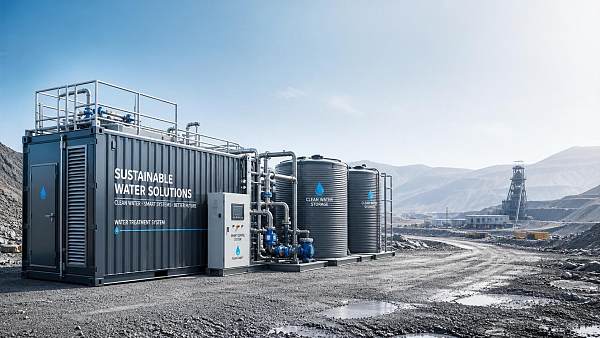
Remote sites rarely fail because of one major system. They fail when support systems become unreliable, delayed, or too costly to maintain.
Water is usually the first pressure point. Supply interruptions affect safety, compliance, workforce stability, and production continuity at the same time.
That is why containerized sustainable water solutions are gaining attention across mining, construction, agriculture, energy, and off-grid industrial operations.
These systems combine treatment, storage, controls, and sometimes reuse capability inside modular units that move faster than conventional infrastructure.
In practice, they help shorten mobilization schedules, reduce civil work, and create a more predictable operating model in hard-to-service locations.
For organizations under ESG pressure, containerized sustainable water solutions also support measurable progress on water stewardship and waste reduction.
Why remote operations need a different water strategy
Traditional water infrastructure assumes stable roads, nearby contractors, and easy access to spare parts. Remote sites usually have none of those advantages.
A fixed plant can work well, but it often requires longer engineering cycles, heavier foundations, and more site-specific construction risk.
More importantly, remote demand changes quickly. Camp occupancy rises, process water loads fluctuate, and regulations can tighten during project execution.
Containerized sustainable water solutions fit this reality because they are modular by design. Capacity can be phased instead of overbuilt from day one.
This also means assets can be relocated when a project closes, a pit shifts, or a temporary construction site becomes unnecessary.
From a capital planning view, that flexibility matters. It lowers the chance of stranded infrastructure and improves lifecycle value.
What is usually inside containerized sustainable water solutions
The exact configuration depends on source water, discharge targets, reuse goals, and site logistics. Still, most systems share a common architecture.
- Pre-treatment for solids, oils, or variable turbidity
- Primary treatment using filtration, UF, RO, MBR, or packaged biological stages
- Storage tanks or balancing modules for demand smoothing
- Disinfection through UV, chlorination, or other validated methods
- Automation, telemetry, alarms, and remote monitoring tools
- Chemical dosing, sludge handling, and maintenance access points
The stronger systems are engineered around transportability and serviceability, not just treatment performance on a specification sheet.
That distinction matters because remote reliability depends on how the unit behaves after weeks of dust, vibration, heat, or operator turnover.
Where containerized sustainable water solutions deliver the most value
Mining camps use them to treat potable water, wastewater, and reuse streams without waiting for permanent utility connections.
Construction projects rely on them when labor density changes fast and local discharge rules vary by jurisdiction.
In agriculture, containerized sustainable water solutions support irrigation quality control, nutrient management, and seasonal operating flexibility.
Remote energy sites use them to reduce trucked water dependency and manage produced water or camp wastewater more effectively.
Industrial facilities in emerging zones also benefit when municipal water is inconsistent or environmental infrastructure is still underdeveloped.
Across these cases, the real value is not only treatment. It is operational resilience under uncertain field conditions.
How to evaluate a solution beyond headline capacity
Many procurement decisions start with daily flow rates. That is necessary, but it is not enough for remote water infrastructure.
A better review looks at the whole operating envelope. Source variability, seasonal temperature swings, and power quality should be tested early.
The same applies to logistics. A technically excellent unit can still underperform if it is difficult to ship, lift, commission, or repair.
- Define influent quality ranges, not single-point assumptions.
- Confirm effluent or reuse targets against current permits.
- Review power demand, backup strategy, and controls resilience.
- Check consumables, membranes, and critical spares availability.
- Model operator skill requirements and remote support coverage.
- Assess how easily modules can scale or relocate later.
This approach gives a more realistic picture of ownership cost and site-level risk than purchase price alone.
Compliance, ESG, and reporting advantages
Water systems are increasingly judged on traceability, not only performance. Auditable data has become part of the asset value.
Containerized sustainable water solutions often include digital monitoring that makes reporting easier across dispersed operations.
That supports permit reporting, contractor oversight, incident response, and internal ESG dashboards with less manual data gathering.
More importantly, reuse-focused designs can reduce freshwater withdrawal and wastewater hauling, which lowers both emissions and operating expense.
For organizations managing investor or customer scrutiny, these are not soft benefits. They influence project approvals and long-term credibility.
Common risks and how to avoid them
The biggest failure mode is underestimating variability. Water quality on remote sites often shifts more than desktop studies suggest.
Another issue is specifying a treatment train without considering operator reality. Sophisticated equipment still needs practical service routines.
Cold weather protection, dust control, and parts lead times are also common blind spots during early procurement stages.
A useful discipline is to run a failure scenario review before purchase. Ask what happens during power loss, membrane fouling, or delayed resupply.
The best containerized sustainable water solutions are designed with these interruptions in mind, including alarms, bypass logic, and service access.
That kind of preparation usually separates a field-ready system from one that only performs well during factory acceptance testing.
A practical framework for selecting containerized sustainable water solutions
A clear selection process prevents late surprises and keeps technical, commercial, and compliance teams aligned.
- Map the site water balance, including peaks, not just averages.
- Prioritize treatment goals by health, process, discharge, and reuse needs.
- Review transport limits, crane access, and installation windows.
- Require performance data from similar field conditions.
- Compare lifecycle cost, not only initial supply cost.
- Lock in service response, training, and spare parts strategy.
From there, the decision becomes more disciplined. You are selecting an operating system for the site, not just a packaged asset.
When evaluated this way, containerized sustainable water solutions become a strategic infrastructure choice with direct impact on continuity and cost control.
For remote projects facing tighter timelines and higher scrutiny, that is usually the difference between reactive water management and a resilient plan.
The Archive Newsletter
Critical industrial intelligence delivered every Tuesday. Peer-reviewed summaries of the week's most impactful logistics and market shifts.