Monday, May 22, 2024

Wastewater treatment bottlenecks that show up after expansion
by
Published
Views:
Plant expansions often expose hidden wastewater treatment bottlenecks that standard capacity plans miss, especially where water purification must align with ISO standards and cross-functional production demands. For manufacturers integrating automotive technology, electronic components, CNC milling machines, plastic injection molds, or even smart power grids and carbon capture initiatives, understanding these constraints is essential to protect compliance, uptime, and long-term operational efficiency.
When a facility expands, wastewater treatment problems rarely begin with the obvious question of “Do we have enough tank volume?” The real bottlenecks usually appear in hydraulic surges, chemistry shifts, sludge handling, controls, operator workload, permit limits, and utility dependencies. For plant managers, technical evaluators, procurement teams, and financial approvers, the practical conclusion is clear: expansion can overload a treatment system long before nameplate design capacity is reached. The cost of missing these hidden constraints is not just poor water quality—it can include production interruptions, failed audits, discharge violations, higher OPEX, and delayed ramp-up.
Why wastewater treatment bottlenecks often appear only after plant expansion
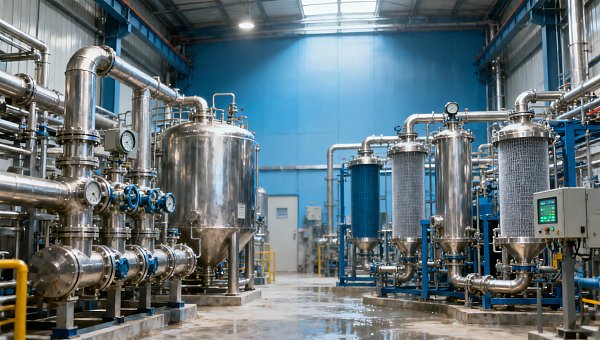
The main reason is that expansion changes more than total flow. It changes the profile of wastewater. A line extension, new product mix, added cleaning cycles, tighter quality protocols, or different raw materials can alter pH swings, COD/BOD loading, suspended solids, oil content, metals, salinity, surfactants, and temperature. A treatment plant that once worked reliably under steady-state conditions may struggle under new peak loads or more complex contaminants.
In many manufacturing environments, design assumptions become outdated after expansion. For example:
- Automotive and mobility plants may add coating, washing, battery-related, or metal-finishing stages that increase metals, solvents, and rinsewater variability.
- Electronics production can introduce fine particulates, flux residues, specialty chemicals, and stricter rinsewater purity demands.
- Plastic and mold operations may increase cooling tower blowdown, washdown frequency, and polymer-related contaminants.
- CNC and precision tooling facilities often generate more emulsified oils, metal fines, and cleaner-laden wastewater after throughput increases.
These changes are exactly why post-expansion wastewater treatment bottlenecks are frequently underestimated. The issue is not simply “more wastewater,” but “different wastewater, arriving less predictably, under tighter compliance expectations.”
What decision-makers should check first before blaming total treatment capacity
Before investing in a major plant upgrade, teams should identify where the real constraint sits. In practice, the bottleneck is often found in one of the following areas:
1. Equalization capacity
Expansion often creates larger peak discharges from batch dumping, CIP cycles, shift change washdowns, or synchronized process drains. If equalization is undersized, downstream systems receive shock loads that reduce treatment efficiency even when average daily flow looks acceptable.
2. Chemical dosing and reaction control
Coagulation, flocculation, neutralization, oxidation, or nutrient dosing systems may no longer match the new wastewater profile. A treatment system can fail because of poor control logic or insufficient chemical contact time, not because the main reactor is too small.
3. Biological treatment stability
If the expansion introduces toxic compounds, salinity changes, temperature shifts, or highly variable organic loads, biological processes can become unstable. This is common in systems where historical influent data no longer reflects actual operations.
4. Solids and sludge handling
Many expansion projects focus on liquid treatment while overlooking sludge thickening, dewatering, storage, haul-off frequency, and disposal costs. Yet sludge handling is a common hidden bottleneck that drives both compliance risk and operating expense.
5. Membrane or filtration fouling
In MBR, UF, RO, or polishing systems, added contaminants can dramatically increase fouling rates. A small upstream process change can shorten cleaning intervals, reduce flux, and increase downtime.
6. Instrumentation, automation, and operator response
More complex operations require faster detection and better control. If online monitoring, alarms, trend analysis, and SOPs have not scaled with the plant, operators may be forced into reactive firefighting instead of stable process control.
7. Permit and compliance limits
Sometimes the plant can physically treat more water, but the discharge permit leaves little room for variability. In such cases, the true bottleneck is regulatory, not mechanical.
Which warning signs indicate a hidden post-expansion bottleneck
Teams should not wait for a permit exceedance or visible system failure. Several early indicators suggest wastewater treatment bottlenecks are already forming:
- Effluent quality becomes inconsistent during high-production periods.
- Chemical consumption rises faster than production output.
- Sludge volume increases disproportionately after expansion.
- Membrane cleaning frequency or filter replacement rate accelerates.
- Operators manually intervene more often to stabilize pH, DO, or dosing.
- Buffer tanks spend more time near high-level alarms.
- Discharge data passes on average but shows wider peaks and variability.
- Utility demand for compressed air, power, or water treatment chemicals starts constraining throughput.
For procurement and finance stakeholders, these signs matter because they often signal avoidable lifecycle cost growth. A system that appears “functional” may already be operating in an inefficient, high-risk mode.
How to evaluate wastewater treatment risk after expansion in a practical way
A useful assessment should connect process engineering, compliance, operations, and investment planning. The most effective reviews typically include the following steps:
Map wastewater by source, not just by final discharge
Break down flows by process line, shift, product family, wash cycle, utility blowdown, and maintenance activity. This reveals whether one new line or one cleaning protocol is driving most of the instability.
Compare actual peak loads against original design assumptions
Do not rely only on average daily flow. Review peak hour flow, shock chemical loads, and worst-case operating scenarios. Many treatment systems fail under short-duration peaks that never appear in monthly averages.
Review influent variability and treatability
Lab testing should confirm whether expanded operations have changed settling behavior, emulsification, biodegradability, oxidation demand, or membrane fouling potential.
Audit controls and staffing readiness
If the treatment system now supports a more complex manufacturing environment, operator training, alarm rationalization, and response procedures must also evolve.
Calculate the cost of underperformance
Evaluation should include more than CAPEX. Factor in downtime risk, scrap exposure, permit penalties, emergency hauling, chemical overuse, membrane replacement, sludge disposal, and lost production during system instability.
This approach helps technical and business teams make better decisions than a simple “expand the tank farm” recommendation.
What upgrade strategies usually deliver the best ROI
The best solution depends on the constraint, but in many cases the highest-return improvements are targeted rather than oversized. Examples include:
- Adding or resizing equalization to absorb production peaks and stabilize downstream treatment.
- Segmenting wastewater streams so high-strength, oily, metal-bearing, or difficult waste is pretreated separately.
- Upgrading automation and online monitoring for pH, ORP, conductivity, TOC/COD surrogates, turbidity, and flow balancing.
- Improving chemical pretreatment to reduce downstream biological or membrane stress.
- Expanding sludge handling capacity to prevent backup and reduce disposal inefficiency.
- Retuning biological operation through aeration control, nutrient balance, biomass management, or staged treatment.
- Installing modular polishing systems where compliance margins are tight or reuse quality targets are increasing.
For project owners and engineering managers, modularity is particularly valuable in phased expansions. It can reduce upfront spending while preserving flexibility for future capacity additions.
How wastewater bottlenecks affect procurement, compliance, and operational strategy
Wastewater treatment is not just an environmental utility. After expansion, it becomes a strategic operational constraint that can influence equipment selection, supplier qualification, plant scheduling, and ESG performance. If one new process chemistry increases treatment cost or compliance risk, procurement teams may need to reassess raw materials or vendor specifications. If a polishing step becomes critical to maintain ISO-aligned process water quality or discharge consistency, maintenance and spare parts strategy become more important as well.
For enterprise decision-makers, this is why wastewater infrastructure should be benchmarked with the same seriousness as production equipment. Hidden bottlenecks can distort total cost of ownership, weaken resilience, and undermine the business case of expansion itself.
Conclusion: the real expansion risk is not visible nameplate overload—it is untreated system complexity
Wastewater treatment bottlenecks that show up after expansion are usually the result of changed flow patterns, contaminant complexity, control limitations, sludge constraints, and tighter compliance exposure—not simply inadequate headline capacity. The most effective response is a cross-functional review that combines process mapping, peak-load analysis, treatability validation, controls assessment, and economic risk evaluation.
For manufacturers and industrial planners, the right question is not “Can our treatment plant handle more?” but “Can it handle the new operating reality reliably, compliantly, and cost-effectively?” That distinction is what protects uptime, supports sustainable growth, and turns expansion planning into a resilient long-term investment.

The Archive Newsletter
Critical industrial intelligence delivered every Tuesday. Peer-reviewed summaries of the week's most impactful logistics and market shifts.