Monday, May 22, 2024

Sustainable Solutions That Cut Energy and Compliance Costs in 2026
by
Published
Views:
In 2026, cost pressure and regulatory scrutiny are converging across global manufacturing. Sustainable solutions now sit at the center of that equation because they influence energy use, audit readiness, asset reliability, and long-term operating resilience at the same time.
That shift matters even more in connected industrial environments, where electronics, mobility systems, water infrastructure, precision tooling, and agri-tech increasingly depend on shared data, shared suppliers, and shared compliance expectations.
The practical question is no longer whether sustainable solutions are relevant. The real issue is which measures reduce electricity demand, simplify regulatory work, and hold up under technical benchmarking across multiple sectors.
Why sustainable solutions have become a cost discipline
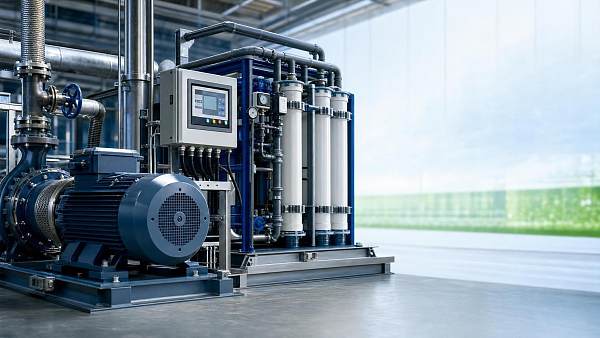
The image fits a familiar reality: industrial sustainability is now tied to meter data, maintenance logs, materials traceability, and certification evidence.
Energy costs remain volatile. Carbon reporting rules are tighter. Water discharge standards, product documentation demands, and supplier disclosure requirements continue to expand across regions.
Under these conditions, sustainable solutions are not limited to solar panels or recycled packaging. They include process redesign, efficient hardware selection, digital monitoring, and supplier benchmarking that lower both resource consumption and administrative friction.
This is where cross-sector visibility becomes valuable. A plant may improve motor efficiency, but still lose margin through poor filtration performance, noncompliant substrates, unstable battery modules, or incomplete supplier records.
A fragmented approach often cuts one cost while increasing another. Sustainable solutions work best when energy, quality, compliance, and sourcing are evaluated together.
What sustainable solutions mean in industrial practice
In operational terms, sustainable solutions are measurable interventions that improve resource efficiency without weakening throughput, safety, or conformance.
They usually appear in four layers of decision-making.
- Asset layer: efficient motors, drives, thermal systems, pumps, filtration units, power electronics, and tooling with longer useful life.
- Process layer: reduced scrap, lower idle energy, optimized cycle times, and tighter water or chemical control.
- Data layer: monitoring platforms that connect performance metrics with audit evidence and supplier risk signals.
- Governance layer: standards alignment, document traceability, and repeatable methods for proving compliance.
The most effective sustainable solutions combine at least two of these layers. Hardware alone rarely solves the full problem if reporting systems remain weak or sourcing data cannot be verified.
A benchmarking perspective also matters. Global Industrial Matrix frames this challenge well by linking technical performance across Semiconductor & Electronics, Automotive & Mobility, Smart Agri-Tech, Industrial ESG & Infrastructure, and Precision Tooling.
That kind of system-level view is increasingly important because the same compliance burden can move through multiple components, from EV powertrains and HDI substrates to autonomous equipment and MBR filtration modules.
Where energy and compliance costs are actually hiding
Many industrial cost reviews focus on visible utility bills. That is necessary, but incomplete.
A large share of avoidable expense sits in indirect areas that sustainable solutions are designed to expose.
This is why sustainable solutions often show value beyond headline energy savings. They reduce rework, shorten audit cycles, and lower the risk of disruption caused by nonconforming parts or unsupported claims.
Cross-sector applications that matter in 2026
The same sustainability logic plays out differently depending on the system being assessed.
Semiconductor and electronics
Here, sustainable solutions often focus on power efficiency, thermal management, water intensity, and restricted-substance documentation. Small design choices can create major downstream compliance implications.
Automotive and mobility
Battery systems, lightweight materials, e-drive components, and charging infrastructure require technical validation against cost, durability, and regulatory expectations. Energy performance alone is not enough.
Smart agri-tech
Autonomous tractors, irrigation systems, and connected field equipment depend on efficient power use and resilient components. Sustainable solutions here often mix fuel reduction, uptime protection, and lifecycle maintenance planning.
Industrial ESG and infrastructure
Water treatment, emissions control, and filtration infrastructure face strict reporting requirements. Sustainable solutions must prove operating efficiency while maintaining environmental performance under real load conditions.
Precision tooling
Tool wear, tolerance drift, and scrap generation directly affect both energy intensity and waste. In this setting, sustainable solutions are closely linked to repeatability and material efficiency.
How to judge which measures are worth funding
Not every green initiative deserves capital allocation. A stronger evaluation method starts with operational evidence, not slogans.
Useful screening questions include:
- Does the measure reduce metered energy or only shift consumption elsewhere?
- Can the result be verified against ISO, IATF, IPC, or other relevant standards?
- Will it lower the labor burden of audits, declarations, or customer reporting?
- Does it improve reliability, yield, or service life in addition to sustainability metrics?
- Can supplier claims be benchmarked through comparable technical data?
These questions help separate durable sustainable solutions from isolated pilot projects that look attractive in presentations but fail under procurement or engineering review.
A practical advantage of platforms like GIM is the ability to compare technologies across categories instead of evaluating every sustainability claim in isolation.
Building a more resilient operating model
The strongest sustainable solutions support a broader operating model, not a one-time compliance response.
That usually means linking engineering, sourcing, and environmental data into a common decision framework. Once those signals are connected, trade-offs become clearer.
For example, a lower-cost component may increase reporting risk. A more efficient filtration module may reduce both energy draw and maintenance downtime. A tooling upgrade may cut scrap enough to justify a faster payback than expected.
This is also where cross-sector intelligence becomes useful. Comparable benchmarks from mobility, electronics, infrastructure, and agri-tech can reveal performance patterns that a single-industry review might miss.
Sustainable solutions gain strategic value when they are treated as operating architecture: measurable, documented, and aligned with the realities of global supply networks.
What to examine next
A useful next step is to map where energy intensity, compliance workload, and supplier uncertainty overlap. That intersection often reveals the best starting point.
Then compare candidate sustainable solutions by technical fit, standards alignment, documentation quality, and expected operating impact over time.
In 2026, the most credible decisions will come from verified data rather than broad sustainability claims. A structured benchmark, especially one spanning multiple industrial pillars, makes that judgment more defensible and more useful in practice.
The organizations that move well here will not be the ones chasing every trend. They will be the ones using sustainable solutions to reduce waste, control compliance effort, and strengthen system performance with evidence that stands up to scrutiny.
The Archive Newsletter
Critical industrial intelligence delivered every Tuesday. Peer-reviewed summaries of the week's most impactful logistics and market shifts.