Monday, May 22, 2024

Light-Weighting Vehicle Materials: Performance vs Durability
by
Published
Views:
Light-weighting vehicle materials sit at the center of a difficult engineering tradeoff. Lower mass improves range, fuel economy, payload flexibility, and dynamic response, yet every kilogram removed changes load paths, thermal behavior, joining strategy, and long-term service performance.
That tension matters more now because vehicle platforms are becoming more integrated. Battery packs, power electronics, software-defined controls, and sustainability targets all push material decisions beyond a single component view.
From a broader industrial perspective, the issue is not only what is lighter. It is which material system remains reliable across production variation, compliance demands, repair realities, and lifecycle cost.
Why material light-weighting has become a cross-sector issue
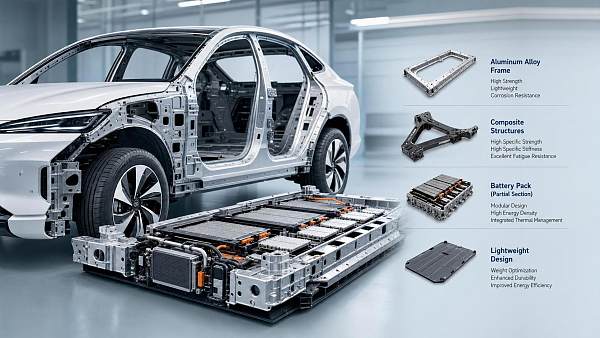
Automotive programs no longer evaluate steel, aluminum, polymers, or composites in isolation. Material choice now affects electronics packaging, thermal shielding, corrosion control, manufacturing energy, and end-of-life recovery.
This is where a cross-disciplinary benchmark becomes useful. GIM tracks how decisions in Automotive & Mobility intersect with Semiconductor & Electronics, Precision Tooling, and Industrial ESG & Infrastructure.
In practice, a lighter enclosure may change vibration loads on sensors. A thinner structure may alter sealing behavior. A new alloy may require different tooling wear assumptions or revised recycling pathways.
So the debate around Light-weighting vehicle materials is no longer a narrow materials science topic. It has become a systems question linked to supply resilience, standards compliance, and operational predictability.
What light-weighting really means in vehicle design
Light-weighting does not simply mean replacing steel with something lighter. It often combines material substitution, geometry redesign, part consolidation, and more efficient joining processes.
A successful program reduces mass while keeping stiffness, crash energy management, fatigue resistance, thermal stability, and manufacturability within target.
That is why Light-weighting vehicle materials should be reviewed as a full system. Material density alone tells very little without modulus, elongation, fracture behavior, galvanic sensitivity, and process repeatability.
Common material routes
The most robust solution is often hybrid rather than singular. Different zones of the vehicle need different responses to impact, vibration, heat, and environmental exposure.
Performance gains are real, but durability failure modes shift
The upside of Light-weighting vehicle materials is easy to measure early. Reduced curb weight can improve acceleration, braking balance, range, emissions performance, and sometimes even assembly ergonomics.
Durability issues usually emerge later. They appear in fatigue hotspots, adhesive aging, corrosion interfaces, stone impact damage, thermal cycling, or service conditions that lab simulations only partially capture.
Electric vehicles make this sharper. Heavy battery packs raise structural demands, while low-noise cabins expose vibration or resonance issues that might have been masked in internal combustion platforms.
The result is a different engineering question: not whether a material is strong enough on day one, but whether it remains predictable after years of mixed loading and environmental stress.
Where durability risk commonly moves
- From bulk material strength to interface behavior, especially at joints and bonded seams.
- From visible damage to hidden degradation, such as delamination or microcrack growth.
- From component validation to system-level interaction with electronics, sealing, and thermal management.
- From initial compliance to lifecycle consistency across multiple suppliers and plants.
The evaluation criteria that matter in real programs
A sound review framework for Light-weighting vehicle materials should connect design intent with production reality. It should also compare test data against the actual duty cycle of the vehicle.
Mass reduction alone is an incomplete target. More useful metrics include specific stiffness, energy absorption, fatigue life, corrosion resistance, thermal distortion, and repairability.
Standards alignment is another filter. Depending on the component, evaluators may need traceability to ISO methods, IATF quality systems, IPC-linked electronics interactions, and OEM-specific validation protocols.
GIM’s value in this environment comes from benchmarking across sectors rather than reading one material data sheet at face value. A vehicle platform increasingly behaves like a layered industrial system.
A practical comparison lens
Where the tradeoff looks different by application
The right answer depends heavily on the vehicle and the operating context. A premium EV, a commercial van, and an autonomous agricultural platform do not carry the same risk priorities.
For passenger cars, lightweight body structures often focus on energy efficiency and crash packaging. In battery electric platforms, enclosure protection and thermal containment add another constraint.
For commercial mobility, payload and uptime matter more. A material that saves weight but complicates field repair may weaken the business case.
In smart agri-tech and off-road equipment, environmental exposure becomes harsher. Mud, fertilizers, vibration, and impact loading can punish materials that look attractive in highway-centered design studies.
That wider industrial view is why Light-weighting vehicle materials should be judged in context, not by headline mass savings.
How to make better decisions before launch
A disciplined material review usually starts with load case clarity. If the duty cycle is poorly defined, even strong test data can mislead the program.
It also helps to validate joints as aggressively as base materials. Many failures in Light-weighting vehicle materials programs come from adhesives, fasteners, weld zones, or mixed-material interfaces.
- Map real service loads, including abuse cases and environmental extremes.
- Benchmark fatigue and corrosion data from comparable platforms, not generic vendor literature.
- Review tooling capability and dimensional control before approving thinner or more complex parts.
- Check repair pathways, inspection methods, and recycling implications early.
- Track standards alignment and supplier traceability across all critical interfaces.
When these steps are in place, performance and durability stop looking like opposing goals. They become design variables that can be optimized together.
What to examine next
The strongest next step is to compare material options against one vehicle architecture, one operating profile, and one compliance framework at a time. That makes tradeoffs visible before they become launch risks.
For teams working across electrification, mobility, and industrial equipment, a benchmark model like GIM can help connect material data with tooling readiness, electronics interaction, and ESG impact.
Light-weighting vehicle materials will remain essential to future platform design. The real advantage comes from selecting lighter systems that stay durable, verifiable, and manufacturable long after prototype success.
The Archive Newsletter
Critical industrial intelligence delivered every Tuesday. Peer-reviewed summaries of the week's most impactful logistics and market shifts.