Monday, May 22, 2024

Automotive Technology Europe: 2026 Trends Shaping EVs and Software-Defined Vehicles
by
Published
Views:
Automotive technology Europe enters 2026 at a turning point. EV platforms are maturing, software-defined vehicles are reshaping product strategy, and supply chains are being rebuilt around resilience, compliance, and regional control.
That shift matters beyond the automotive sector alone. It touches semiconductors, battery materials, industrial automation, energy infrastructure, cybersecurity, and the standards that connect them into a workable manufacturing system.
In this environment, automotive technology Europe is no longer just about vehicle innovation. It is increasingly about how hardware, software, and industrial governance align across borders and across technical disciplines.
Why 2026 Looks Different
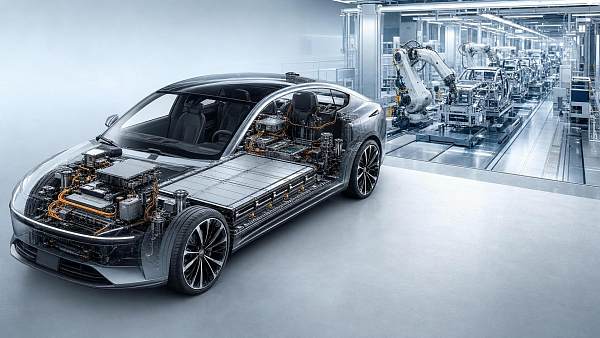
The European market has moved past the early stage of electrification. The central question is no longer whether EV adoption will grow, but which architectures, suppliers, and digital ecosystems will stay competitive under tighter cost pressure.
Several forces converge in 2026. Battery sourcing rules are stricter, vehicle software stacks are more complex, and OEMs face pressure to localize critical components without losing access to global scale.
At the same time, Europe continues to balance climate targets with industrial policy. That creates a market where engineering choices now carry direct consequences for trade exposure, homologation timing, and long-term platform profitability.
From Electric Vehicles to Software-Defined Mobility
Automotive technology Europe increasingly centers on two connected transitions. One is the shift from internal combustion to electrified propulsion. The other is the shift from feature-based electronics to software-defined vehicle architecture.
A software-defined vehicle uses centralized computing, updateable functions, and integrated data layers to control performance, safety, energy management, and user experience over the vehicle lifecycle.
That changes how value is created. Mechanical excellence still matters, but differentiation now also depends on domain controllers, middleware, operating systems, cybersecurity, and validation workflows.
The result is a broader industrial equation. Battery packs, power electronics, onboard networks, cloud connectivity, and AI-assisted diagnostics must work together under demanding quality and certification requirements.
The Trends Shaping Automotive Technology Europe
1. EV platforms are becoming more modular
Dedicated EV architectures are evolving toward fewer variants and higher parts commonality. This helps reduce engineering overhead, simplify manufacturing, and support faster rollout across multiple segments.
Modularity also supports better battery packaging and improved thermal efficiency. In practice, it allows vehicle programs to respond faster to shifts in chemistry, range targets, and supplier availability.
2. Batteries are now a sourcing and compliance issue
Battery performance remains critical, but the business lens is wider. Cell chemistry, recycling traceability, regional content, and lifecycle documentation now influence investment decisions as much as nominal energy density.
This is where automotive technology Europe intersects with broader industrial intelligence. Material provenance, refining capacity, and environmental reporting now affect both cost structure and market access.
3. Vehicle software stacks are consolidating
Legacy electronic control unit sprawl is becoming harder to sustain. European programs are moving toward zonal architectures, high-performance compute, and shared software platforms that can support updates across product lines.
This improves flexibility, but raises integration risk. Software maturity, test coverage, cyber resilience, and supplier interface discipline become central to launch quality.
4. Supply chain design is becoming a strategic capability
Cost optimization alone is no longer enough. Automotive technology Europe now depends on dual sourcing, regional redundancy, and real visibility into tiered dependencies, especially for semiconductors, inverters, and battery subsystems.
Industrial disruptions in one domain can quickly affect another. A tooling constraint, substrate shortage, or filtration issue in upstream processing can delay output downstream. Cross-sector mapping matters more than before.
Where the Broader Industry Context Matters
One of the defining features of automotive technology Europe is that it cannot be assessed in isolation. Vehicle competitiveness now depends on adjacent sectors that shape component quality, energy systems, and manufacturing stability.
That is why multi-disciplinary benchmarking has become more valuable. A platform such as Global Industrial Matrix brings together data across semiconductors, automotive systems, industrial ESG, infrastructure, and precision tooling.
This approach is useful because automotive decisions increasingly rely on cross-domain evidence. An EV powertrain program may be affected by HDI substrate availability, ISO-based process controls, IATF quality discipline, or IPC-related board reliability.
When viewed through that lens, automotive technology Europe becomes a system problem. The winning organizations are often those that connect engineering benchmarks with procurement visibility and operational risk analysis.
What Deserves Closer Attention in Real Programs
The market discussion often focuses on launch announcements and headline range figures. In real programs, the more decisive signals are usually less visible and more technical.
These factors are practical filters for evaluating automotive technology Europe. They help separate attractive prototypes from scalable industrial propositions.
Typical Business Scenarios Behind the Trend
Different organizations will encounter the 2026 transition in different ways, but several recurring scenarios stand out.
- A platform review where EV architecture choices must be compared against software integration cost and battery sourcing risk.
- A localization decision where regional supply options look stronger on compliance, but weaker on scale or process consistency.
- A digital transformation effort where vehicle data, factory systems, and aftersales diagnostics need a shared technical backbone.
- A supplier qualification exercise where certification status alone is insufficient without benchmarking actual performance and process capability.
In each case, automotive technology Europe should be evaluated as an ecosystem of interdependent decisions, not a simple product category.
How to Read the Market More Clearly
A useful starting point is to separate visible innovation from industrial readiness. New interfaces and autonomy features matter, but they should be tested against sourcing depth, standards compliance, and serviceability.
It also helps to compare claims across domains. For example, a strong software roadmap means little if the supporting electronics chain lacks substrate stability or if validation timelines remain unrealistic.
The most reliable view often comes from benchmarked evidence. Cross-sector intelligence can reveal whether a vehicle program is supported by resilient hardware, qualified processes, and infrastructure that can sustain scale.
That is where automotive technology Europe becomes a decision framework rather than a headline trend. The key question is not only what is innovative, but what is measurable, repeatable, and economically durable.
A Practical Next Step
The 2026 landscape rewards disciplined comparison. Reviewing EV architectures, software stacks, battery pathways, and supplier dependencies side by side is now more useful than tracking isolated announcements.
For any organization following automotive technology Europe, the next move is to define a clear benchmark structure. Include engineering performance, standards alignment, digital maturity, and cross-border supply resilience in the same assessment.
That approach creates a stronger basis for investment timing, partner selection, and operational planning. In a market shaped by EVs and software-defined vehicles, better decisions start with connected evidence.
The Archive Newsletter
Critical industrial intelligence delivered every Tuesday. Peer-reviewed summaries of the week's most impactful logistics and market shifts.