Monday, May 22, 2024

Sustainable Transport for Cities: Cost Trade-Offs That Matter
by
Published
Views:
Why does sustainable transport for cities become a finance question so quickly?
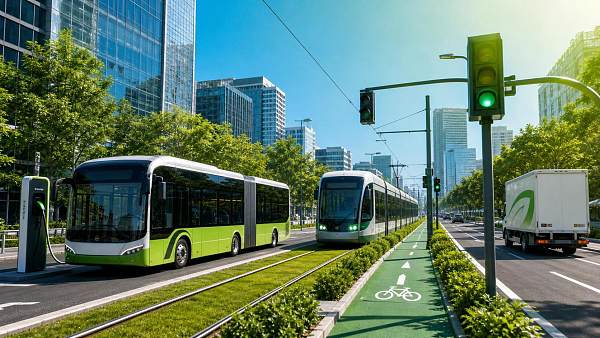
Sustainable transport for cities is often discussed as a climate or mobility issue. In budget reviews, it quickly turns into a cost structure question.
The pressure point is simple. Capital budgets are fixed, while urban transport assets last for years and expose projects to operating, energy, and compliance costs.
That is why the useful comparison is rarely diesel versus electric, or rail versus bus, in isolation. The real comparison is total cost, timing, and risk concentration.
In practical terms, sustainable transport for cities can include electric buses, battery charging systems, tram upgrades, bike networks, intelligent traffic control, and low-emission logistics corridors.
Each option shifts costs differently. Some require heavy upfront infrastructure. Others appear affordable at first, then create unstable maintenance or energy exposure later.
A more disciplined review asks three things. Which costs arrive first, which savings are dependable, and which risks stay hidden until implementation begins?
This matters even more when supply chains cross sectors. Battery systems, charging hardware, grid interfaces, sensors, filtration equipment, and control electronics all carry procurement dependencies.
That cross-sector view is where technical benchmarking becomes useful. Platforms such as Global Industrial Matrix connect mobility decisions with standards, component reliability, and infrastructure performance data.
For cost approval, that broader visibility helps separate investments with real lifecycle value from projects that only look efficient in headline estimates.
Where do the biggest cost trade-offs usually sit?
Most cost debates around sustainable transport for cities cluster around five trade-offs. None of them should be reviewed as a single-line item.
- Vehicle cost versus infrastructure cost.
- Energy savings versus grid upgrade expense.
- Lower emissions today versus higher replacement cost later.
- Technology flexibility versus standardization benefits.
- Fast deployment versus durable system integration.
Electric bus fleets are a good example. The vehicle itself may reduce fuel and maintenance spend, but depot charging, transformer capacity, and software integration can reshape the full project budget.
Rail extensions show the opposite pattern. Initial construction is large, but route capacity, service life, and lower emissions per passenger can improve long-range economics.
Cycling networks and pedestrian corridors often look cheaper. Yet they may deliver lower direct revenue, making the value case depend on congestion relief, public health, and land use benefits.
The useful question is not which mode is cheapest. It is which mode creates the best cost-to-outcome profile under realistic demand, asset life, and operational constraints.
A quick comparison table for early screening
Early screening works better when trade-offs are visible side by side. This kind of table is often more useful than a long narrative memo.
How should lifecycle cost be judged without oversimplifying?
Lifecycle cost is often mentioned, but many evaluations still underweight it. The mistake is treating operations as stable and maintenance as predictable without evidence.
A stronger review separates cost into acquisition, installation, commissioning, energy, maintenance, software support, replacement cycles, and end-of-life handling.
For sustainable transport for cities, battery health is one example. A favorable energy model can weaken fast if route loads, temperature, and charging patterns differ from bid assumptions.
The same applies to signaling equipment, power electronics, and networked sensors. Reliability data matters because small failure rates scale quickly across citywide assets.
In actual procurement reviews, the better method is to stress-test three scenarios: base case, constrained operations, and delayed maintenance support.
This is where benchmark platforms can sharpen judgment. GIM’s cross-sector intelligence model is relevant because mobility hardware increasingly depends on electronics, tooling, and ESG infrastructure performance.
When components are compared against ISO, IATF, or IPC-aligned expectations, lifecycle assumptions become more defensible. That reduces the chance of approving a low-bid system with unstable downstream costs.
When does the cheapest proposal become the most expensive one?
Usually when the proposal excludes integration, resilience, or replacement timing. In transport projects, those omissions are common and expensive.
A low equipment price may depend on proprietary software. Later, expansion, data migration, and service contracts can erase the original savings.
Another weak point is fragmented procurement. Buying vehicles, chargers, controls, and maintenance support separately may reduce initial bids but increase interface risk.
More common than expected is mismatch between transport hardware and grid readiness. If substations, transformers, or load management are deferred, deployment slows and contingency spending rises.
There is also a regulatory angle. Sustainable transport for cities must increasingly stand up to emissions reporting, resilience planning, and public value scrutiny.
A cheaper option can become costly if it fails future compliance thresholds or cannot document performance clearly enough for funding and audit requirements.
The practical lesson is straightforward. Cost approval should reward verifiable operating performance, not just a narrow capital discount.
What red flags deserve a second look?
- Savings depend on utilization rates with no route or demand evidence.
- Maintenance assumptions stop before midlife replacement cycles.
- Energy pricing is fixed in the model despite known volatility.
- Interoperability claims are broad but unsupported by standards references.
- Critical components rely on single-region supply chains.
What should be confirmed before approving sustainable transport for cities?
At approval stage, clarity matters more than volume. A shorter, better-structured evidence package usually beats a large deck full of optimistic assumptions.
The most reliable approvals are built around a few measurable checks.
- Confirm asset life assumptions for vehicles, batteries, signaling, and charging equipment.
- Test whether operating savings still hold under lower ridership or slower ramp-up.
- Map supply chain concentration for power electronics, software, and spare parts.
- Check standards alignment and service support depth, not just product claims.
- Quantify implementation downtime and construction disruption as real costs.
In many cases, the decision improves when transport projects are reviewed alongside industrial infrastructure data rather than as stand-alone civic assets.
That broader lens reflects how modern systems behave. Mobility now depends on semiconductors, digital control, precision tooling, and environmental infrastructure working together.
This is also why sustainable transport for cities should be approved with a benchmark mindset. The strongest decisions compare technical claims, supply resilience, and operating economics across the full system.
So what is the most practical next step?
Start by narrowing the choice set. Separate projects that mainly reduce emissions from those that also improve network efficiency, maintenance stability, and reporting confidence.
Then build a cost review around lifecycle evidence, not only capital requests. That means testing assumptions on energy, utilization, replacement cycles, interoperability, and supplier resilience.
For sustainable transport for cities, the winning option is rarely the one with the lowest visible price. It is usually the one with the clearest path to durable savings and fewer downstream surprises.
A grounded next move is to create a short comparison framework for each candidate investment. Include upfront spend, five-to-ten-year operating costs, standards fit, implementation risk, and data transparency.
When those elements are visible together, approval becomes less about optimism and more about disciplined judgment. That is where long-term public value and cost control are most likely to meet.

The Archive Newsletter
Critical industrial intelligence delivered every Tuesday. Peer-reviewed summaries of the week's most impactful logistics and market shifts.