Monday, May 22, 2024

Custom Lighting Cost Factors Often Missed
by
Published
Views:
Custom Lighting Cost Factors Often Missed in Lighting Custom Decisions
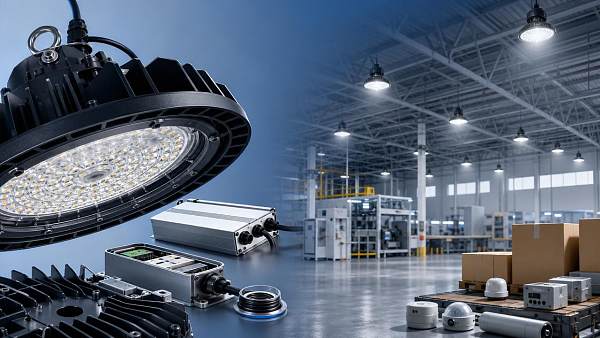
For modern industrial projects, lighting custom budgets rarely fail because of the visible fixture price.
They fail when hidden engineering, compliance, controls, logistics, and maintenance costs appear after approval.
As facilities become smarter, safer, and more energy accountable, lighting custom decisions now influence operational resilience.
The strongest estimates consider unit cost, system behavior, supply continuity, certification risk, and lifecycle performance together.
Industrial Lighting Is Moving From Fixture Buying to System Benchmarking
Lighting custom demand is changing because industrial environments are no longer static spaces.
Warehouses, EV plants, farms, laboratories, tunnels, and water facilities now require task-specific illumination.
A light fitting may interact with sensors, automation platforms, safety rules, thermal loads, and ESG reporting systems.
This shift creates a broader cost model for lighting custom projects across sectors.
The question is no longer only “How much is each luminaire?”
The better question is “What does the complete lighting custom system cost to validate, deploy, operate, and replace?”
Trend Signals Showing Why Hidden Costs Are Rising
Several market signals show why lighting custom quotes need closer review.
First, energy efficiency targets are tightening across industrial estates and infrastructure contracts.
Second, smart controls are becoming standard rather than optional.
Third, cross-border sourcing increases exposure to certification gaps, freight volatility, and documentation inconsistencies.
Fourth, specialized environments require better optical, thermal, and sealing performance.
These signals make lighting custom less predictable when specifications are incomplete or supplier benchmarking is weak.
Tooling and Engineering Are Often Underestimated Early
Lighting custom work often begins with a shape, output target, or mounting constraint.
However, translating that idea into repeatable production requires engineering time.
Costs may include CAD design, thermal modeling, optical simulation, PCB layout, driver matching, and prototype iteration.
Tooling can be especially sensitive when housings, gaskets, brackets, lenses, or die-cast parts are unique.
A low lighting custom quote may exclude mold charges, fixture jigs, testing fixtures, or engineering change fees.
These exclusions create budget pressure when drawings mature or installation details change.
Engineering Items That Deserve Early Confirmation
- Who owns the final mechanical drawings?
- Are optical simulations included in the lighting custom price?
- Does the supplier charge for design revisions?
- Are sample costs credited after mass production?
- Is tooling amortized or invoiced separately?
Compliance Testing Can Change the Budget After Design Freeze
Compliance is a major hidden cost in lighting custom programs.
A fixture used in one region may need different labeling, reports, wiring, or component approvals elsewhere.
Industrial applications may also demand IP ratings, IK impact resistance, EMC testing, photobiological safety, or hazardous-area certification.
Testing becomes more expensive when the LED driver, enclosure, cable gland, or diffuser is modified late.
For lighting custom projects, certification planning should start before prototype release.
Otherwise, rework can delay installation windows and increase air freight or temporary lighting expenses.
Control Systems Add Value but Also Integration Risk
The rise of intelligent infrastructure has made controls central to lighting custom design.
Dimming, occupancy sensing, daylight harvesting, emergency logic, and remote diagnostics can reduce energy use.
Yet each control layer adds hardware, software, commissioning, cybersecurity, and maintenance considerations.
Integration costs rise when systems require DALI, 0-10V, Zigbee, Bluetooth Mesh, KNX, or proprietary gateways.
A lighting custom estimate should define control scope in operational language, not only component names.
That means confirming scenes, zones, fail-safe behavior, user permissions, and data reporting requirements.
Logistics, Packaging, and Installation Conditions Shape Real Cost
Lighting custom fixtures may have unusual dimensions, fragile optics, or pre-installed brackets.
These features affect carton design, pallet utilization, container loading, insurance, and site handling.
Oversized luminaires can increase freight cost even when product weight is low.
Projects in tunnels, ports, greenhouses, cleanrooms, or remote plants may need phased delivery.
Delays in one phase can multiply storage charges or disrupt installation crews.
For lighting custom decisions, logistics should be modeled with packaging drawings and installation sequencing.
Lifecycle Maintenance Is Becoming a Strategic Cost Factor
The cheapest lighting custom option may become expensive if maintenance access is difficult.
High-bay installations, offshore platforms, road tunnels, and automated warehouses can make replacement labor costly.
Drivers, LED boards, surge protectors, sensors, and gaskets should be evaluated for serviceability.
A sealed design may improve durability but complicate repairs.
A modular lighting custom design may cost more upfront but reduce downtime across a long operating period.
Lifecycle value depends on mean time between failures, spare availability, warranty clarity, and field replacement procedures.
Different Business Areas Feel the Cost Shift Differently
In semiconductor and electronics facilities, lighting custom requirements often focus on glare, flicker, cleanroom compatibility, and inspection accuracy.
In automotive and mobility projects, durability, vibration resistance, and line safety become stronger cost drivers.
Smart agriculture may require spectral tuning, humidity resistance, corrosion protection, and continuous operating stability.
Environmental infrastructure needs reliable illumination for wastewater plants, filtration sites, roads, and monitoring areas.
Precision tooling environments often need high color rendering, low shadowing, and stable optical output.
Across all these settings, lighting custom costs reflect the operating environment, not only the product drawing.
Key Factors to Review Before Comparing Quotes
A stronger lighting custom comparison separates visible unit price from total project exposure.
The following checkpoints help reveal whether two quotations are genuinely comparable.
- Bill of materials transparency, including LED chips, drivers, optics, seals, and fasteners.
- Thermal performance evidence under realistic ambient temperatures.
- Compliance pathway, including reports, labels, certificates, and testing responsibilities.
- Control architecture, including protocols, gateways, sensors, software, and commissioning.
- Packaging validation for vibration, moisture, stacking, and long-distance shipping.
- Warranty terms linked to operating hours, temperature, and installation conditions.
- Spare parts strategy for drivers, lenses, brackets, sensors, and boards.
A Practical Framework for Future Lighting Custom Decisions
Future-ready lighting custom evaluation should combine commercial, technical, and operational evidence.
A structured review reduces late surprises and supports more resilient sourcing decisions.
How Data Transparency Improves Lighting Custom Outcomes
Cross-sector benchmarking is becoming essential for lighting custom programs.
Industrial decisions now depend on verified performance, not isolated supplier claims.
Comparable data on thermal stability, optical depreciation, certification history, and supply continuity improves risk control.
This is where platforms focused on technical integrity can add value.
Global Industrial Matrix supports a system-level view across electronics, mobility, agri-tech, infrastructure, and tooling environments.
That perspective helps lighting custom decisions align with broader manufacturing, safety, ESG, and reliability expectations.
Next Steps for Reducing Hidden Lighting Custom Costs
Before approving a lighting custom project, request a cost breakdown that covers more than fixtures.
Include engineering, samples, tooling, compliance, control commissioning, packaging, freight, spares, and warranty conditions.
Then compare suppliers using evidence, not only price tables.
Review test reports, drawings, component traceability, logistics plans, and maintenance assumptions before final selection.
A disciplined lighting custom review protects budgets, schedules, safety performance, and long-term operating efficiency.
When hidden factors are made visible early, custom illumination becomes a strategic infrastructure asset rather than a cost surprise.

The Archive Newsletter
Critical industrial intelligence delivered every Tuesday. Peer-reviewed summaries of the week's most impactful logistics and market shifts.