Monday, May 22, 2024

India FTA Use Gap Raises Origin Rule Concerns
by
Published
Views:
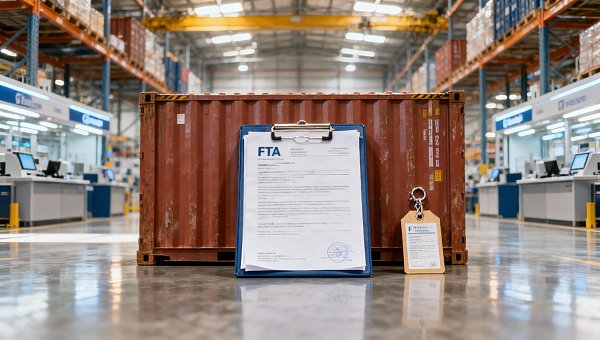
A recent analysis indicates that India’s free trade agreement utilization rate stands at only 25%, with rules of origin and certificate application procedures becoming a practical barrier for small and medium-sized importers. The timing of the event has not been specified in the available information. This development deserves attention from direct trade companies, raw material buyers, manufacturers, distributors, and supply chain service providers because it may affect sourcing decisions, customs efficiency, and regional supplier selection.
Event Overview
According to the available information, India has signed multiple free trade agreements, but the actual utilization rate is reported at only 25%.
The analysis identifies the highly cumbersome certificate of origin application process as the main reason. Small and medium-sized enterprises are described as having difficulty bearing the related compliance costs.
The same information states that this situation is prompting distributors in Southeast Asia and the Middle East to turn to Chinese suppliers. These suppliers are described as using an RCEP origin intelligent application system and third-party AEO certification, enabling more than 98% of export orders to generate FORM E with one click. Their average customs clearance time is reported to be 3.2 working days faster than comparable Indian products.
No specific event date or official policy announcement date is stated in the available information.
Impacts on Specific Industry Segments
Direct Trade Companies
Direct import and export companies are directly affected because FTA utilization depends not only on tariff preferences but also on whether origin documentation can be obtained efficiently.
From an industry perspective, the impact is mainly reflected in customs documentation workload, order delivery predictability, and the actual ability to use preferential trade arrangements. If certificate of origin procedures remain complex, smaller traders may face higher transaction friction even when trade agreements are in place.
Raw Material Procurement Companies
Raw material buyers may be affected when sourcing decisions involve tariff preference eligibility and customs clearance timing. If suppliers from one market face heavier origin compliance procedures, buyers may need to compare not only unit prices but also documentation efficiency.
Analysis shows that procurement teams may place greater emphasis on whether suppliers can provide origin documents quickly and consistently, especially when goods are destined for Southeast Asian or Middle Eastern distribution channels.
Processing and Manufacturing Enterprises
Manufacturers that rely on imported inputs or export finished goods may experience indirect effects through supplier selection and delivery scheduling. Rules of origin can influence whether goods qualify for preferential treatment and whether shipment schedules remain stable.
Observably, the issue is not limited to tariff rates. It also concerns the operational burden of proving origin, coordinating documents, and avoiding delays at customs. For manufacturers with tight production cycles, documentation uncertainty can become a supply chain planning factor.
Channel and Distribution Companies
Distributors in Southeast Asia and the Middle East are specifically mentioned in the available information as shifting toward Chinese suppliers. This group is affected because clearance speed and document readiness can influence inventory turnover and downstream delivery commitments.
What deserves closer attention is that distributor preferences may change when one supplier group can provide faster customs documentation and another faces higher compliance friction. The reported 3.2-working-day clearance advantage may influence route planning and supplier evaluation where time sensitivity matters.
Supply Chain Service Providers
Customs brokers, freight forwarders, and compliance service providers may see rising demand for origin rule interpretation and certificate application support.
It is more appropriate to understand this as a compliance service opportunity rather than a simple trade flow change. Companies that assist with origin documentation, AEO-related processes, and customs clearance coordination may become more important partners for small and medium-sized traders.
Key Points to Watch and Practical Responses
Track Official Statements and Policy Adjustments
Companies should continue monitoring whether relevant authorities or trade bodies release further clarification on FTA utilization, certificate of origin procedures, or simplification measures.
Analysis shows that the current information reflects a reported utilization gap and operational burden, but it does not confirm a new policy change. Businesses should avoid treating the analysis itself as an official regulatory update.
Review Key Products and Destination Markets
Enterprises should identify which product categories and destination markets rely most heavily on preferential origin documentation. This is especially relevant for businesses serving Southeast Asia and the Middle East, as these markets are specifically mentioned in the available information.
From an industry perspective, companies should compare the total trade process, including document preparation, customs clearance time, and compliance cost, rather than evaluating suppliers only by quoted price.
Distinguish Policy Signals from Business Execution
The reported 25% FTA utilization rate signals a gap between agreement signing and actual business use. However, companies still need to verify whether the issue applies to their own products, trade routes, and documentation requirements.
Observably, the practical question is whether a supplier can repeatedly provide accurate origin documents within the required timeline. Businesses should assess supplier documentation capability before making procurement or distribution commitments.
Prepare Procurement and Supply Chain Contingency Plans
Importers, distributors, and manufacturers should prepare backup sourcing and documentation plans where origin certificates are critical to clearance or tariff treatment.
What deserves closer attention is the operational risk faced by small and medium-sized companies. If compliance costs are difficult to absorb, they may need earlier coordination with suppliers, customs brokers, and logistics partners before confirming shipment schedules.
Editor’s View / Industry Observation
Analysis shows that this development is less about the existence of free trade agreements and more about their actual usability in daily trade operations. A low utilization rate suggests that formal trade preferences may not automatically translate into practical benefits for smaller market participants.
It is more appropriate to understand the current information as a signal of changing supplier evaluation standards. Clearance efficiency, origin certificate automation, and compliance readiness may become more important in procurement decisions, particularly for distributors operating across regional markets.
From an industry perspective, continued attention is needed because the issue connects trade policy, customs documentation, and supply chain execution. If origin rules remain difficult to use, companies may increasingly evaluate suppliers by their ability to reduce documentation friction and clearance uncertainty.
Conclusion
The reported low utilization of India’s free trade agreements highlights a practical challenge in international trade: preferential agreements only create value when companies can access them efficiently.
For industry participants, the key significance lies in the growing importance of rules of origin, certificate application efficiency, and customs clearance predictability. The current information should be viewed in a neutral and practical way: it is more appropriate to understand it as a signal that compliance execution is becoming a decisive factor in regional sourcing and distribution decisions.
Information Source Statement
Main source: the latest analysis referenced in the provided industry briefing.
Items requiring continued observation: whether official authorities release further explanations on FTA utilization, whether certificate of origin procedures are simplified, and whether the reported shift by Southeast Asian and Middle Eastern distributors continues in actual trade activity.
The Archive Newsletter
Critical industrial intelligence delivered every Tuesday. Peer-reviewed summaries of the week's most impactful logistics and market shifts.