Monday, May 22, 2024

METI Ties Fastener Export Quotas to Carbon Intensity
by
Published
Views:
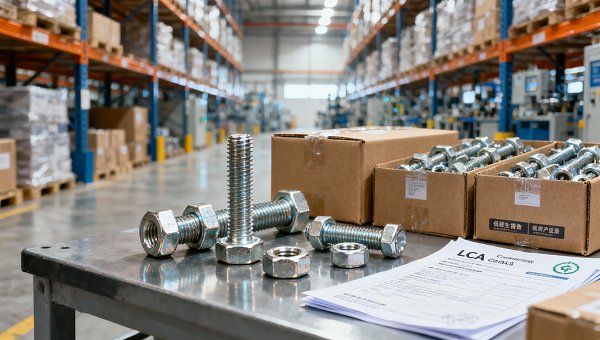
On July 13, 2026, Japan's Ministry of Economy, Trade and Industry (METI) launched a green access pilot for Hardware Components exports that introduces a new rule for fasteners such as bolts and nuts: export quota levels will be adjusted against verified product carbon intensity. Because the pilot requires exporters to submit LCA reports certified under JIS Q 14067, the change is not only a trade administration update but also a compliance and documentation issue for exporters, suppliers, procurement teams, and certification-related service providers involved in China-Japan fastener trade.
What METI Has Put Into the Pilot
The confirmed facts are limited but clear. METI started the Hardware Components export green access pilot on July 13, 2026. Within that pilot, fastener products including bolts and nuts are subject to carbon-intensity-weighted quota management. Exporters are required to provide LCA reports certified under JIS Q 14067. Quota allocation is set to move inversely with product carbon footprint measured in kgCO2e/kg. The first batch of the pilot covers fastener suppliers representing the top 20% of China-Japan trade volume in this product segment.
Where the Rule Change May Be Felt First
Export filings move closer to carbon documentation
From an industry perspective, direct exporters are likely to feel the change first because quota access is now linked to a certified carbon-footprint document rather than only to conventional shipment preparation. The practical impact may appear in pre-export review, document readiness, internal product data collection, and the timing of quota applications. What deserves closer attention is whether exporters can align product-level LCA evidence with the shipment categories covered by the pilot.
Manufacturing and sourcing teams may face upstream pressure
Analysis shows that the inverse adjustment mechanism could push attention upstream into manufacturing and sourcing decisions, since unit carbon footprint becomes relevant to export quota treatment. For fastener producers and procurement teams, the immediate issue is less about market messaging and more about whether material inputs, production records, and technical documents can support a certifiable LCA submission under JIS Q 14067. Even where the rule formally targets exporters, operational pressure may spread to suppliers that provide the production and traceability data behind those reports.
Buyers and channel partners may need to recheck delivery assumptions
For buyers, distributors, and other channel participants connected to affected fastener supply, the rule change may matter through delivery planning rather than through direct regulatory filing. If quota levels float with carbon intensity, counterparties may need to recheck supply continuity, preferred suppliers, and document conditions attached to orders. Observably, this creates a reason to review whether procurement specifications, bid documents, or supply contracts need clearer references to LCA evidence and certification status.
Certification and testing support may become part of trade execution
Certification-related firms and testing or verification service providers may also see a more operational role in export readiness. The stated requirement for JIS Q 14067-certified LCA reports means that conformity support is not peripheral to the trade process in the pilot scope. For companies handling submissions, the key issue is whether technical, emissions, and product-boundary information can be prepared in a form that supports certification without delaying shipment preparation.
What Companies Should Watch in Practice
Check whether current LCA materials are usable for JIS Q 14067 submission
Analysis shows that companies should first distinguish between having internal carbon data and having a submission-ready LCA report certified under JIS Q 14067. Those are not automatically the same. Exporters and suppliers within the pilot scope should review whether existing documentation can support the required certification format and whether product-level boundaries are clear enough for filing use.
Track how the quota formula is described in execution
The confirmed rule says quota allocation will adjust inversely with kgCO2e/kg, but the summary provided does not include full operational detail. It is therefore more appropriate to understand this as an active execution signal with details still worth monitoring. Companies should follow how official language, filing instructions, and practical review standards describe the use of the weighting factor in actual quota handling.
Review product and customer exposure within the pilot scope
Businesses should map which fastener categories, customers, and shipments sit closest to the pilot's initial coverage. Because the first batch covers suppliers accounting for the top 20% of China-Japan trade volume in this segment, affected firms may need to assess where compliance work should be prioritized first, especially across high-volume export lines and customers with tighter delivery windows.
Prepare for knock-on changes in procurement and delivery planning
Observably, one of the practical risks is not only certification readiness but coordination risk across procurement, production, export documentation, and delivery schedules. Companies should therefore watch whether customers begin asking for LCA-related materials earlier in the order cycle, whether supplier qualification standards start to reference certified carbon data, and whether shipment timing becomes more dependent on document completion.
Why This Looks Like an Execution Signal, Not Just a Policy Headline
From an industry perspective, this update is significant because it links export quota treatment to a measurable and certified carbon indicator at the product level. That gives the rule more operational weight than a general sustainability statement. At the same time, the available facts do not yet establish how broadly the mechanism will be expanded, how strict review practice will be in day-to-day filing, or how market participants will adapt their contracts and sourcing behavior. It is more appropriate to understand this as a live regulatory and trade execution signal that still requires close observation as the pilot proceeds.
How the Market Is Most Likely to Read It Now
The immediate industry meaning lies in the combination of three elements already confirmed: quota management, carbon-intensity weighting, and a JIS Q 14067-certified LCA requirement. Taken together, these indicate that carbon documentation is moving closer to market access conditions for the covered fastener trade. A rational reading at this stage is that the rule has moved beyond abstract policy direction, but the full business effect will depend on how execution language, certification practice, and trade counterparties respond over time.
Basis of This Article and What Still Needs Verification
This article is generated from the user-provided news title, event date, and event summary. For developments of this kind, relevant source types typically include official government announcements, releases from regulatory or trade authorities, customs or trade administration information, industry association notices, standards-related documents, and reporting from established sector media. A specific official source link was not provided in the input, so the precise official publication path still needs to be verified. Further observation is also needed on implementing details, certification interpretation, filing practice, procurement document changes, market feedback, and how affected companies carry the pilot requirement into day-to-day execution.
The Archive Newsletter
Critical industrial intelligence delivered every Tuesday. Peer-reviewed summaries of the week's most impactful logistics and market shifts.