Monday, May 22, 2024

Steel Frame Formwork Panels: Cost vs Reuse
by
Published
Views:
Steel Frame Formwork Panels: Cost vs Reuse in a Changing Construction Supply Chain
Steel frame formwork panels are becoming a lifecycle investment, not a simple purchase expense.
The lowest upfront price can raise total project cost when panels deform, slow assembly, or require early replacement.
Across infrastructure, industrial plants, energy facilities, and commercial building, reuse performance now shapes sourcing decisions.
This cost-versus-reuse equation depends on durability, standardization, maintenance discipline, transport efficiency, and supplier reliability.
Reuse Economics Are Redefining Steel Frame Formwork Panels
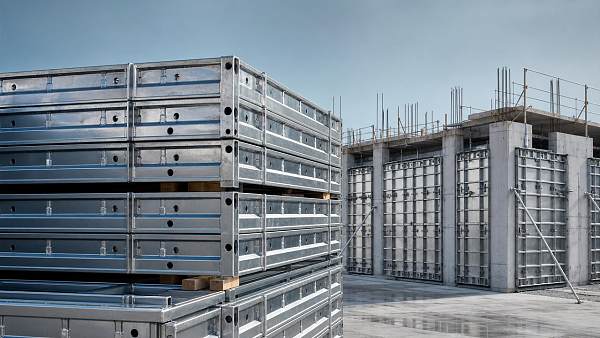
Construction cycles are becoming faster, more modular, and more cost-sensitive.
That shift is changing how steel frame formwork panels are evaluated across mixed project portfolios.
Earlier decisions often focused on purchase price, visible weld quality, and delivery lead time.
Current evaluations increasingly compare reuse cycles, concrete finish consistency, and compatibility across repeated pours.
A panel that costs more initially may deliver lower cost per use over several projects.
Steel frame formwork panels therefore require financial analysis beyond invoice comparison.
The practical question is not only “How much does it cost?”
The better question is “How many stable, safe, and productive cycles can it deliver?”
Trend Signals Behind the Cost vs Reuse Debate
Several market signals explain why steel frame formwork panels now receive closer technical scrutiny.
Labor constraints make fast assembly and predictable alignment more valuable on complex sites.
Material volatility also increases the penalty of premature panel replacement.
At the same time, owners expect better surface quality and fewer rework events.
These forces move attention from unit price toward total usable life.
The trend is clear: reuse is becoming measurable industrial performance.
Why Cheap Steel Frame Formwork Panels Can Become Expensive
A low initial price may hide weak structural design or inconsistent production control.
When steel frame formwork panels bend early, every following pour becomes less predictable.
Additional labor is then needed for adjustment, cleaning, bracing, and surface correction.
Replacement purchases can also disrupt site planning and increase emergency freight costs.
Common Hidden Cost Drivers
- Frame distortion after repeated lifting and concrete pressure.
- Poor corner protection causing leakage and finish defects.
- Non-standard sizes increasing storage and matching difficulty.
- Weak coating performance leading to corrosion and cleaning delays.
- Inconsistent accessories reducing assembly speed and site safety.
These issues rarely appear in a basic quotation.
They emerge only after steel frame formwork panels face repeated loading, handling, and stripping.
The Reuse Equation: Cost Per Pour Matters Most
Cost per pour is a useful benchmark for comparing steel frame formwork panels.
It divides total ownership cost by reliable reuse cycles under realistic site conditions.
The calculation should include purchase price, freight, maintenance, storage, repair, and disposal value.
It should also include productivity gains or losses from assembly efficiency.
This model prevents misleading savings from dominating the decision.
It also supports fair comparison between different steel frame formwork panels suppliers.
Design Features That Extend Reuse Life
Long-life steel frame formwork panels depend on practical engineering details.
Frame stiffness is central because it protects dimensional stability under concrete pressure.
Weld consistency matters because fatigue often begins at weak joints and stress points.
Panel skin quality affects concrete finish, cleaning time, and release agent performance.
Key Specifications to Review
- Steel grade, frame thickness, and reinforcement layout.
- Welding method, inspection frequency, and tolerance control.
- Panel face material, coating, and repairability.
- Corner design, sealing performance, and edge protection.
- Accessory compatibility with clamps, ties, and lifting points.
Standardized steel frame formwork panels reduce mismatch risk across different building sections.
They also simplify inventory planning when multiple projects share similar structural dimensions.
Operational Impact Across the Construction Value Chain
The effect of steel frame formwork panels extends beyond the purchase department.
Site teams experience the impact through assembly speed, alignment control, and stripping efficiency.
Engineering teams feel it through dimensional accuracy and concrete surface reliability.
Finance teams see it through depreciation, repair budgets, and asset utilization.
Logistics teams deal with stacking efficiency, loading safety, and return transport planning.
When steel frame formwork panels perform consistently, the entire workflow becomes easier to forecast.
When they fail early, cost spreads across labor, quality, schedule, and cash flow.
Maintenance Discipline Is Now a Competitive Factor
Reuse performance is not created by product design alone.
Maintenance discipline strongly affects the working life of steel frame formwork panels.
Cleaning should happen quickly after stripping to prevent concrete buildup and surface damage.
Panels should be stacked correctly to avoid bending during storage and transport.
Damaged edges, cracked welds, and warped skins need early inspection.
Reuse Protection Checklist
- Record pour cycles for each panel batch.
- Inspect alignment before panels return to storage.
- Use approved release agents and cleaning tools.
- Separate repairable panels from panels requiring retirement.
- Track repair cost against remaining reuse value.
Good maintenance can turn steel frame formwork panels into predictable long-term assets.
Supplier Reliability Shapes the Real Cost Curve
Supplier capability can determine whether promised reuse cycles become field reality.
Technical documentation should match actual production methods, not only catalogue claims.
Useful evidence includes material certificates, welding records, load data, and inspection procedures.
Stable suppliers also provide spare parts, repair guidance, and consistent accessories.
For cross-border sourcing, packaging and shipment protection deserve equal attention.
Steel frame formwork panels damaged in transit lose value before reaching the jobsite.
Reliable suppliers reduce uncertainty across engineering, delivery, and after-sales support.
How to Judge Steel Frame Formwork Panels Before Commitment
A structured evaluation prevents emotional price decisions.
The best comparison combines technical review, lifecycle costing, and field feedback.
This approach makes steel frame formwork panels easier to compare across regions and suppliers.
It also creates a defensible basis for long-term asset planning.
Strategic Priorities for the Next Buying Cycle
The next phase of formwork sourcing will favor measurable performance.
Steel frame formwork panels with documented reuse data will carry a stronger commercial position.
Decisions should focus on the following priorities.
- Define target reuse cycles before requesting quotations.
- Compare cost per pour instead of unit price alone.
- Ask for proof of tolerance control and weld inspection.
- Prioritize modular systems that support future project reuse.
- Include maintenance procedures in the commercial evaluation.
- Review packaging, spare parts, and repair support.
These steps help convert steel frame formwork panels from consumable tools into managed assets.
Action Path: Turning Reuse Insight Into Better Decisions
Start with a simple lifecycle model for each project type.
Estimate required pours, handling intensity, transport frequency, and finish requirements.
Then compare steel frame formwork panels using technical evidence and cost-per-use assumptions.
Pilot orders can validate assembly speed, surface quality, and damage resistance before larger commitments.
After deployment, record reuse cycles and repair events to improve future sourcing benchmarks.
The winning decision is rarely the cheapest panel on day one.
It is the steel frame formwork panels system that delivers stable cost, reliable reuse, and controlled project risk.
For organizations benchmarking industrial assets globally, lifecycle transparency is becoming essential.
A disciplined review of steel frame formwork panels supports safer construction, leaner budgets, and more resilient operations.
The Archive Newsletter
Critical industrial intelligence delivered every Tuesday. Peer-reviewed summaries of the week's most impactful logistics and market shifts.